You are here
CSDP
NATO Book about the Sahel
Janos Besenyö (Ed.) :
NATO’s Regional Challenges – Terrorism and Counter-Terrorism in Sahel
2025, NATO CoE-DAT (Centre of Excellence – Defence Against Terrorism), Ankara
Download
> EUVI/ CERPESC Contribution: History of the Sahel (András István Türke)
The Centre of Excellence Defence Against Terrorism (COE-DAT) is pleased to present this book on the topic of NATO’s Regional Challenges: Terrorism and Counter- Terrorism in Sahel.
Many political analysts have been forecasting inevitable conflicts driven by the different challenges characterized by regions where the Alliance might have to deal with the situation that no other power can or wish to handle singlehandedly. Amongst these geographically determined areas stand out a vast part of Africa, that is facing great problems generated by climate change, overpopulation, social discrepancies, ideological differences, poverty and armed conflicts including terrorism. This area includes countries like Senegal, Gambia, Mauritania, Guinea, Mali, Burkina Faso, Niger, Chad, Cameroon and Nigeria or on commonly understood as the SAHEL region.
Amongst many international and national efforts to support better security and well-being of the people living in the vast dry land also NATO planners are monitoring closely their strategic southern flank in order to be prepared to conduct wide range of activities. One of these is supporting counter-terrorism with the toolset that only the Alliance has. To be prepared includes updated Situational Awareness or better to say, Situational Understanding.
In order to support planners, decision-makers or troops of NATO to be deployed to the region COE DAT launched a research project having a large sum of well-known SMEs from around the world. The research aimed for providing an appreciation of the area discussing geography, history, culture and also addressing the challenges that affect the everyday life of the people who must face with them. The focus is directed on the evolving terrorism and its direction with the aim of finding answers and recommendations to the Alliance to counter it as this book concludes.
The post NATO Book about the Sahel appeared first on CERPESC.
Vulnerability Points of EU & NATO in Europe
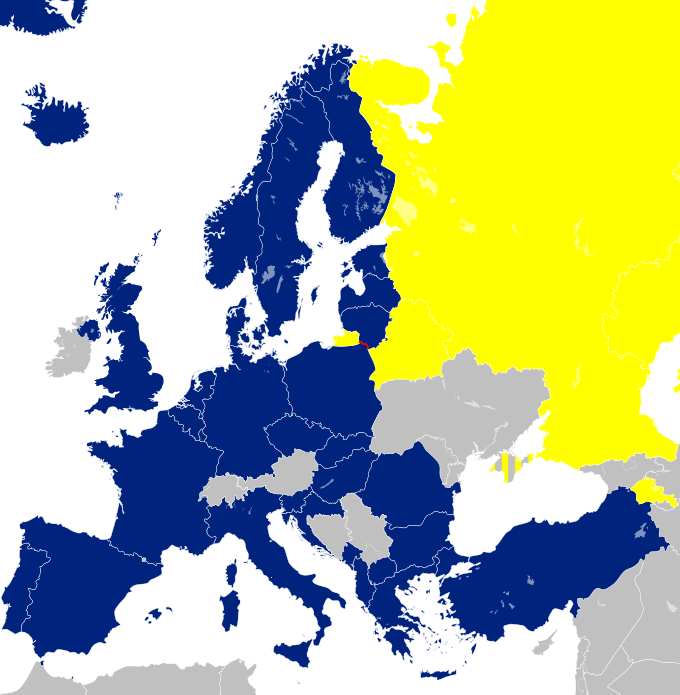
We often hear and read about the Suwalki Corridor – east of Kaliningrad, on the Polish-Lithuanian border – as one of the EU’s Achilles’ heels, which Russia could easily cut off land connections by attacking.
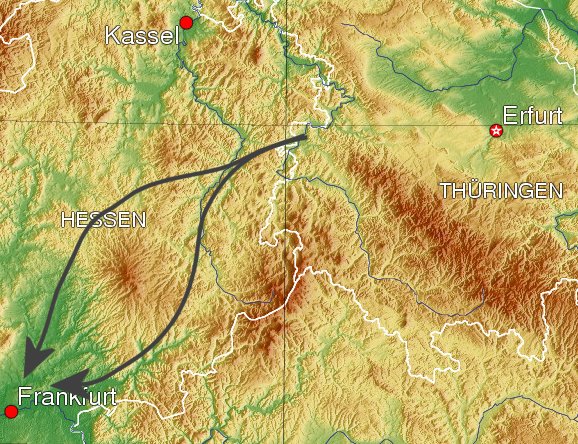
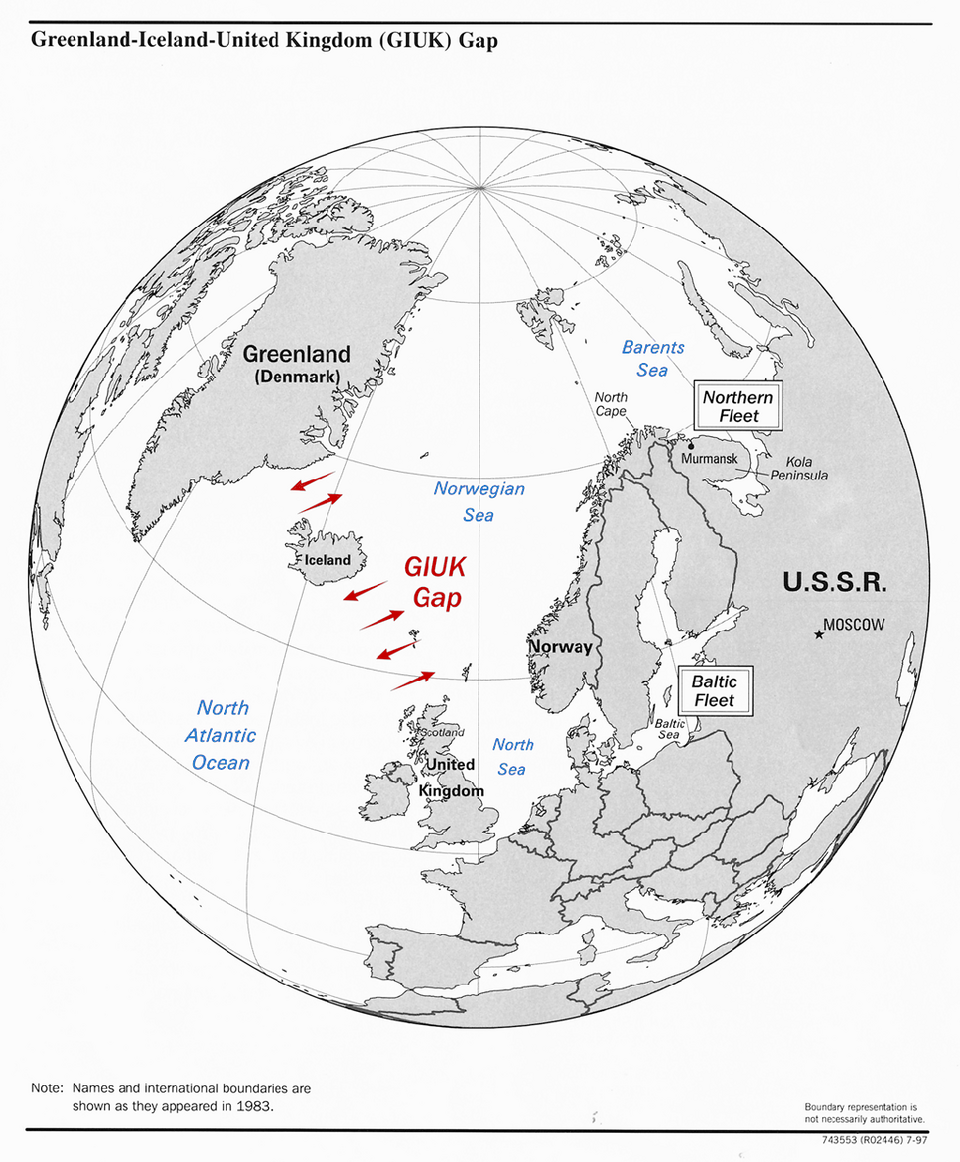
During the Cold War, the GIUP-gate (G-I-UK), the sea section between Greenland – Iceland – Great Britain, and the German Fulda gap (Fulda-Lücke) between the GDR states of Hesse and the FRG states of Thuringia, were considered further vulnerabilities.
Less well known – although of course known since 1882 – is another Achilles’ heel of Romania (and therefore NATO), the Focșani Gate (Poarta Focșani). Located between the Carpathian Mountains and the Danube Delta, in the northeastern part of the Wallachian Plain, it stretches for 80-85 kilometers in an east-west direction and about 60 km in a north-south direction through the counties of Galați, Vrancea, Buzău and Brăila, close to the Romanian-Moldovan-Ukrainian triple border.
Controlling the Focșani Gate allows access to vast areas of Romanian territory and to many other regions of Europe. The area exists as a somewhat isolated zone due to poor infrastructure, which makes it vulnerable in the event of a possible Russian attack.
It has been suggested that a Russian incursion into the Budjak region of Ukraine would threaten the Focșani Gate and the Danube Delta in Romania, which could force Romania to invade the region. A possible Romanian invasion of Budjak has been examined by several analyses for security reasons.
The post Vulnerability Points of EU & NATO in Europe appeared first on CERPESC.
Frigate Amiral Ronarc’h : the new lead ship of the French Navy.
The post Frigate Amiral Ronarc’h : the new lead ship of the French Navy. appeared first on CERPESC.
Interview for Expresso.pt about Ukraine
ARF: Whether you think that Budapest has, indeed, failed to offer Ukraine a more tangible security ?
AIT: After the collapse of USSR in 1991, Ukraine made the huge mistake of giving up the use of nuclear weapons (nuclear weapons remained on its territory after the collapse of the USSR) in exchange for some vague political promises.
The Budapest Summit in 1994 could not provide more tangible guarantees to Ukraine because the OSCE (former CSCE, 1973-1994) itself was established as a soft security institution. This means that its decisions are not binding on its members. With this “compromise” they could only guarantee that every country in Europe (+ USA, Canada, URSS) could actually be a member of the conference/organization (and remain so in the long term, although there were of course conflicts, despite the fact that some members sometimes boycott the meetings). The goal and most important result of the CSCE/OSCE is to provide a forum for political dialogue for its members in all situations, while dialogue is already broken off in every other international forum. From the beginning, CSCE/OSCE did not aim to provide security guarantees because it is not a hard security institution like NATO.
ARF: Whether things could have been different if those commitments had been taken more seriously?
AIT: In 2008, my Institute (Europa Varietas Institute ) wrote an analysis based on what (in connection with the Georgian conflict) was said at the Valdai Club, stating that Russia was essentially just waiting for a favorable opportunity to take back the Crimea from Ukraine, which Khrushchev had “easily given” as a gift. Our research group only deal with the Russian topic tangentially, and Russian experts reacted by saying that Russians are talking nonsense. Yet we were right. At the time (2008), there would have been enough time to prepare and launch countermeasures, and the West (like Hungary) did nothing, of course. The other side of the coin is that in the meantime – especially since 2005 – American political and economic penetration in Ukraine has accelerated. And in 2014, we also expected that the Russian advance would automatically continue to create a land corridor all the way to Transnistria – because geostrategic logic would have required this.
In my opinion, Russia itself was surprised by how easily, without any serious Western backlash, it managed to annex Crimea. We were therefore certain that the Russians would move forward, it was only a question of when. From a strategic point of view, Putin wasted valuable years by not taking advantage of the unique opportunity presented by the moment to move forward, although of course, clashes continued to take place in the Donbass from 2014 until well before 2022. Furthermore, some Russian weapons systems were not yet ready for use, which prompted further caution on the Russian side.
In my opinion, the course of history could have turned out differently in three cases:
1) The first and most important case is if Ukraine had insisted on keeping the nuclear weapons (and the nuclear weapons themselves) on its territory. Let’s think of North Korea. This is an important lesson for all states possessing nuclear weapons.
2) The second case is if the Western (American) economic and political intervention in Ukraine after 2004 had been less aggressive. During this, the American lobby squeezed out, for example, Chinese partners from strategically important military plants for the Russians (Moto Sich, Dnepropetrovsk SS-18 factory, etc.).Since a power vacuum has developed in the region and the logic of international relations shows that the great powers fill these, in our opinion, a conflict would have definitely arisen, only later in time. There is a grain of truth in the arguments from the Russian side that the West did not comply with certain points of the CFE Treaty, while of course the Russians also interpreted it quite loosely when their interests demanded it.
3) The third case is that when Russia annexed Crimea by force, the West would have responded much more harshly. Let’s say the Crimean peninsula (and/or other Russian interests, such as Kaliningrad), would have been placed under a NATO blockade. Of course, this would have required unified, harmonised action, the European countries would have had to « step out of their comfort zone » (theoretically) and step out of NATO’s territorial scope (in practice).
For example, the Crimean peninsula and/or other Russian interests, such as Kaliningrad, would have been placed under a NATO blockade. With the necessary determination, a chicken run game situation could have been created, such as the one that developed in Cuba in 1963 (the antecedent of which was the installation of an American missile capable of reaching Moscow on Turkish territory.) Russian policy is based only on force & counterforce. Sanctions and other soft tools cannot affect it, even if they naturally affect Russia sensitively.
ARF: What is realistic that we expect now from the “coalition of the willing”?
AIT: I have published countless books and articles on EU missions and military operations. In recent years, the emphasis has (with a few exceptions) shifted to “power point missions”, with minimal personnel, mainly training or, at best, CMCO tasks. 20 years ago, we could say that the political will was essentially lacking, the capabilities were available or at least they showed dynamic development. We have seen in the Sahel what disastrous results unintelligible, adventurous political ideas have brought. (Special commando units to perform classic OPEX peacekeeping tasks or territory control). So today France has practically ceased to be a factor in the region. Nowadays, the available capabilities have also decreased dangerously, plus BREXIT has meant another blow to the common European defense policy.
On the one hand, there is a lack of the appropriate political background, of national consensus on the issue. If Macron is removed, for example, in 2027, then the French contingent could end up like it did in Afghanistan after the fall of Sarkozy. Therefore, I think that the sending of troops may be a political “as if we are doing something”, but their strategic, or even tactical, value will be small. Also, in terms of personnel, they will remain significantly below the level actually needed. I am sceptical about what a common European force would be capable of in Ukraine. First of all, the Europeans have been trying to create a common army since 1947, and a common peacekeeping force since the 1980s and then in 1999 (Helsinki Headline Goal).
(I wrote a lot about this in my book) Partial results have been achieved, but the number of participants in EU military operations is very small and, considering the trend over the past 20 years – excluding maritime missions – is increasingly moderate. The only war theater is the Balkans, where a significant number of European forces have been deployed under the auspices of UN missions. Their number has gradually decreased since then, but in view of the events in Bosnia, it is questionable whether there will not be a need for a larger European presence there again.
On the other hand, if we consider France, 15 years ago there were still approx. it was able to send 15,000 men to African missions (OPEX) in strategically and economically important regions, significantly using the country’s financial capabilities. (Note, that Poland has spent 4.12 and 4.7% of its GDP on the development of its army since the Russian aggression, the most in all of Europe.) They have already essentially withdrawn from the Sahel and Ukraine is hardly the place where they could replace the lost potential there. In addition, the lack of French forces deployed in Ukraine would be strongly felt in other operational areas and constantly stationing them there would also mean a significant financial outlay.
Thirdly, the whole idea is also outdated in its concept. Since an economically strong great power with a significant military arsenal, and moreover a nuclear power, wants to “deter” it with peacekeeping tools, conventional weapons, which are traditionally weaker and usually only bring temporary results in third world countries with limited military equipment.
Politically, it would probably be impractical and completely unthinkable to install French or English nuclear weapons in Ukraine for the purpose of deterrence, at least as long as Ukraine is not a NATO member. If Ukraine becomes a NATO member, even then it would be necessary to take steps that, for example, the French do not take for the benefit of their close German ally, namely to extend their domestic nuclear umbrella to a foreign country.
ART: And what are the risks of “going” into Russia has European troops?
AIT: Russian geostrategy has considered the Ukrainian territory as its sphere of interest for centuries, so it is absolutely unlucky to station European troops in the region. The UN Brahimi report published in 2000 states as a basic principle that if foreign troops are stationed in the territory of a country for the purpose of peacekeeping, it is not lucky if those troops come from neighboring (interested) countries, but rather they should strive to come from neutral regions (preferably from another continent). Why do they think that if consistent violations of these principles, for example in Africa, always lead to inefficiency, then they still achieve success on the fringes of Europe? How long do they want to keep these European forces there? Until a political upheaval occurs in Russia? Those who think this way do not understand the rules of the system of international relations and geopolitics. Sending European troops to Ukraine makes little strategic sense, but it is perfect for politically provoking the Russians.The recent Balkan wars have also proven that whoever is within their territory has the advantage. On the other hand, the Russians have not yet tolerated the appearance of troops other than their own “peacekeepers” in their sphere of interest. These steps, devoid of both military and political rationality, are nothing more than sowing the seeds of a future war.
The success of any peacekeeping presence essentially depends on whether the (former) warring parties agree to the deployment of the peacekeeping force and whether they consider the presence of this force legitimate. Well, the situation in Ukraine speaks for itself in this regard.
It is not a good idea to play politics out of resentment. Macron was led by Putin by the nose for months before the invasion of Ukraine, and for a while he positioned himself as a peacemaker, but then hi came a cropper. A phone recording of the negotiations was made public. It seems that Macron will never forgive Putin for this. Macron told in May 2025 about “a few thousand” soldiers, a number that cannot be taken seriously in a military sense. Moreover, these would not be neutral UN troops, but specifically troops supporting (fighting?) Ukraine. This idea is as much nonsense as Macron’s idea a few years ago to transfer the peacekeeping and military presence in the Sahel from traditional peacekeeping forces to special commandos. (The plan failed in record time. I wrote about it here)
And it will be difficult because, among others, the Germans, Poles, and Spaniards fundamentally oppose the plan. Of course, there have been even stranger plans, for example, Macron wanted to open a debate on the use of French nuclear power in the defense of Europe in relation to Ukraine. I note that in February 2024, we already knew about about 100 French people fighting in Ukraine from French security sources, including former French soldiers and members of humanitarian organizations. According to the official version, all of these Frenchmen are under contract with the Ukrainian army, have Ukrainian military books and receive a basic salary of 500 EUR (20,000 hryvnia), to which a supplement of 2,500 EUR is added for each month spent on the front. (According to the unofficial version, there is talk of mercenaries, which is illegal under French law.)
The answers do not necessarily coincide with the official position of EuVI/CERPESC and can only be considered the personal opinion of Andràs Istvàn Türke.
The post Interview for Expresso.pt about Ukraine appeared first on CERPESC.
Hungarian hero of the Ukrainian war : Róbert Brovdi
The post Hungarian hero of the Ukrainian war : Róbert Brovdi appeared first on CERPESC.
Book about Wagner PMC – Vol. II.
Establishment, Purpose, Profile and Historic Relevance 2013-2023
> Autors: Besenyö, Janos – Türke, András István – Szénási, Endre
> Publisher: Helion
> EUVI/ CERPESC Contribution: Wagner PMC in Africa
> 2025
The Wagner Private Military Company (PMC) first appeared in Ukraine’s Donbas region during the initial Russian intervention in the spring of 2014. Its fighters—lacking national insignia, Russian flags, or unit designations and always concealing their faces in public—presented an unorthodox and ambiguous presence. However, their use of Russian-made arms, equipment, and uniforms left little doubt about Moscow’s involvement, reinforcing Wagner’s role as a deniable yet effective force in place of poorly trained local militias. Over the following years, Wagner served Moscow’s strategic interests by maintaining both ambiguity and control over various local proxies.
While Wagner was not initially involved in Russia’s full-scale invasion of Ukraine on 24 February 2022, a series of military setbacks suffered by the Russian Armed Forces (VSRF) led to its redeployment. Following a rapid expansion, Wagner became instrumental in achieving one of the Kremlin’s first major military successes of the war—the capture of the heavily fortified town of Popasna in late April and early May 2022. From that point, under the nominal leadership of Yevgeny Prigozhin, Wagner grew significantly in both manpower and firepower.
The group also played a central role in Project 42174, a large-scale recruitment program that enlisted Russian prison inmates as assault troops. Tens of thousands of these recruits were deployed—nearly 20,000 of whom were killed—during the brutal Battle of Bakhmut, which raged from July 2022 to May 2023. This operation marked Russia’s first major military victory in nearly a year and had a lasting impact on the tactics and structure of the VSRF.
Richly illustrated with rare photographs, custom-drawn artwork, and analysis based on captured Russian documents, Wagner Group Private Military Company, Volume 2 provides an in-depth examination of the group’s emergence, organization, combat operations, and eventual downfall. Offering a comprehensive study of one of the most significant and controversial private military forces of modern times, this volume is essential reading for those seeking to understand the evolution of Wagner and its role in contemporary warfare.
(Helion)
/*! elementor - v3.15.0 - 20-08-2023 */ .elementor-widget-image{text-align:center}.elementor-widget-image a{display:inline-block}.elementor-widget-image a img[src$=".svg"]{width:48px}.elementor-widget-image img{vertical-align:middle;display:inline-block}The post Book about Wagner PMC – Vol. II. appeared first on CERPESC.
Anti-Drone Fight: New Innovations
00:28 ERBC & PROTEUS
01:32 Skyranger / Rheinmetall (DE)
03:53 Korkut / Aselsan (TR)
04:30 Gokberk / Aselsan (TR)
05:53 Alka / Rokestan (TR)
06:18 HELMA-P de CILAS (FR)
06:56 AT-625 (PRC)
07:32 Chimera 200 de Cerbair (FR)
/Select “English” on Youtube Video if needed/
The post Anti-Drone Fight: New Innovations appeared first on CERPESC.
France ready to replace US with nuclear deterrent
France is ready to deploy nuclear-capable fighter jets to Germany in a strong signal to the Kremlin after the United States threatened to withdraw its troops from the continent. The statement could put pressure on British Prime Minister Keir Starmer to take similar steps.
Immediately after the election, future German Chancellor Friedrich Merz called on the United Kingdom and France to expand their nuclear shields to reduce the continent’s dependence on Donald Trump’s United States for protection. French President Emmanuel Macron held talks with the German politician just before he was due to travel to Washington.
The United States has long guaranteed Europe’s security with its nuclear arsenal, a significant part of which is located at a US military base in Germany. France’s nuclear deterrent is currently independent of NATO (but works closely with it), while the United Kingdom’s is a key element of the North Atlantic Alliance’s defense strategy. Emmanuel Macron has already called on the continent’s leaders to discuss the role that French nuclear weapons could play in protecting Europe.
The post France ready to replace US with nuclear deterrent appeared first on CERPESC.
European Union puts pressure on Rwanda
Despite international calls, fighting between the Democratic Republic of Congo Armed Forces (FARDC) and the M23 continues in the provinces of North Kivu and South Kivu. The humanitarian situation is deteriorating with thousands of displaced people and widespread violence against civilians.
Rwanda is de facto leading the M23’s military operations and illegally exploiting Congolese mineral resources. Kinshasa continues to demand sanctions against Kigali and a firm response from the international community to the ongoing crisis in eastern DRC.
The European Parliament has adopted a resolution condemning Rwanda’s interference in the DRC and calling on Kigali to withdraw its troops. The resolution, voted by a large majority, also calls for the immediate suspension of the MoU (Memorandum of Understanding) between the EU and Rwanda on raw materials. MEPs denounce Kigali’s support for the M23 rebels, who occupy several territories in eastern DRC.
MEPs insisted on the need for the EU to take concrete measures, including freezing budgetary aid to Rwanda and suspending all military cooperation.
The European Commission’s reaction is awaited, while MEPs call for an embargo on minerals from Rwanda and a reassessment of current economic agreements.
France, through its Minister of Foreign Affairs, reiterated its support for the sovereignty of the DRC and condemned the M23 offensives.
The post European Union puts pressure on Rwanda appeared first on CERPESC.
South Sudan / CERPESC Analysis
“Born to be Wild”
– South Sudan after the Independence
András István Türke
CERPESC 18/AF/07/2025 – 09 January 2025
Before 2011, until the declaration of independence of the Republic of South-Sudan (Juba), Sudan was the largest country in Africa and the seventh most populous. It was ruled by General Omar al-Bashir between 1989-2019. This analysis seeks to answer the basic questions how has the South Sudan issue been handled by Khartoum since Sudan’s independence in 1956? And how has South Sudan’s political life changed since the proclamation of independence on 9 July 2011? Has the long-awaited peace and economic prosperity arrived? Is it really Khartoum who has been the only one who has interfered the development of this region? Or maybe the first 14 years of the new state weren’t such a success story after all? How did the cooperation between the former allies develop? Did local conflicts develop over the oil reserves? And finally, how did the relationship with neighboring Sudan develop?
/*! elementor - v3.15.0 - 20-08-2023 */ .elementor-widget-image{text-align:center}.elementor-widget-image a{display:inline-block}.elementor-widget-image a img[src$=".svg"]{width:48px}.elementor-widget-image img{vertical-align:middle;display:inline-block}The post South Sudan / CERPESC Analysis appeared first on CERPESC.
US Withdrawal from Niger
The withdrawal process of US forces and assets from Niger began on May 19 following the mutual establishment of withdrawal conditions and continued with the withdrawal from Air Base 101 in Niamey on July 7, 2024, and Air Base 201 in Agadez on Aug. 5, 2024.
Additionally, the U.S. Africa Command Coordination Element, consisting of a two-star General Officer and staff, has departed from Niger.
Over the past decade, American troops have trained Niger’s forces and supported partner-led counterterrorism missions against Islamic State and al Qaeda in the region.
/*! elementor - v3.15.0 - 20-08-2023 */ .elementor-widget-video .elementor-widget-container{overflow:hidden;transform:translateZ(0)}.elementor-widget-video .elementor-wrapper{aspect-ratio:var(--video-aspect-ratio)}.elementor-widget-video .elementor-wrapper iframe,.elementor-widget-video .elementor-wrapper video{height:100%;width:100%;display:flex;border:none;background-color:#000}@supports not (aspect-ratio:1/1){.elementor-widget-video .elementor-wrapper{position:relative;overflow:hidden;height:0;padding-bottom:calc(100% / var(--video-aspect-ratio))}.elementor-widget-video .elementor-wrapper iframe,.elementor-widget-video .elementor-wrapper video{position:absolute;top:0;right:0;bottom:0;left:0}}.elementor-widget-video .elementor-open-inline .elementor-custom-embed-image-overlay{position:absolute;top:0;right:0;bottom:0;left:0;background-size:cover;background-position:50%}.elementor-widget-video .elementor-custom-embed-image-overlay{cursor:pointer;text-align:center}.elementor-widget-video .elementor-custom-embed-image-overlay:hover .elementor-custom-embed-play i{opacity:1}.elementor-widget-video .elementor-custom-embed-image-overlay img{display:block;width:100%;aspect-ratio:var(--video-aspect-ratio);-o-object-fit:cover;object-fit:cover;-o-object-position:center center;object-position:center center}@supports not (aspect-ratio:1/1){.elementor-widget-video .elementor-custom-embed-image-overlay{position:relative;overflow:hidden;height:0;padding-bottom:calc(100% / var(--video-aspect-ratio))}.elementor-widget-video .elementor-custom-embed-image-overlay img{position:absolute;top:0;right:0;bottom:0;left:0}}.elementor-widget-video .e-hosted-video .elementor-video{-o-object-fit:cover;object-fit:cover}.e-con-inner>.elementor-widget-video,.e-con>.elementor-widget-video{width:var(--container-widget-width);--flex-grow:var(--container-widget-flex-grow)}The post US Withdrawal from Niger appeared first on CERPESC.
Book about Wagner PMC
Russia’s Wagner PMC (Wagner Group):
Establishment, purpose, profile and historic relevance worldwide
> Autors: Besenyö, Janos – Türke, András István – Szénási, Endre
> Publisher: Helion
> EUVI/ CERPESC Contribution: Wagner PMC in Africa
> COMING SOON (Spring 2024)
The Wagner Group is symbolic of Russia’s deployment of private military companies (PMCs) to exercise influence in Africa, the Middle East and Europe since the mid-2010s. Nominally an independent commercial enterprise, but actually operating on behalf of the Russian government, and in close cooperation with the Ministry of Defence and its Main Intelligence Directorate (GRU), the Foreign Intelligence Service (SVR), and the Federal Security Service (FSB), it has been deployed to perform a very wide range of military and paramilitary tasks, provide security, and collect intelligence.
Through much of its existence, the activity of the Wagner Group appears to have been clandestine and poorly recorded. In practice, the operating principles of this PMC have been very similar to those of numerous similar enterprises from the West.
Since its failed coup attempt in the summer of 2023, the fate of the Wagner Group appears to be sealed. Indeed, presently, it is highly unlikely that a Russian PMC might ever again have the same power and influence that Wagner once wielded. However, this does not mean that such all such enterprises have been completely disbanded: only that the Wagner Group has not (yet) been replaced by some other enterprise – whether Russian or foreign. In fact, we are witnessing a recurrent trend that is likely to become even more characteristic for conflicts in the coming decades as almost everybody who can afford to pay for the services of a PMC is hiring them. Indeed, numerous governments in control of relatively weak or disloyal armed forces have concluded that the deployment of a PMC holds significant advantages.
This two-part works examines the predecessors to the Wagner Group, and the establishment of the latter organisation by Yevgeny Prigozhin, its activities in a number of conflicts around the world, and its armed mutiny against the top leadership of the Russian Federation. It is thoroughly illustrated with authentic photographs and custom commissioned colour illustrations and maps.
(Helion)
The post Book about Wagner PMC appeared first on CERPESC.
EUNAVFOR ASPIDES : From the Red Sea to the Gulf
19/02/2024: The European Union launched a naval mission (Aspides = Protektor in Greek) to protect commercial vessels in the Red Sea from attacks by Iran-backed Houthi rebels.
Since late 2023, as a result of Houthi attacks on maritime shipping, maritime security in the Red Sea, the Indian Ocean and the Gulf has significantly degraded. The deterioration of the maritime security in the Red Sea has disrupted a key geopolitical area for international shipping. This affects negatively the EU as well as the wider international community.
Operation ASPIDES will contribute to restore and safeguard freedom of navigation, for the sake of the EU, the region, and the wider international community.
EUNAVFOR OPERATION ASPIDES, within its purely defensive mandate, will protect shipping targeted by attacks at sea or air. It will not conduct strikes on land. ASPIDES will act in line with the UN Security Council Resolution 2722, which demands the cessation of Houthis’ attacks on merchant and commercial vessels, and recognises the right to defend vessels against such attacks, in line with international law. Building upon the Strategic Compass for Security and Defence, ASPIDES consolidates the EU’s capacity to respond rapidly to a global crisis, in cooperation with like-minded international partners, while reinforcing the strategic autonomy of the EU.
The force commander Stefano Constantino was former tactical commander of the Operation AGENOR operation in the Strait of Hormuz from 6 July 2022 to January 2023. AGENOR was the military component of the European led Maritime Awareness in the Strait of Hormuz (EMASoH) established at the beginning of 2020 by the governments of Denmark, Belgium, France, Germany, Greece, Italy, the Netherlands and Portugal (to which was recently added also Norway) in order to guarantee the safety of navigation in an area of operation centered on the Strait of Hormuz and extended northwards to the entire Gulf and southwards to the area of the Indian Ocean located along the Omani coasts.
Last year, Constantino held the position of tactical commander at sea of Operation Safe Mediterranean (OSM), in a portion of the Mediterranean that goes from the west of Sardinia to include its entire central and eastern part.
Among the tasks of Operation Safe Mediterranean stand out the defense of maritime communication lines, the monitoring and protection of the national, merchant and fishing fleets, the increase in surveillance and the protection of the dense network of strategic underwater infrastructures that run on the seabed around the Peninsula, such as telephone and data transfer cables, electricity lines and gas pipelines. International, inter-ministerial cooperation and synergy in the field of maritime security with the countries bordering the Mediterranean complete the picture of the activities carried out by this important Operation to defend the free use of the sea.
OHQ: EU multunationalisable HQ, Larissa (Greece)
Staff:
– OHQ: 130
– FHQ embarked on a Frigate: 30
Operation Area : From the Red Sea to the Gulf and a large part of the North-West Indian Ocean
Assets: 4 frigates + 1 aerial asset
Budget: €8 million
Participating States: Greece, France, Italy, Germany
Force commander: Rear Admiral Stefano Costantino (IT)
D-day: 19 February 2024
The post EUNAVFOR ASPIDES : From the Red Sea to the Gulf appeared first on CERPESC.
Adaptive Hussars 2023
Joint NATO Military Exercice in Hungary: In November 2023, under the name ADAPTIVE HUSSARS 2023, the Hungarian Defence Forces are going to hold a multinational domestic military exercise with the participation of NATO forces in order to test the defence capabilities of the country. The objective of the exercise is to test the military’s readiness for and response to an imagined situation threatening Hungary’s security.
The Hungarian Defence Forces will be carrying out military operations on several spots around the country, with the objective of strengthening cooperation between the HDF and the civilian public administration.
This is the Largest Military Exercise in Hungary in 30 Years, the population must be advised that in the framework of this multinational exercise, increased military traffic will be moving on major and minor roads at several places in Hungary between 2 and 26 November.
Adaptive Hussars 23 involves around 5,000 Hungarian troops, including 500 reservists.
/*! elementor - v3.15.0 - 20-08-2023 */ .elementor-widget-video .elementor-widget-container{overflow:hidden;transform:translateZ(0)}.elementor-widget-video .elementor-wrapper{aspect-ratio:var(--video-aspect-ratio)}.elementor-widget-video .elementor-wrapper iframe,.elementor-widget-video .elementor-wrapper video{height:100%;width:100%;display:flex;border:none;background-color:#000}@supports not (aspect-ratio:1/1){.elementor-widget-video .elementor-wrapper{position:relative;overflow:hidden;height:0;padding-bottom:calc(100% / var(--video-aspect-ratio))}.elementor-widget-video .elementor-wrapper iframe,.elementor-widget-video .elementor-wrapper video{position:absolute;top:0;right:0;bottom:0;left:0}}.elementor-widget-video .elementor-open-inline .elementor-custom-embed-image-overlay{position:absolute;top:0;right:0;bottom:0;left:0;background-size:cover;background-position:50%}.elementor-widget-video .elementor-custom-embed-image-overlay{cursor:pointer;text-align:center}.elementor-widget-video .elementor-custom-embed-image-overlay:hover .elementor-custom-embed-play i{opacity:1}.elementor-widget-video .elementor-custom-embed-image-overlay img{display:block;width:100%;aspect-ratio:var(--video-aspect-ratio);-o-object-fit:cover;object-fit:cover;-o-object-position:center center;object-position:center center}@supports not (aspect-ratio:1/1){.elementor-widget-video .elementor-custom-embed-image-overlay{position:relative;overflow:hidden;height:0;padding-bottom:calc(100% / var(--video-aspect-ratio))}.elementor-widget-video .elementor-custom-embed-image-overlay img{position:absolute;top:0;right:0;bottom:0;left:0}}.elementor-widget-video .e-hosted-video .elementor-video{-o-object-fit:cover;object-fit:cover}.e-con-inner>.elementor-widget-video,.e-con>.elementor-widget-video{width:var(--container-widget-width);--flex-grow:var(--container-widget-flex-grow)}The post Adaptive Hussars 2023 appeared first on CERPESC.
New CERPESC site 2023
The new site of CERPESC started to be developed! The old site remain available here
———————————————————————————
03/03/2023
Updated page : Burkina Faso
27/12/2021
New pages : Rwanda and Burundi
03/04/2018
Updated page : Trade Policy
30/11/2017
Nouvelle série : Les Manuels du CERPESC
More news→ (function(i,s,o,g,r,a,m){i['GoogleAnalyticsObject']=r;i[r]=i[r]||function(){ (i[r].q=i[r].q||[]).push(arguments)},i[r].l=1*new Date();a=s.createElement(o), m=s.getElementsByTagName(o)[0];a.async=1;a.src=g;m.parentNode.insertBefore(a,m) })(window,document,'script','//www.google-analytics.com/analytics.js','ga'); ga('create', 'UA-40360849-1', 'visuart.eu'); ga('send', 'pageview');
The post New CERPESC site 2023 appeared first on CERPESC.
Book about North Africa and the Sahel Region
Terrorism and Political Contention in North Africa and the Sahel Region
> Editors: János Besenyő, Leonid Issaev, & Andrey Korotayev
> Publisher: Springer
> COMING SOON (2023)
The book analyzes factors of political contention in North Africa and the Sahel after the Arab Spring. The sharp increase in the terrorist activity in the Sahel after the Arab Spring led to serious destabilization, as well as the emergence of new and re-actualization of old conflicts in the region. A number of terrorist groups have emerged and/or intensified their activities, including ones associated with al-Qaeda and the Islamic State (AQIM, DNIM, ISGS, ISWAP, etc.). In a number of cases, full-scale Islamists insurgencies emerged and provoked increased external interference in the affairs of the region. The aforementioned processes led to the fact that the position of some of the great powers and countries present in North Africa and the Sahel region weakened or even strengthened, so they had to re-evaluate their previous policies. The effect of this is even less visible now, but in the long term it will clearly affect the security of the region and the processes taking place there. This is also true for the current Russian-Ukrainian conflict, the effects of which are already visible in the countries of the African continent and whose impact on the security of the region will entail serious challenges. The book proposes to analyze and generalize organization forms and dynamics of the terrorism and conflict in North Africa and the Sahel region.
EUVI/CERPESC contributions :
(5) “Chasse gardée » or « faubourg »?: Politico-Military Interventions of France in the Sahel Region
(Andras Istvan Türke – Europa Varietas Institute, Switzerland and African Research Institute of Óbuda University, Budapest)
Abstract
On September 11, 2006 Ayman Al-Zawahiri, al-Qaeda’s number two announced that France is as much their enemies as the USA and the Salafist Group for Preaching and Combat has become France`s number one enemy in the field of terrorism. In the Sahel region, France increased its presence after 2008 with counter-terrorist operations against jihadist organizations. The operations of special commandos were followed and accompanied by specific intervention operations. The Libyan intervention and the disintegration of Libya (2011) had a drastic domino effect. States are disintegrating, jihadist organizations (based on historical precedents from the 19th century) are multiplying and strengthening, and in many cases, they also perform state functions and are increasingly popular among the local population. With the weakening and elimination of state factors, the local legal bases for the fight against jihadist terrorist organizations have disappeared. The chapter focuses on French interventions in the Sahel region, especially on the relations with Chad, on the operations in the “peripheral regions” (in Mauritania, Djibouti and Somalia) and finally on today`s French anti-jihadist operations and their geopolitical context, with particular attention to the Task Force Sabre, Serval and Barkhane operations.
The post Book about North Africa and the Sahel Region appeared first on CERPESC.
Livre sur l`Afrique francophone
Frankofón Afrika (Afrique francophone) (HU)
> Editeur: CUF Szeged
> Rédacteur-en-chef: Brucker, Balázs – Kruzslicz, Péter
> Parution prévue: octobre 2023
Contribution de l`Institut Europa Varietas (CERPESC):
Türke, Andras Istvan:
A CEDEAO (Nyugat-afrikai Államok Gazdasági Közössége) a nyugat-afrikai integrációs törekvések tükrében
La CEDEAO de l`aspect de l`intégration de l`Afrique occidentale
Türke, Andras Istvan:
Az afrikai Nagy tavak térségének frankofón államai – A Kongói Demokratikus Köztársaság, Ruanda és Burundi
Les Etats de la région des grands lacs en Afrique – L`histoire contemporaine de la République Démocratique du Congo, du Rwanda et du Burundi
(Illustration: Tiffet; Source: https://www.ledevoir.com/societe/686892/nous-sommes-321-millions-de-francophones-dans-le-monde)
The post Livre sur l`Afrique francophone appeared first on CERPESC.
EU finance Rwanda`s troop in Capo Delgado (Mozambique)
The intervention by 3,000 Rwandan soldiers and police officers was partly financed by the European Peace Facility, a mechanism that enables it to “support partners in the fields of defense in order to prevent conflicts and strengthen international security.”
The Rwandan military benefited from assistance worth €20 million, intended particularly for the transport of troops and the purchase of equipment (tents, vehicles, generators, and so on).
Since 2021 Rwanda Security Forces were deployed to fight terrorists, there base is in Mocimboa da Praia.
“In 2018, a contingent of 160-300 people of Wagner PMC arrived in Mozembique to help fight against jihadists (Al Shabab, 1 500 – 4 000 people) settled in the northern part of the country, who were posing a threat for the Cabo Delgado gas fields. Fighting alongside the 12 000-strong Mozambican Army, Wagner was given the Nacala base in August 2019. President Filipe Nyusi and Putin signed a bilateral defence agreement. Nevertheless, the Wagner Group finally left the country in May 2020 because it suffered very serious losses. ” (See more details)
/*! elementor - v3.15.0 - 20-08-2023 */ .elementor-widget-image{text-align:center}.elementor-widget-image a{display:inline-block}.elementor-widget-image a img[src$=".svg"]{width:48px}.elementor-widget-image img{vertical-align:middle;display:inline-block}The post EU finance Rwanda`s troop in Capo Delgado (Mozambique) appeared first on CERPESC.
France-Croatia: Enhanced Cooperation
Croatia's purchase of Rafales aircraft appears to be a hallmark of an important new geopolitical alliance. The strengthened Franco-Croatian cooperation has 6 pillars and is organized by three-year projects
1.) The first pillar deals with strengthening political cooperation and partnership at bilateral and European level.
2.) The second pillar deals with enhanced dialogue and a privileged relationship with South-Eastern Europe.
3.) The third part is devoted to joint cooperation in the environment and international organizations, France's support for Croatia's path to Schengen, the euro zone, the OECD.
4.) The fourth pillar concerns the strengthening of military cooperation, which provides an opportunity to make better use of the funds available within the EU to strengthen military capabilities and the military industry.
5.) The fifth pillar concerns the strategic partnership linked to the strengthening of economic, cultural, scientific and university cooperation.
6.) The sixth part concerns administrative cooperation.