
You are here
Feed aggregator
A dialogue on Europe, but with whom?
We are a few weeks past Andy Burnham’s speech about wanting to re-open the question of the UK’s long-term relationship with the EU.
Since then, there has been a fair amount of (sometimes hyperventilated) comment and discussion about what this relationship might look like, usually in flavours of Why My Prior Preference Was Right Then And Right Now.
But one thing that has been missing is any more detail about what Burnham actually, specifically has in mind for this ‘dialogue’. Indeed, it’s not even clear who the dialogue might be between.
Monday’s statement to Parliament might have been that moment, as the Prime Minister dropped a bunch of international matters on the floor of the House. That neither Iranian involvement in the Fairford incident nor future UK-EU relations was felt to be serious enough to merit a statement of their own points both to a busy time in international relations and to Burnham’s standing intention to focus more on domestic matters (logically, given that these are much more immediately likely to secure votes in a general election).
But the statement was very light on details too. Other than that he will do something around the time of the 20 November summit to ‘present options’, we have no guidance on process, who’s involved, how long it will take, whether any decisions will come out of it, nor what actions will flow from any decisions that are made.
As a best guess – and it is a guess – Burnham will do some kind of high profile speech to start a form of public consultation/debate, presumably with a nominal end-point that will get captured in a reflection document. That document either gets debated in Parliament as the basis from some new mandate to negotiate or – more likely – becomes the basis of a new Labour party manifesto commitment for the next general election.
Given that Burnham was repeatedly pushing back not only on indicating a preference option but also on going across existing red lines, it’s hard to see him trying for anything more than this, certainly within this Parliament.
None of this is intrinsically wrong, but with only just over a month until the summit the absence of any articulated plan, especially one where “[a]t every stage, the British public will be the boss”, seems to confirm the extent to which this whole project was sprung on government by Burnham, leaving it running to catch up. That in turn points to a more extended process, to set up lines for the next Parliament, rather than any hurried dash to set new policy.
From a European perspective that might be the better way of doing things too. Given understandable concerns about whether this is simply another swing of the Brexit pendulum, the effort to seek out more consensual and non-partisan policy positions might better enable the exploratory talks that this development seems likely to produce. Of course, should there be a Conservative/Reform-led government, the limits to that will be all too obvious.
In the meantime, it is useful to keep watching how the plans develop and who gets to set those decisions, especially if there is a genuine commitment to popular involvement.
PDF: https://bit.ly/UshGraphic152
The post A dialogue on Europe, but with whom? appeared first on Ideas on Europe.
Categories: European Union
Sea Lanes at Risk, Maritime Order under Threat
In the Strait of Hormuz since the beginning of the war waged by the United States and Israel against Iran, it has become evident how vulnerable sea lanes are and how fragile the global political and economic order is. Today, actors willing and able to use instruments of power can threaten key maritime chokepoints and thereby exert political pressure. Germany, acting in concert with its European partners, should adapt to this reality of power politics. Among other things, it should establish a strategic framework for maritime security policy and cooperate closely with old and new partner states to defend the international order.
Categories: Diplomacy & Defense Think Tank News
The Africa Pivot: India and Japan’s Quest for Critical Mineral Security
India and Japan are betting on Africa’s critical minerals as the two Asian powers explore joint investment to secure supplies and expand mining capabilities across Africa.
Categories: Diplomacy & Crisis News
How Chinese Clean Tech Is Reshaping Ukraine’s Wartime Energy Security
Despite China’s close ties with Russia, Chinese solar energy technology is giving Ukraine badly needed energy resilience.
Categories: Diplomacy & Crisis News
Maldives Opposition Eyes Sweeping Constitutional Overhaul
The MDP’s constitutional reform program calls for splitting the executive into two separate offices: head of state and head of government.
Categories: Diplomacy & Crisis News
Minutes - Thursday, 25 June 2026 - PE790.755v02-00 - Committee on the Environment, Public Health and Food Safety , Committee on Industry, Research and Energy , Committee on Security and Defence
Source : © European Union, 2026 - EP
Categories: Defence`s Feeds, European Union
Taking the Pulse: Does the EU Have a France Problem?
With its public finances in shambles, the far right polling at 35 percent ahead of the 2027 presidential election, and a growing protest movement, is France’s crisis a threat to the EU’s geopolitical awakening?
Categories: Diplomacy & Defense Think Tank News
China Spied on Taiwanese President’s Son – in the US
The incident shone a spotlight on China's growing repertoire for transnational repression targeting Taiwanese leaders.
Categories: Diplomacy & Crisis News
‘We Have Stitched Our Hearts to Hope’: The Unseen Resistance of Afghan Women Under Taliban Rule
Afghan women say that they respond to Taliban oppression in vastly different ways depending on their social, cultural, and personal contexts.
Categories: Diplomacy & Crisis News
Press release - Metsola: We cannot agree on Europe's ambitions and cut the means to achieve them
At the European Council, President Metsola called for a long-term EU budget that matches Europe's ambitions, faster progress on competitiveness, and continued momentum for enlargement.
Source : © European Union, 2026 - EP
Source : © European Union, 2026 - EP
Categories: European Union
OPCON Transition: Now It Is Time for the Commanders-in-Chief
It’s time for the OPCON transition process to move beyond military assessments into the realm of political responsibility.
Categories: Diplomacy & Crisis News
SETAF-AF joins G-TEAD, USAREUR-AF at AUSA to explain how operational challenges in Africa drive tactical solutions
The U.S. Army Southern European Task Force, Africa (SETAF-AF) commander outlined how Africa is where operational problems are defined, solutions are tested in realistic conditions, and results are shared across the Army during the 2026 Association of the United States Army Annual Meeting and Exposition at the Walter E. Washington Convention Center on Oct. 14.
Categories: Defence`s Feeds
Cuba denounces at the UN the serious humanitarian consequences of the US blockade
Cuba's Permanent Representative to the United Nations, Ambassador Ernesto Soberón Guzmán, denounced the grave impact on the human rights of the Cuban population of the intensification of the economic, commercial and financial blockade imposed by the United States against Cuba. He made the remarks during the interactive dialogue with UN High Commissioner for Human Rights Volker Türk in the Third Committee at the 81st session of the General Assembly.
Categories: Defence`s Feeds
SA chief pledges review over 'disappointing' Test crowds
A senior South African cricket official pledges to order a review into the low crowd which attended the first Test against Australia in Durban.
Categories: Africa
Preparing the EU for Enlargement Means Investing in Strategic Autonomy. And integrating the Western Balkans is key
Following the publication of the long-awaited pre-enlargement policy reviews by the European Commission and just in time for the October Council Summit, Dr. Frauke Seebass (Research Fellow, Wider Europe Programme – ELIAMEP & think nea – New Narratives of EU Integration) and Ioannis Alexandris (Research Fellow, Wider Europe Programme – ELIAMEP & think nea – New Narratives of EU Integration) co-authored the policy brief “Preparing the EU for Enlargement Means Investing in Strategic Autonomy. And integrating the Western Balkans is key” in the framework of ELIAMEP’s initiative think nea – New Narratives of EU Integration which is supported by OSF-WB.
Originally hailed as a possible “Helsinki Moment” for enlargement, this week’s Council Summit is unlikely to focus much on the issue. Work will continue in the Council and capitals in the coming months based on the long-awaited pre-enlargement policy reviews presented by the EU Commission on 6 October 2026 acknowledge the inherent connection between a bigger and a stronger Union. It will not be up to the Council to translate into practice suggestions for closer integration before accession and to prepare the EU itself.
European strategic autonomy risks remaining a buzzword if European leaders fail to understand it as a continent-wide strategic vision and not merely another EU-level policy and the Western Balkans as a key asset to include in their deliberations beyond the accession process. Locking the region into the EU is neither luxury nor charity – it is essential to the Union’s geopolitical actorness.
As can be seen in the current practice, candidates – with the possible exception of Ukraine in EU deliberations on common defence – are included in new initiatives most often as an afterthought rather than seeing their inclusion as a (geo-)strategic imperative. This is true for the Critical Raw Materials Act (CRMA), the Security Action for Europe (SAFE) instrument, as well as for the Democracy Shield. In the meantime, geopolitical competitors and adversaries are securing mining and defence contracts in countries like Serbia, Bosnia- Herzegovina, and North Macedonia while deepening strategic dependencies contrary to EU interests. This is a geopolitical lose-lose situation for the EU as it continues to miss opportunities to strengthen its strategic autonomy while its competitors increase their footprint on the continent. The more these trends persist and the longer Western Balkan countries remain outside the EU’s vision and policy debates, the more entrenched strategic dependencies will become and more difficult to reverse course. Evidently, anticipating enlargement strategically requires consultations beyond the EU to accomplish its purpose of European strategic autonomy.
You can read the policy brief here.
Categories: Diplomacy & Defense Think Tank News
AMENDMENTS 20 - 255 - Draft opinion EU Gender Action Plan IV – priorities for gender equality and women’s rights in external action - PE796.424v01-00
AMENDMENTS 20 - 255 - Draft opinion EU Gender Action Plan IV – priorities for gender equality and women’s rights in external action
Committee on Foreign Affairs
Hannah Neumann
Source : © European Union, 2026 - EP
Committee on Foreign Affairs
Hannah Neumann
Source : © European Union, 2026 - EP
Categories: Europäische Union, Oroszország és FÁK
AMENDMENTS 20 - 255 - Draft opinion EU Gender Action Plan IV – priorities for gender equality and women’s rights in external action - PE796.424v01-00
AMENDMENTS 20 - 255 - Draft opinion EU Gender Action Plan IV – priorities for gender equality and women’s rights in external action
Committee on Foreign Affairs
Hannah Neumann
Source : © European Union, 2026 - EP
Committee on Foreign Affairs
Hannah Neumann
Source : © European Union, 2026 - EP
Categories: European Union
Ce que révèlent les enregistrements des appels d'urgence américains après l'échec de l'exécution de Christa Pike
Le meurtrier de Colleen Slemmer a finalement été transporté à l'hôpital après que deux doses d'injection létale n'aient pas suffi à la tuer.
Categories: Afrique
Kenia Hernández: Indigenous Rights Defender Imprisoned for Her Activism
Kenia Inés Hernández Montalván. Credit: @CDHVitoria
By Clare Quirk
JOHANNESBURG, South Africa, Oct 15 2026 (IPS)
Kenia Hernández is an Indigenous Mexican lawyer and human rights defender dedicated to advancing women’s rights and social justice.
Arrested in October 2020, she has faced multiple criminal proceedings that human rights organisations, including CIVICUS, have denounced as politically motivated and linked to the criminalisation of her activism. This piece is the second in our series on the campaign that advocates for the immediate release of unjustly imprisoned or persecuted human rights defenders globally.
Additional reference: Five years of resistance: The case of Kenia Hernández and the battle against the fabrication of crimes
Additional research and reporting: Cecilia Russell
Note: This feature is published with the support of CIVICUS: Stand As My Witness Campaign.
IPS is solely responsible for the editorial content, and it does not necessarily reflect the views of CIVICUS.
IPS UN Bureau Report
Categories: Africa
Pages


© 2012-2018 Europa Varietas Foundation © 2015-2018 Europa Varietas Association
www.europavarietas.org | info(@)europavarietas(dot)org | Switzerland
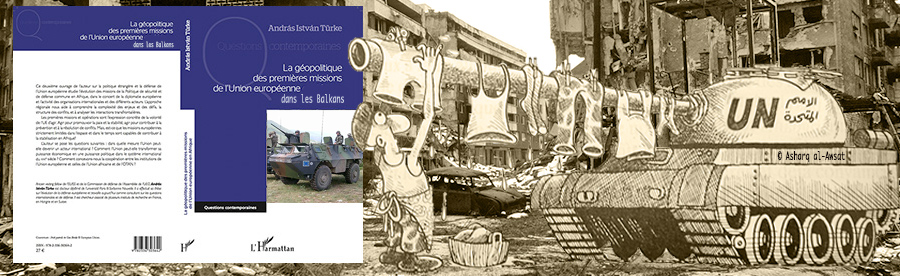
We are looking for sponsors for the English translation of these books, please contact turkeandras(at)gmail(dot)com