
Vous êtes ici
Agrégateur de flux
Indonesia’s MSCI Mess, Explained
Why has the global index provider threatened such a drastic downgrade threat, and is the punishment proportionate to the offense?
Catégories: Diplomacy & Crisis News
Kenya’s Civil Society Calls on COP31 Climate Negotiators To Draw From Grassroots
Tharaka seed custodians pray for seeds at Kibuka shrine ahead of 2026 planting season. Credit: Isaiah Esipisu/IPS
By Isaiah Esipisu
NAIROBI, Nov 6 2026 (IPS)
As the world prepares for the 31st United Nations Conference on Climate Change (COP31) in Antalya, Türkiye, Kenya’s priorities for the negotiations are being shaped by lived experiences of communities who are on the frontline of the climate crisis.
At the recently concluded annual Tharaka Biocultural Festival in Tharaka-Nithi County, farmers gathered to showcase, exchange and celebrate traditional seeds, some which were already on the verge of extinction, and traditional foods that were celebrated by their ancestors over generations.
“This is a semi-arid region, and there were those seeds that our ancestors used to plant, which could easily survive such tough climatic conditions without fail,” said Simon Mitambo, the Chief Executive Officer at the Society for Alternative Learning and Transformation (SALT), the convener of the annual festivals.
“We have been convening these festivals every year for the past 10 years, and as a result we have been able to revive some of the most important seeds, such as the canton melon, which many young people think is a new crop because they had never seen it, yet it was one of the most important fruits in Tharaka, used to prepare Kathongo, the main staple food that fed our forefathers for generations before maize came in to interrupt those diets,” he said.
The community has also been able to revive the communal grazing system to enhance biodiversity recovery, support natural vegetation cover, and aid climate adaptation. They have also managed to recover traditional millet varieties such as Mugeeta (white millet) and pearl millet, multiple indigenous varieties of sorghum, including Mukuumbu, and local, climate-adapted cowpea varieties.
And now, civil society organisations from Kenya, through a workshop that brought Kenyan negotiators along, want such indigenous grassroots adaptation measures to be presented on the climate negotiations table in Antalya.
“Such community-led actions provide a practical pathway to climate adaptation, restoring locally adapted crops that can withstand prevailing environmental conditions and give farming communities renewed hope for reliable harvests,” said Anym Khan, the Acting Chair of the Kenya Climate Change Working Group (KCCWG) during the Pre-COP workshop.
Apart from such lived experiences, the workshop condemned the emerging new narrative observed during the Pre-COP conference in Nadi, Fiji, and the recent IPCC meeting in Addis Ababa, that due to limited resources, the available finance should focus on Least Developed Countries (LDC) and Small Island Developing States (SIDS).
“This is a dangerous narrative for our country because communities living on border lines share climatic conditions naturally, and using the borderline to determine who receives climate finance and who doesn’t is discriminative,” said Lydia Kimani, the Executive Director, Agribusiness for Africa Markets.
For example, in Busia, which is on the border of Uganda and Kenya, people living in Busia, Uganda, will be favoured because Uganda is categorised as an LDC, while those in Busia, Kenya, will miss out on such funding because Kenya is a Lower Medium Income Country (LMIC). Yet the impacts of climate change within the Busia community are exactly the same in both countries.
“We are calling on our negotiators to be so vigilant to avoid that kind of narrative in the negotiations,” said Kimani. “Let the funding continue targeting developing countries, or if the language has to change, then it should be LDC, SIDS and Africa,” she said.
Another concern is the proposal listed by the Subsidiary Body for Scientific and Technological Advice as agenda item 15, “Promoting sustainable dietary practices, reducing animal-based diets and transitioning to plant-based diets.”
“We will need to argue against that agenda item because Article 2.1b of the Paris Agreement clearly states that adaptation should happen without threatening food security,” said Michael Okumu, one of the country’s lead negotiators.
The article on adaptation and resilience states that “enhancing adaptive capacity, fostering resilience, and promoting low-emission development without threatening food production.”
According to Kimani, livestock in Kenya and the entire continent go beyond animal-based diets. “It is from our livestock that we get organic manure, which has kept our soils healthy and productive for generations,” she said.
In Tharaka, livestock, particularly goats, are considered to be very important domestic animals that support culture in terms of performance of sacred rituals; they are used during bridal ceremonies, they provide milk and meat, they are a source of income, particularly for smallholder farmers, and most importantly, they are resilient to tough climatic conditions.
Pastoral communities in the country, such as the Maasai, Borana, Rendile and Kenyan Somalis, depend on livestock entirely for their livelihoods, making it one of the most important sectors in the country and across Africa.
The team also pointed out that transition to low-emission development must address inequality, protect livelihoods and ensure that affected communities participate meaningfully in decisions.
“Energy transitions and critical-mineral extraction must not transfer environmental and social costs to local communities, while agriculture and food systems must be recognised as integral to a just transition,” observed Jacqueline Kimeu, the Senior Climate and Energy Advisor at Christian Aid.
According to the United Nations University, COP 31 must show whether political commitments can translate into more predictable, accessible and effective financial support, particularly for adaptation and countries facing the greatest climate risks.
IPS UN Bureau Report
Related Articles
Catégories: Africa
Guillaume Tabard : «Que peut faire un pouvoir faible face à la rue ?»
CONTRE-POINT - L’impopularité record du tandem Macron-Lecornu, entretient l’envie d’en découdre.
Catégories: France
Le troisième livre de Jordan Bardella «Gouverner» suscitera-t-il l’engouement du premier ?
«Gouverner», le dernier livre de Jordan Bardella va-t-il se vendre dans des niveaux comparables à son premier ouvrage ? C’est toute la question qui se pose pour l’équipe du président du RN qui disposera des chiffres «la semaine prochaine».
Catégories: France
France : French spies mourn two renowned DGSE veterans
Many French spies were among the mourners gathered at the small church of Saint-Enogat in Dinard on 30 October for [...]
Catégories: Defence`s Feeds
Russia/Ukraine : GUR braces for launch of Katran naval drone and Russian defence developments
Russia's Katran naval drone is in the sights of Ukraine's GUR military intelligence. According to Intelligence Online sources, this FPV [...]
Catégories: Defence`s Feeds
Afghanistan/China/Pakistan : Islamabad urging Beijing to establish ties with Afghan armed opposition
Intelligence Online sources in Islamabad have confirmed that Pakistan remains active in its efforts to keep China firmly anchored in [...]
Catégories: Defence`s Feeds
South Korea : Pyun Moo-sam, surprise chief of South Korea's new counterintelligence agency
South Korean President Lee Jae-myung's government made a bold decision in appointing General Pyun Moo-sam to head the Defense Counterintelligence [...]
Catégories: Defence`s Feeds
European Union/Syria : Syrian foreign minister heads to Brussels
Syrian Foreign Minister Assaad al-Shaibani will attend the European External Action Service's Schuman Security and Defence Forum scheduled in Brussels on 17 and 18 November.
Catégories: Defence`s Feeds
France : Ex-chairman of OSINT Industries to analyse seized devices for French police
The French national police, national gendarmerie and customs authorities have picked new service providers to carry out cyber forensics on the digital devices they seize.
Catégories: Defence`s Feeds
US Government Announces Fresh Sanctions Against Cambodia-based Scam Network
The U.S. Treasury Department says that actors linked to Prince Group targeted victims across with world via "sophisticated cyber-enabled fraud schemes."
Catégories: Diplomacy & Crisis News
Leaner, Meaner, More Networked: The Royal Thai Air Force’s Modernization Drive
Driven by lessons from the 2025 border clashes, the RTAF is organizing, training, and equipping a more capable and flexible force.
Catégories: Diplomacy & Crisis News
Vietnam Is Rising, but Will It Leave the Rainbow Behind?
The country's economy is growing rapidly, but its “take it slow” approach to LGBTQ+ rights risks creating a prosperous but intolerant society.
Catégories: Diplomacy & Crisis News
Die Integration der CO2-Entnahme in den Emissionshandel der EU
Im Juli 2026 hat die Europäische Kommission vorgeschlagen, von 2031 bis 2040 zusätzlich zum bisherigen Volumen des Emissionshandels (ETS) 250 Millionen Zertifikate zu versteigern. Mit den Erlösen soll eine entsprechende Menge dauerhafter CO2-Entnahmen innerhalb der EU angekauft werden, die aus der Abscheidung biogener Emissionen oder aus Direct Air Capture mit anschließender geologischer Speicherung stammen. Damit entsteht erstmals eine durch EU-Politik ausgelöste Nachfrage nach Projekten für eine dauerhafte Entnahme, was deren Finanzierbarkeit verbessert. Wie hoch die ETS-Erlöse für den Ankauf von Entnahmezertifikaten ausfallen und wann sie zur Verfügung stehen, ist jedoch mit erheblicher Unsicherheit behaftet. Der Kommissionsvorschlag birgt daher das Risiko, dass er zu geringe und zu späte Anreize für die CO2-Entnahme setzt und so eine Umsetzungslücke bei den EU-Klimazielen hinterlässt. Daher dürfte der politische Druck wachsen, den Kreis zulässiger Methoden auf günstigere Verfahren oder auf internationale Gutschriften auszuweiten. Das hätte auch Auswirkungen auf den Landnutzungssektor und die europäische Entnahmeindustrie.
Catégories: Diplomacy & Defense Think Tank News
Following Wiretapping Arrests, Indonesia Deploys Thousands of Troops for Former President’s Trial
On Tuesday, authorities announced the arrest of three senior police officers for illegally wiretapping the phones of President Prabowo Subianto and other politicians.
Catégories: Diplomacy & Crisis News
For More Than 20 Years, Bangladesh’s One Constant Has Been Political Violence
Violent clashes between rival parties, within their own ranks, and around elections have persisted through successive governments.
Catégories: Diplomacy & Crisis News
I Also Accuse
This is the second article in a four-part series. The remaining two will follow.
I wish to warn distinguished readers that a distorted and unauthorized version of my first article, 'I Accuse', has been posted on the [https://www.thenewyorkernews.com] site.
The original version, published by IPS, is available at [https://www.ipsnews.net/2026/11/i-accuse/].
By Saber Azam
GENEVA, Nov 5 2026 (IPS)
Following my first article with a similar title, I must note that many actors have contributed, and continue to contribute, to the world’s current appalling state and the calamities that may await future generations. When historical injustices committed by colonial powers and their ramifications are ignored; when the drums of war sound in many corners of the world; when international institutions remain powerless; when vulgarity permeates politics and diplomacy; and when heads of state in rich and “poor” countries, along with the leadership of the United Nations (UN), are unable or unwilling to address issues affecting humanity’s destiny, I also declare:
Saber Azam
I Accuse Other LeadersAt the national level, leaders are elected, selected, or imposed with firm claims that they will lead their nations toward a more secure, peaceful, and prosperous future and serve their people with dedication, honesty, and vision. I do not argue here about their accession to power, but rather about their “obligation” to protect their nations’ interests without prejudice toward any constituent group and in concert with other nations, all naturally pursuing similar objectives. Yet bigotry has become a preferred tool and strategy for many leaders seeking to gain or retain power, even in societies considered “democratic.” Moreover, the wealth of a few too often determines the destiny of the many.
Most leaders of countries commonly referred to as “poor or developing” have failed their people. Mired in incompetence, many neglect their duties, serve other interests, and misuse national treasuries to amass personal wealth and property. At the same time, despite possessing enormous natural resources, their populations still lack access to basic social services, their infrastructure lies in ruins, and their economies remain in disarray, requiring support from foreign countries or financial institutions at high interest rates. In contrast, powerful countries appear entrenched in strategies of lip service. The clearest example is so-called “development aid,” often used as a guise to pressure “the needy to submit to the will of the rich.” Like multilateral development initiatives, bilateral aid has produced limited tangible results despite decades of existence and trillions of US dollars spent.
As a standard operating procedure, some states use proxy groups to sow insecurity and to circumvent international law. In both technologically advanced and less developed countries, politics often seems driven by short-term personal or party interests.
International cooperation has lost much of its meaning and substance, becoming “international competition.” While powerful countries may have the military and economic might to pursue this political philosophy, it harms the welfare of less powerful or technologically disadvantaged nations. Honest and sincere cooperation therefore remains elusive. The mighty seek to impose their vision of the world, bullying the less powerful, who often lack the courage to free themselves from dependency and compromise. Many leaders in both groups of countries therefore bear responsibility for the world’s lack of equitable peace, stability, and progress.
I Accuse the UN Leadership
Article 97 of the UN Charter establishes the Secretariat, comprising the Secretary-General and such staff as the Organization may require. Article 99 provides that the “Secretary-General may bring to the attention of the Security Council any matter which in his opinion may threaten the maintenance of international peace and security.” Article 100 further states that “in the performance of their duties, the Secretary-General and the staff shall not seek or receive instructions from any government or from any other authority external to the Organization. They shall refrain from any action which might reflect on their position ….” Article 101 emphasizes that “the paramount consideration in the employment [recruitment] of the staff and in the determination of the conditions of service shall be the necessity of securing the highest standards of efficiency, competence, and integrity.”
When judging the performance of UN Secretaries-General, their senior management teams, and the heads of UN agencies, few have truly met the required standards. This is also a major reason the Organization has failed to fulfill its duties and obligations. Many factors have contributed to UN leadership’s shortcomings in serving humanity. Political and funding pressure from powerful countries seeking to impose their views and preferred candidates—mostly former politicians, ministers, or other prominent figures—for senior UN positions has been a significant obstacle. Such individuals have often proved more loyal to their countries’ policies or political alliances than to the “world-loving” spirit and the principles of impartiality and fairness outlined in the UN Charter. Furthermore, the desire to secure a second term, remain in senior roles for as long as possible, or work in prestigious headquarters such as New York, Geneva, Paris, or Vienna—where political prominence and financial remuneration are most attractive—has left parts of the Organization’s leadership willing to compromise on key principles. As a result, powerful member states have turned such positions into “bargaining chips.” The willingness of some of the most senior UN leaders to yield to external pressure has seriously damaged the Organization’s efficiency and reputation.
The Secretary-General, senior Secretariat officials, and agency heads are expected to uphold international morality and law. They must unequivocally denounce violations of human rights and lawlessness by any state, organization, business, or individual and take decisive action. Leaders who resist political pressure to fulfill their duties have been pushed out. Inefficiency and a lack of accountability are other trademarks of some senior UN managers. In the worst cases, behind-the-scenes deals appear to be the preferred solution because “scandals tarnish the image of the organization.” The internal justice system frequently appears to protect senior managers while being applied more readily to junior staff.
Almost all development agencies, especially the UN Development Program, have failed to meet expectations despite decades of operation and trillions of US dollars spent. Many agencies have overlapping mandates, prompting competition for relevance and funding and leaving them vulnerable to exploitation. No Secretary-General has dared to suggest shutting down some of these agencies, or at least replacing them with more effective bodies and streamlining their mandates. Likewise, reform efforts have amounted to little more than superficial fixes, allowing senior managers to remain in place and the status quo to persist. Therefore, since its inception more than eighty years ago, UN leadership has also played a significant role in the world’s deplorable situation by remaining silent, yielding to external pressure, and accepting unacceptable compromises on crucial issues of peace, security, human rights, and development.
[To be continued]
Saber Azam is a former United Nations official who served at UNHCR and UN-DPKO. He is the author of Soraya: The Other Princess and Hell’s Mouth: A Journey to the Heart of West African Jungles. His third book, Nowhere to Go, will be published soon.
IPS UN Bureau
Excerpt:
This is the second article in a four-part series. The remaining two will follow. I wish to warn distinguished readers that a distorted and unauthorized version of my first article, 'I Accuse', has been posted on the [https://www.thenewyorkernews.com] site.The original version, published by IPS, is available at [https://www.ipsnews.net/2026/11/i-accuse/].
Catégories: Africa
Communiqué de presse - Les députés européens accueilleront des parlementaires d’Afrique, des Caraïbes et du Pacifique
La semaine prochaine, près de 160 parlementaires des États d’Afrique, des Caraïbes et du Pacifique ainsi que des députés se réuniront au Parlement européen pour débattre des défis mondiaux.
Source : © Union européenne, 2026 - PE
Source : © Union européenne, 2026 - PE
Catégories: Union européenne
Falklandinseln – Warum Argentinien sie haben will
Die Falklandinseln liegen vor dem südlichsten Zipfel von Südamerika. Sie gehören zu Großbritannien, doch schon lange erhebt Argentinien Ansprüche – 1982 kam es deshalb zum Krieg. Jetzt hat Argentiniens Präsident Milei den Konflikt neu angefacht.
Catégories: Diplomacy & Defense Think Tank News
Pages


© 2012-2018 Europa Varietas Foundation © 2015-2018 Europa Varietas Association
www.europavarietas.org | info(@)europavarietas(dot)org | Switzerland
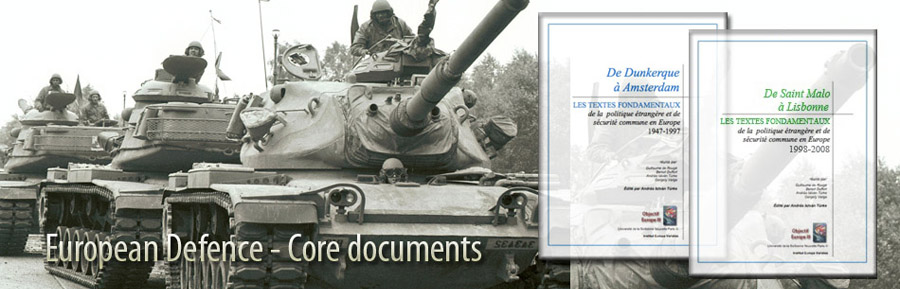
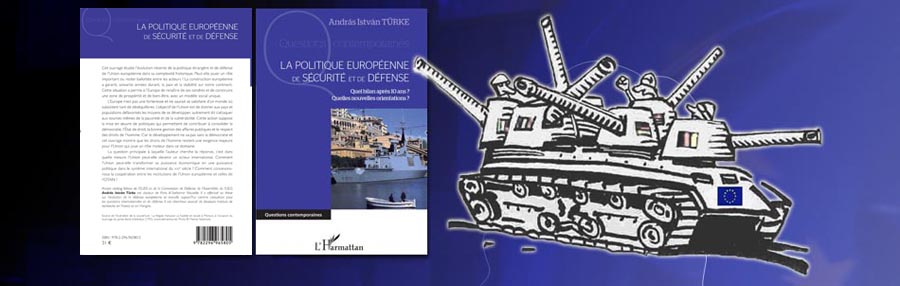
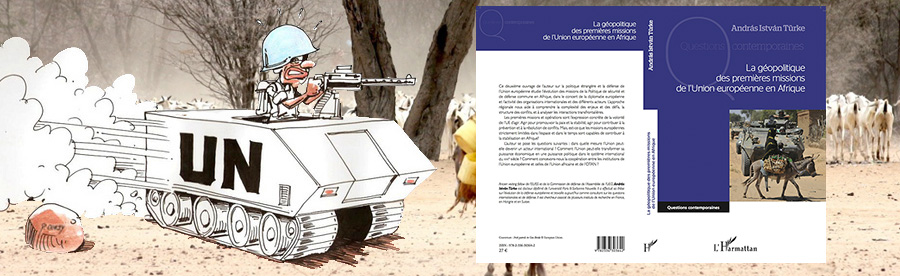
We are looking for sponsors for the English translation of these books, please contact turkeandras(at)gmail(dot)com