
Vous êtes ici
Agrégateur de flux
Exercise Tarang Shakti: A Mirror to India’s Multipronged Engagements
The exercise reflects two trends: the Indian military’s deepening interoperability with key partner nations, and India’s multi-vector foreign policy.
Catégories: Diplomacy & Crisis News
Finding Silver Linings Amid Haze of Climatic Uncertainty
Singer-songwriter Yusuf ‘Cat Stevens’ Islam speaks during the closing session of the Global Tipping Points Conference in Kuala Lumpur. Credit: Zofeen T. Ebrahim
By Zofeen Ebrahim
KUALA LUMPUR, Oct 16 2026 (IPS)
With the city enveloped in a cloak of haze, the urgency of tackling the climate crisis could hardly have been clearer as the four-day Global Tipping Points Conference 2026 drew to a close at Malaysia’s Sunway University on Thursday.
At the conference, speakers stressed the need for humanity to remain within planetary boundaries, or the “safe operating space”.
Crossing these boundaries could have catastrophic consequences, warned Professor Johan Rockström, director of the Potsdam Institute for Climate Impact Research and one of the conference organisers.
He highlighted the dangers of triggering irreversible changes in major Earth systems. Some of the bulwarks have already been breached, manifesting themselves in the form of collapsed ice sheets, bleached corals, shrinking wildlife habitats and the slow death of rainforests.
Dong Wang’s park in Bangkok. Credit: Zofeen T. Ebrahim
‘Tipping points’ conference brings together climate scientists, activists, and finance gurus; highlights success stories from around the world
All of this threatens food security, causes displacement, damages human health and destabilises economies.
With plenty of reasons to be pessimistic – social and political polarisation, rising inequality and poverty, and wars among them – the message was nevertheless one of urgency rather than despair. “The science has matured, evidence is there… it is time for action… that’s the natural step,” said Sultan Nazrin Shah of Perak.
But there is another side to the tipping-point story.
Professor Timothy Lenton, chair of Climate Change and Earth System Science at the University of Exeter and one of the organisers, spoke about “positive tipping points.” Lenton, who has studied tipping points since the 1990s, argued these could help societies move towards more sustainable futures. Citing Pakistan’s solar boom and Norway’s rapid adoption of electric vehicles, he pointed to transformative shifts that can happen within a relatively short period.
But protecting ecosystems is as important as technologies, said Acehnese forest conservator Farwiza Farhan, while making a compelling case for the protection of the Leuser Ecosystem – a tropical rainforest reserve in Sumatra and one of the last places on Earth where tigers, elephants, rhinos and orangutans coexist in the wild.
Others turned to imagining the future. Anab Jain, co-founder of London-based Superflux, described Mitigation of Shock, an immersive installation set in a fictional 2050. Visitors enter an imagined apartment shaped by a future in which some of the most severe impacts of climate change have already occurred. More than 100,000 people have visited it since 2017, she said.
Professor Jeffrey Sachs, director of the Center for Sustainable Development at Columbia University, broadened the discussion to social, economic and political tipping points. If these systems tipped in the wrong direction, he warned, they could trigger a “cascade of devastating consequences.”
Planetary changes and social, economic and political conditions are deeply interconnected, said Sachs, making cooperation essential to averting disaster. He repeatedly pointed to poverty and inequality as forces that could deepen instability but argued that all was not lost. The tools for change – economic wellbeing, social inclusion, environmental sustainability, and peace and cooperation among nations – already exist, he said.
Discussions also covered deforestation, land-use change, governance failures and the rise of artificial intelligence. Turning tools into action, however, requires money, policy and political will.
“But where’s the money?” many asked, urging encouragement for supportive policies and a pipeline of “bankable projects” that protect nature, so that economic incentives favour regeneration over extraction. One such approach came from Dr Ralph Chami, founder of Blue Green Future, who outlined his concept of “regenerative GDP”, i.e. recognising the value of “living nature” and accounting for it on the balance sheet.
Timothy Lenton explaining the positive tipping points. Credit: Zofeen T. Ebrahim
“Why kill the goose that lays the [golden] egg?” he asked, contrasting a living coral reef in the Maldives – which provides a habitat for fish and plays a role in the marine carbon cycle – with a bleached one that can threaten both tourism and fisheries.
But money and markets are only part of the equation. Dr Jemilah Mahmood, executive director of the Centre for Planetary Health at Sunway University, insisted on channelling youth energy. “Give them space at policy [discussions], send them to COPs not as tokenism, but let them negotiate. It’s their future,” she said.
As an example of what young people can achieve, Mahmood pointed to Pacific Island law students whose campaign helped bring climate change and human rights before the International Court of Justice (ICJ). Their efforts contributed to a landmark advisory opinion in July 2025, clarifying states’ legal obligations on climate change. Climate litigation and the role of legal action in holding governments accountable also featured in the wider conversation.
The highlight of the conference was definitely the success stories from around the world that offered the most tangible hope.
For example, Chinese urban planner Dong Wang, who specialises in sponge cities and ecological planning, shared a low-cost, low-maintenance and replicable project in the heart of Bangkok – the transformation of a former tobacco factory into the 102-acre Benjakitti Forest Park, to which more than 200 bird species have since returned.
Eva Gladek of Metabolic, who spoke about NetZeroCities, showed how 17 old houseboats in Amsterdam were retrofitted with clean technologies and transformed into energy-efficient offices and workspaces.
Mumbai-based Sheela Patel, director of the Society for the Promotion of Area Resource Centres, drew on five decades of work with people living in informal settlements to highlight another kind of urban resilience. Through the ‘Roof Over Our Heads’ campaign, women supported by young professionals are helping make homes more resilient to rain, strong winds and extreme heat.
And these efforts are not simply one-off experiments. Patel said the work has been documented and shared, with more than 100 labs established across 20 countries to help communities test and replicate solutions. Gladek, meanwhile, is helping 100 European cities work towards climate neutrality.
The thought-provoking conference had opened on a note of faith, with Sultan Nazrin Shah speaking of humanity’s responsibility to care for the planet, which he said “comes with privilege and obligation” but is “not a burden to be feared”.
It ended on a rather philosophical and spiritual note, with British singer-writer Yusuf ‘Cat Stevens’ Islam urging people to become the change rather than expecting the world to change. “Never stop being a child, as there is light in their eyes and they see hope,” he said, also stressing the need to bring spirituality into education. “Look how the curriculum has been colonised.”
For positive tipping points to hold, science alone will not be enough, concluded Mahmood. It will also need the voices of those whose futures are at stake.
Note: Published with the permission of Dawn.
IPS UN Bureau Report
Catégories: Africa
‘Prioritize Social Inclusion as Rapid Transformations Risk Leaving Millions Behind’
UN DESA Assistant Secretary-General Bjørg Sandkjær (right) and Rashmi Banga, Chief of the Development Research Branch, brief journalists at UN Headquarters on the launch of the 2026 World Social Report, emphasizing the need for social inclusion as economic, digital, and climate transformations widen existing divides. Credit: UN DESA / P. Vasic
By Oritro Karim
UNITED NATIONS, Oct 16 2026 (IPS)
The United Nations Department of Economic and Social Affairs (UN DESA) new report, which addresses the rapid global transformations driven by artificial intelligence (AI), demographic shifts, climate change, and conflict, highlights the widening disparities in employment, social inclusion, and access to services.
The report titled The New Economics of Social Inclusion: Making Transformations Work for All was released on October 5.
Despite decades of progress in income, health, and education that drove development worldwide, the report warns that millions of people risk falling behind. Drawing on data collected over 25 years and across 168 countries, this year’s edition introduces a new Socially Inclusive Transformation (SIT) dashboard, which examines how a nation’s economic, digital, and energy transformations align with social and economic inclusion.
“On one hand, rapid transformations are reshaping our world: digital technologies, artificial intelligence, renewable energy, and the demographic and economic transition,” said UN Secretary-General António Guterres during a press briefing at the UN Headquarters coinciding with the report’s release. “On the other hand, these transformations are not working for all. Poverty and deprivation are widespread. Billions are locked out of opportunities because of income, gender, age, disability, ethnicity, or many other fault lines that undermine equality.”
In 2025, UN DESA found that roughly 58 percent of workers were informally employed, while approximately 27 percent of young women aged 15 to 24 were neither employed nor in education or training programs. The same year, UN DESA estimated that around 26 percent of the world’s population, or 2.2 billion, still lacked internet access. Roughly 730 million people lacked access to electricity. The report underscores that even among digitally connected communities, affordability and service quality continue to hinder meaningful participation.
Between 2000 and 2024, the agency reported that more than 50 countries experienced rising income inequality, including in 23 high-income countries. These gaps continue to stifle productivity and weaken community resilience to economic shocks from technological shifts, climate disasters, and geopolitical tensions.
Marginalized groups—including women and girls, youths, disabled persons, migrants, and Indigenous peoples—disproportionately experience limited access to essential resources, economic opportunities, and decision-making processes.
Rashmi Banga, Chief, Development Research Branch, Economic Analysis and Policy Division at UN DESA, stressed that transformations do not automatically translate into inclusion. She noted that none of the top five best-performing countries in transformation, specifically Malta, Ireland, the U.S., Singapore, and China, rank among the top five in inclusiveness, which mainly consist of European countries. The report reveals that numerous African countries continue to fall behind, especially with the proliferation of new digital technologies and the energy transition.
The report highlights the compounding climate crisis as a major driver of social exclusion, noting that approximately 887 million of the 1.1 billion people living in multidimensional poverty are also exposed to at least one major climate hazard. These impacts are most pronounced in regions entrenched in humanitarian crises, where communities have the fewest resources to adapt, significantly threatening long-term economic resilience.
Guterres warned that cascading global shocks, such as the Middle East crisis, are compounding existing threats through rising food, fertilizer, and fuel prices, resulting in more than 100 countries lowering their gross-domestic product forecasts this year alone.
UN DESA also identifies the growing digital divide driven by artificial intelligence as a major threat to social inclusion. While the report shows AI’s potential in enhancing agricultural productivity and generating meaningful gains for rural communities, it warns that significant threats remain. Entire communities with limited affordable, digital connectivity, coupled with insufficient digital skills, risk falling further behind.
Bjørg Sandkjær, UN DESA’s Assistant Secretary-General for Policy Coordination, told reporters that AI often reproduces “biases that exist in the world today” during hiring processes. She warned that this has severe implications for employment, particularly for women.
Banga added that equitable and effective AI governance is critical in preventing these biases and fostering economic and social inclusion. She highlighted India and China as examples of countries implementing AI education into school curriculum, while France has established access to digital infrastructure as a legal right.
Additional data from the report reveals that delaying social inclusion carries a “measurable economic cost.” UN DESA estimates show that if investments in social protection mechanisms are delayed by another decade, countries could face a potential decline in economic output by roughly 12 percent compared to countries that invested early. Conversely, efforts to include young people in employment could raise national GDP by 9.6 percent over the next decade.
“Inclusive societies are more productive, resilient, and prosperous,” said Guterres. “The report urges investments in education, job creation, and skill training, so all people can benefit from technological advancements and the growth of new industries. It calls for inclusive institutions and policymaking to ensure all voices are represented, and it advocates equity-focused approaches to labor markets and taxation to open opportunities for all people, no matter who they are or where they live.”
Banga emphasized that national investments alone cannot achieve adequate social inclusion without strong international cooperation. Multilateral support is pivotal in expanding fiscal space, providing long-term development financing, and widening access to digital infrastructure. Sandkjær called on governments to reframe social inclusion not only as an economic imperative, but as a strategic investment in long-term stability, resilience, and productivity. She also urged for greater integration of social commitments into macroeconomic planning.
“As transformations gather pace, there is no time to be lost by bringing social commitments into the heart of economic policymaking; we can unleash a virtuous cycle of greater inclusion and stronger growth,” said Sandkjær.
IPS UN Bureau Report
Catégories: Africa
If the UN COP17 Is Serious About Biodiversity, It Needs to Follow the Money
Woodlands in nearly every forested country face threats from climate-change-driven fires and deforestation pressures fueled by economic interests exploiting natural resources. Credit: Imran Schah/IPS
By Stephanie Dowlen
MALMO, Sweden, Oct 16 2026 (IPS)
On Monday, governments from across the world will gather in Armenia for COP17, the UN biodiversity summit, to assess progress on the global agreement to halt and reverse biodiversity loss. For anyone who cares about the livability of our planet for future generations, and the richness of life on earth, the stakes could hardly be higher. Policy makers will debate targets, implementation, and the lack of money to protect nature, in particular the failure of developed countries to fulfil their obligations. But there is a more basic question that should put at the center of those discussions: what happens when the financial system governments are counting on to fund nature protection is also financing its destruction?
A new analysis by the Forests & Finance coalition provides an alarming answer. Since 2020, banks have provided $595 billion to companies operating in high-risk agribusiness and metal and mineral mining sectors across tropical forest regions. Of that, $351 billion went to agro-commodities and $244 billion to mining. These are among the primary industries driving deforestation, land degradation, pollution and conflicts with communities across the tropical forest regions of South America, Southeast Asia and Central and West Africa.
The significance of that figure goes beyond the amount of money involved. It exposes a fundamental weakness in the way the biodiversity crisis is being addressed. Governments have committed under the Kunming-Montreal Global Biodiversity Framework to aligning financial flows with biodiversity goals, yet financial institutions remain largely free to finance nature destruction as a risk to themselves rather than as harm they may in fact be helping to cause.
Nature-related risks are not like ordinary financial risks. A bank might assess how drought could affect a company’s revenues without adequately considering whether the company itself helped create that vulnerability by clearing forests, draining wetlands or degrading watersheds. By the time those consequences appear on a balance sheet, an ecosystem may already have crossed a threshold from which recovery is extremely difficult. The report finds that current financial risk frameworks and sustainability policies remain woefully ill-equipped to assess these real-world impacts.
The consequences are already visible in some of the world’s most important forest landscapes. In Brazil, banks have provided $83 billion to the soy sector since 2020, including $6.8 billion this year alone, despite the collapse in January of the Amazon Soy Moratorium, which had been credited with reducing soy-driven deforestation by 69 percent in monitored areas. The withdrawal of major exporters from the agreement removed a critical safeguard and traceability system keeping forests standing, yet banks have not publicly taken a position on its collapse.
Indonesia presents a similarly disturbing pattern. Banks have provided $67.1 billion to the country’s notoriously destructive pulp and palm oil sectors since 2020, including financing for companies associated with repeated breaches of their own commitments to avoid deforestation, peatland development and exploitation. Peat drainage and deforestation leave landscapes less able to retain water and resist fire, increasing the vulnerability of communities to climate extremes.
At the same time, the financial flows behind mining are growing rapidly. Governments and companies are scrambling to secure copper, lithium, nickel, cobalt and other minerals needed for energy technologies, while demand is also being driven by geopolitical competition and the expansion of artificial intelligence infrastructure. Financing for mining in tropical forest-rich countries increased 55 percent between 2016 and 2025, with lithium financing increasing more than elevenfold and nickel financing by 183 percent.
There is a danger in treating every new mine as part of a clean transition simply because its minerals may eventually be used in low-carbon technologies. Mining in tropical forest regions is associated with ecosystem destruction, pollution, land conflicts, violence and violations of Indigenous Peoples’ rights. A transition that sacrifices some of the world’s most biodiverse landscapes and the people who depend on them is not sustainable, whatever the end product.
What makes this particularly troubling is how little protection many banks actually require before providing this financing. The average score in the report’s assessment of bank policies covering forest-risk agro-commodities is only 25 percent, while 39 percent of banks assessed scored below 20 percent. JPMorgan Chase, one of the world’s largest and most influential banks, scored just 18 percent.
Voluntary commitments have done little to close this gap. Governments now need to establish binding rules requiring financial institutions to conduct meaningful environmental and human rights due diligence across corporate groups and supply chains, disclose where their money is going and what impacts that financing is associated with, and face consequences when they finance severe and unresolved harms.
Financial regulators also need to recognize biodiversity loss as more than a distant environmental concern. Tropical forests underpin food systems, water supplies and economic activity, while their degradation can create cascading risks across economies. Yet there is still no equivalent to the regulatory framework used for financial institutions considered systemically important, even as the degradation of these natural systems threatens consequences that extend far beyond individual companies or projects.
But banks should not wait for governments to act. They can establish clear red lines against deforestation, ecosystem conversion and serious human rights abuses, make those requirements enforceable in financing agreements, independently verify compliance and suspend or terminate financing when clients fail to address serious violations. Those safeguards must respect Indigenous Peoples’ rights, including Free, Prior and Informed Consent, and provide affected communities with meaningful access to remedy.
The choice facing governments at COP17 is therefore not simply how much money to mobilize for biodiversity. It is whether they are prepared to stop the financial system from undermining those investments in the first place.
The evidence is increasingly difficult to dismiss. Hundreds of billions of dollars are flowing into industries that are rapidly degrading the natural systems on which economies, and the web of life, depend. Governments have already promised to align financial flows with biodiversity goals. Now they need to make that commitment real.
At COP17, following the money would be a good place to start.
IPS UN Bureau
Catégories: Africa
Pakistan : Despite favourable winds, Asim Munir and ISI struggle to keep India in check
India's Firewall-2026 counter-intelligence operation has been sending shockwaves through the ranks of the Indian Navy over the last few days. [...]
Catégories: Defence`s Feeds
France : Airbus sets out new plans for Quarkslab
Having secured approval from the French Ministry of Finance earlier this month for its acquisition of Quarkslab, Airbus can now [...]
Catégories: Defence`s Feeds
China/France : Le Président: a favourite Paris haunt of French politicians and Chinese spies
A gallery of photographs adorns the imposing entrance hall of Le Président, a historic Chinese restaurant in the Belleville neighbourhood [...]
Catégories: Defence`s Feeds
France/Indonesia : Jakarta delegation's planned Paris trip revives hopes of deals
Indonesian Defence Minister Sjafrie Sjamsoeddin is expected to attend the naval defence industry exhibition Euronaval near Paris from 3 to [...]
Catégories: Defence`s Feeds
Greece/Turkey/United States : Balkans, energy: Tom Barrack bolstered by Kimberly Guilfoyle's ousting
The departure of US ambassador to Greece Kimberly Guilfoyle, who was asked to resign by the Trump administration, has bolstered [...]
Catégories: Defence`s Feeds
Myanmar Establishes New Committee to Advance Normalization With ASEAN
The creation of the body, which comes ahead of next month's ASEAN Summit in Manila, is intended to “regain the country’s original role and rights” in the bloc.
Catégories: Diplomacy & Crisis News
EU Climate Policy to 2040: Initial Steps towards More Flexibility and Effort Sharing
By setting a 90 per cent emissions reduction target for 2040, the European Union (EU) has taken a key step forward. This decision marks the start of a substantial realignment of its core climate policy instruments. The Commission’s implementation package is expected to comprise more than a dozen legislative proposals, the final form of which is to be negotiated by the Council and the European Parliament. The proposals include, among other items, the crediting of emission reductions from international mitigation projects within the EU Emissions Trading System (ETS), the further development of rules governing land use, land-use change and forestry (LULUCF) and the integration of carbon dioxide removal (CDR) into EU climate policy. Moreover, a political decision is needed on the future role of national targets within the EU’s climate policy architecture. Although the EU can still be regarded as a frontrunner at the global level, given its 90 per cent emissions reduction target, the inclusion of flexibilities in achieving this target creates uncertainties that significantly undermine the credibility and effectiveness of EU climate policy. It is therefore crucial that the Commission promptly presents its detailed proposals on international carbon credits and on updating the overall regulatory framework.
Catégories: Diplomacy & Defense Think Tank News
KI als Risiko für die Demokratie
In vielerlei Hinsicht ist Künstliche Intelligenz (KI) eine »normale« Technologie. Sie kann wie andere Technologien für unterschiedliche Zwecke eingesetzt werden, auch in politischer Hinsicht. Die enormen Entwicklungssprünge der KI in den letzten Jahren verstärken insofern Herausforderungen, mit denen Demokratien schon zuvor konfrontiert waren. Insbesondere erlauben KI-Systeme qualitativ wie quantitativ eine neue Stufe an Überwachung und Manipulation. Hinzu kommt jedoch eine Eigenschaft, die über bisher bekannte Technologien hinausgeht, nämlich die immer deutlicher hervortretende Fähigkeit von KI-Systemen, sich eigenständig weiterzuentwickeln. Wird diese Fähigkeit nicht effektiv eingehegt, droht demokratischen Systemen ein massiver Kontroll- und Handlungsverlust.
Catégories: Diplomacy & Defense Think Tank News
Indonesian President Replaces Head of Disaster Management Agency
The move comes amid growing scrutiny of Jakarta's response to the forest and peatland fires that have drastically reduced air quality across the region.
Catégories: Diplomacy & Crisis News
Briefing - Monthly Highlights: Research digest for committees - October 2026 - PE 789.227 - Committee on Legal Affairs - Committee on Civil Liberties, Justice and Home Affairs - Committee on Employment and Social Affairs - Committee on Culture and...
Source : © European Union, 2026 - EP
Catégories: Union européenne
Briefing - Monthly Highlights: Research digest for committees - October 2026 - PE 789.227 - Committee on Legal Affairs - Committee on Civil Liberties, Justice and Home Affairs - Committee on Employment and Social Affairs - Committee on Culture and...
Source : © European Union, 2026 - EP
Catégories: Europäische Union
Briefing - Monthly Highlights: Research digest for committees - October 2026 - PE 789.227 - Committee on Legal Affairs - Committee on Civil Liberties, Justice and Home Affairs - Committee on Employment and Social Affairs - Committee on Culture and...
Source : © European Union, 2026 - EP
Catégories: Défense, European Union
Cambodia’s NGO Sector Is Collapsing. Does It Matter?
Imported by international donors in the 1990s, NGOs have supplanted rather than strengthened local forms of political organizing.
Catégories: Diplomacy & Crisis News
Nepal Should Not Shoulder the Himalayan Climate Crisis Alone
“No matter how much we reform our internal engineering, a frontline nation simply cannot manage the shocks of a global systemic failure alone.”
Catégories: Diplomacy & Crisis News
International Day for the Eradication of Poverty 2026
By External Source
Oct 15 2026 (IPS)
A safe home is more than a roof over our heads.
It is the foundation of health, security, opportunity and human dignity.
Yet for billions of people, that foundation remains out of reach.
According to UN-Habitat, 2.8 billion people worldwide face some form of inadequate housing.
More than one billion live in slums and informal settlements.
And over 300 million people are homeless.
The housing crisis is unfolding alongside a wider struggle against poverty.
The United Nations estimates that 826 million people will live in extreme poverty in 2026 — surviving on less than three dollars a day.
That’s one in every ten people worldwide.
And having a job offers no guarantee of escaping poverty.
In 2025, 284 million workers were living in extreme poverty.
Meanwhile, 3.8 billion people remain without any form of social protection.
Conflict, climate-related disasters, displacement and rising living costs are placing further pressure on vulnerable communities.
Against this backdrop, the 2026 International Day for the Eradication of Poverty calls for Safe Homes for All, under the theme United for Peace and Human Rights.
The United Nations is urging governments to prioritize adequate housing, mobilize resources and involve people experiencing poverty in decisions that affect their lives.
Because ending poverty means more than increasing incomes.
It means ensuring that everyone has a safe place to live, access to essential services, and the opportunity to build a secure future.
This October 17th, the message is clear:
A safe home is not a privilege. It is a human right.
IPS UN Bureau
Catégories: Africa
Clean Energy Must Avoid the Mistake of Overdependence
The world must diversify its energy dependence, not simply relocate it from the Middle East to China.
Catégories: Diplomacy & Crisis News
Pages


© 2012-2018 Europa Varietas Foundation © 2015-2018 Europa Varietas Association
www.europavarietas.org | info(@)europavarietas(dot)org | Switzerland


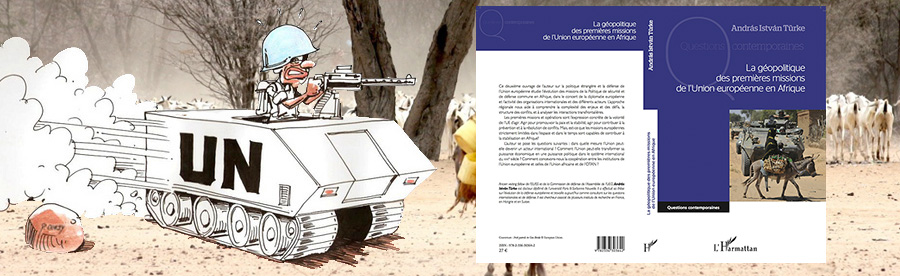
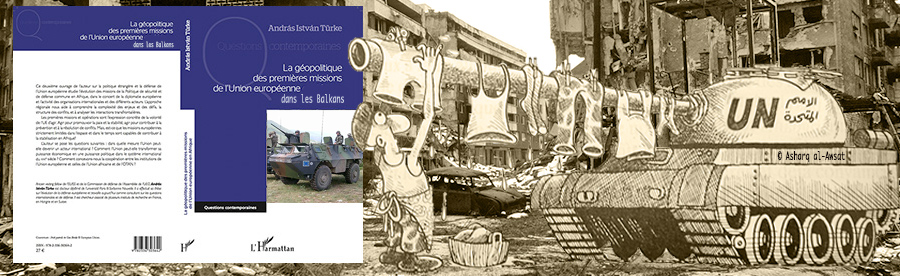
We are looking for sponsors for the English translation of these books, please contact turkeandras(at)gmail(dot)com