
Vous êtes ici
Agrégateur de flux
Social and environmental trade-offs and safeguards in Hydrogen production in the Middle East and North Africa region: insights from Morocco and Oman
Several countries in the Middle East and North Africa (MENA) have launched initiatives to produce green hydrogen for their own use and for export, raising the question of what environmental and social effects such initiatives may generate, and how these can be anticipated and mitigated. Oman and Morocco are among the region’s frontrunners. Because all projects in these countries are still in the preparatory phase and no large-scale facility is yet in commercial operation, they offer the unusual opportunity to observe how safeguards, stakeholder participation and risk management are being configured before build-out, that is, before conditions are created that may not be easily reversed, thereby creating path dependencies.
Drawing on desk-based analysis, a comparative media review, and stakeholder interviews conducted in both countries, this study examines the environmental and social impacts of hydrogen projects in the two countries through the lens of four inter-related dimensions: (i) resource endowments, (ii) environmental risks, (iii) decision-making and governance arrangements, and (iv) social equity dynamics. It finds that the two states have developed different institutional settlements.
While environmental and social safeguards are increasingly integrated into hydrogen development, often drawing on international standards, their practical implementation often remains shaped by complex and fragmented institutional arrangements. This raises questions about the allocation of mandates, the distribution of responsibilities, the consistency of procedures and the capacity for long-term monitoring and traceability. The study therefore argues that institutional design is central to sustainable hydrogen development, as environmental and social risks may otherwise evolve faster than regulatory capacities, highlighting the need for robust impact assessment, monitoring frameworks and transparent reporting mechanisms.
Dr Tobias Zumbraegel is a senior researcher at the University of Heidelberg and sustainability consultant at Momentum Novum GmbH.
Catégories: Diplomacy & Defense Think Tank News
Stelczer Virág: A venezuelai migráció, mint regionális biztonságpolitikai kihívás, Kolumbia példáján
A venezuelai migráció az elmúlt évtized egyik legnagyobb népességmozgásává vált, amelynek következményei messze túlmutatnak Venezuela határain. Az UNHCR 2025 végén közzétett adatai szerint közel 7,9 millió ember hagyta el Venezuelát, közülük több mint 6,9 millióan Latin-Amerika és a Karib-térség országaiban élnek. A válság különösen erősen érinti Kolumbiát, amely földrajzi közelsége, a két ország közötti történelmi kapcsolatok és a hosszú közös határ miatt a venezuelai migráció egyik legfontosabb cél- és tranzitországává vált. A Migración Colombia 2024. év végi becslése alapján 2.815.611 venezuelai migráns élt Kolumbiában. A venezuelai migráció ezért Kolumbia számára már nem csupán humanitárius vagy szociális kérdés, hanem összetett regionális biztonságpolitikai kihívás is (UNHCR, n.d.).
A tömeges kivándorlás hátterében Venezuela hosszú ideje fennálló politikai, gazdasági és humanitárius válsága áll. A kivándorlás különösen a 2010-es évek második felében gyorsult fel, és rövid idő alatt alapvetően megváltoztatta Kolumbia migrációs helyzetét. A World Bank szerint 2015-ben még csak mintegy 148 ezer hosszú távú bevándorló élt Kolumbiában, 2021-re azonban már körülbelül 1,7 millió venezuelai tartózkodott az országban. Fontos ugyanakkor különbséget tenni a migráció és a biztonsági fenyegetés között. Nem önmagukban a venezuelai migránsok jelentenek veszélyt, hanem azok a problémák, amelyek a nagy létszámú és részben irreguláris migráció, a gyenge állami jelenlét, a szervezett bűnözés és a korlátozott intézményi kapacitások találkozásából alakulnak ki (Rossiasco és de Narváez, 2023).
A probléma egyik legfontosabb eleme maga a kolumbiai-venezuelai határ. A két ország közös határa körülbelül 2.200 kilométer hosszú, amelyen 7 hivatalos, ugyanakkor több száz informális átkelőhely található. A határ földrajzi adottságai miatt annak teljes ellenőrzése rendkívül nehéz, ezért az irreguláris migráció kezelése nem oldható meg kizárólag hagyományos határőrizeti eszközökkel (IOM, n.d.). A Migración Colombia 2024 végi adatai szerint a Kolumbiában élő venezuelaiak közül 454.514 ember tartózkodott irreguláris migrációs helyzetben. Fontos azonban, hogy az irreguláris státusz nem feltétlenül jelent illegális határátlépést, sokan szabályosan érkeztek az országba, de később lejárt a tartózkodási engedélyük. Ez jól mutatja, hogy a biztonsági probléma nem egyszerűen a határ fizikai védelméről, hanem a migráció megfelelő adminisztratív kezeléséről is szól (Migración Colombia, 2024).
Az irreguláris migráció emellett összekapcsolódhat az embercsempészet és az emberkereskedelem problémájával. A hivatalos dokumentumokkal nem rendelkező, informális útvonalakon közlekedő migránsok kiszolgáltatottabbak a bűnözői csoportoknak, valamint a munkaerő- és szexuális kizsákmányolásnak. Az R4V 2024-es elemzése szerint regionális szinten körülbelül 2,2 millió venezuelai maradt irreguláris helyzetben, miközben 4,5 millió ember valamilyen regularizációs vagy nemzetközi védelmi rendszer segítségével rendezni tudta jogi helyzetét (R4V, n.d.).
A migráció másik fontos következménye a kolumbiai közszolgáltatásokra nehezedő nyomás. A Migración Colombia adatai alapján 2017 márciusa és 2024 augusztusa között mintegy 32,2 millió egészségügyi ellátási eseményt regisztráltak venezuelai migránsok esetében. 2020-2024 között pedig közel 200 ezer venezuelai anyától született gyermek szülészeti ellátása történt kolumbiai intézményekben, ami az adott időszak összes ellátott szülésének 7,2%-át jelentette. Az oktatásban is jelentős változás következett be, a venezuelai tanulók aránya a kolumbiai oktatási rendszerben 4,5%-ról 6,8%-ra emelkedett 2019 és 2023 között. Ezek az adatok jól érzékeltetik, hogy a nagy létszámú és területileg koncentrált migráció komoly alkalmazkodást követel az államtól (Migración Colombia, 2024). A World Bank korábbi számításai a migráció rövid távú költségvetési terhét évente a kolumbiai GDP 0,4–0,5%-ára becsülték, ugyanakkor arra is rámutattak, hogy a megfelelő munkaerőpiaci integráció hosszabb távon gazdasági előnyökkel járhat (Rossiasco és de Narváez, 2023).
Kolumbia egyik legfontosabb válasza ezért a venezuelai migránsok jogi helyzetének rendezése lett. 2021-ben létrehozták az Estatuto Temporal de Protección para Migrantes Venezolanos (ETPV) rendszerét, amely tízéves ideiglenes védelmi keretet biztosít, és lehetőséget teremt a legális tartózkodásra, munkavállalásra, valamint bizonyos közszolgáltatások igénybevételére. 2024 áprilisára mintegy 2,2 millió venezuelai regisztrált a rendszerben, és közülük körülbelül 1,9 millióan rendelkeztek ideiglenes védelmi engedéllyel (Migración Colombia, 2024). A regularizáció biztonságpolitikai szempontból is jelentős, hiszen a dokumentált személyek könnyebben bekerülnek az állami nyilvántartásokba és a formális munkaerőpiacra, miközben csökkenhet az informális gazdaságtól és illegális közvetítőktől való függőségük.
Összegezve, Kolumbia példája jól mutatja, hogy a venezuelai migráció biztonságpolitikai jelentősége túlmutat a hagyományos határvédelem kérdésén. A több millió ember érkezése egyszerre jelent kihívást a határellenőrzés, a szervezett bűnözés elleni fellépés, az állami intézmények és a közszolgáltatások működése, valamint a migránsok emberi biztonsága szempontjából. A kolumbiai tapasztalatok alapján a migráció biztonsági vonatkozásai szorosan összefüggnek a jogi státusz rendezésével és a társadalmi-gazdasági integrációval. A regularizáció elősegítheti a migránsok beilleszkedését, miközben az állami ellenőrzést és a jogérvényesítést is hatékonyabbá teheti. A venezuelai válság így rávilágít arra, hogy a modern biztonságpolitikában az állambiztonság és az emberi biztonság nem egymással ellentétes szempontok, hanem egy összetett regionális kihívás egymást kiegészítő
Források:
IOM (n.d.) Displacement Tracking Matrix – Colombia. Elérhető itt: https://dtm.iom.int/colombia?page=2 (Hozzáférés dátuma: 2026. szeptember 22.)
IOM (n.d.) DTM Activities 2014–2016 – Colombia. Elérhető itt: https://dtm.iom.int/reports/colombia-dtm-activities-2014-2016 (Hozzáférés dátuma: 2026. szeptember 22.)
Migración Colombia (2024) Salud migrantes venezolanos – Corte diciembre 2024. Elérhető itt: https://nexusmigracion.cancilleria.gov.co/sites/default/files/documentos/2026-03/Salud_migrantes_venezolanos_Dic%20%282024%29_Migracion_Colombia.pdf (Hozzáférés dátuma: 2026. szeptember 22.)
R4V (n.d.) Regional Refugee and Migrant Response Plan 2025–2026. Elérhető itt: https://rmrp.r4v.info/rmrp-2025-2026/ (Hozzáférés dátuma: 2026. szeptember 22.)
R4V (n.d.) Refugee and Migrant Needs Analysis 2024. Elérhető itt: https://rmrp.r4v.info/rmna2024/ (Hozzáférés dátuma: 2026. szeptember 22.)
Rossiasco, P. és de Narváez, P. (2023) Adapting public policies in response to an unprecedented influx of refugees and migrants: Colombia case study of migration from Venezuela. World Bank. Elérhető itt: https://thedocs.worldbank.org/en/doc/7277e925bdaa64d6355c42c897721299-0050062023/original/WDR-Colombia-Case-Study-FORMATTED.pdf (Hozzáférés dátuma: 2026. szeptember 22.)
UNHCR (n.d.) Venezuela Situation. Elérhető itt: https://www.unhcr.org/emergencies/venezuela-situation (Hozzáférés dátuma: 2026. szeptember 22.)
A Stelczer Virág: A venezuelai migráció, mint regionális biztonságpolitikai kihívás, Kolumbia példáján bejegyzés először Biztonságpolitika-én jelent meg.
Catégories: Biztonságpolitika
Press release - 2027 EU budget: press conference with lead MEPs on Wednesday at 14.30
Parliament’s rapporteurs for the 2027 EU will brief journalists following the plenary vote on its position.
Committee on Budgets
Source : © European Union, 2026 - EP
Committee on Budgets
Source : © European Union, 2026 - EP
Catégories: Union européenne
Press release - 2027 EU budget: press conference with lead MEPs on Wednesday at 14.30
Parliament’s rapporteurs for the 2027 EU will brief journalists following the plenary vote on its position.
Committee on Budgets
Source : © European Union, 2026 - EP
Committee on Budgets
Source : © European Union, 2026 - EP
Catégories: Europäische Union
Press release - 2027 EU budget: press conference with lead MEPs on Wednesday at 14.30
Parliament’s rapporteurs for the 2027 EU will brief journalists following the plenary vote on its position.
Committee on Budgets
Source : © European Union, 2026 - EP
Committee on Budgets
Source : © European Union, 2026 - EP
Catégories: Európai Unió : hírek magyarul
Press release - 2027 EU budget: press conference with lead MEPs on Wednesday at 14.30
Parliament’s rapporteurs for the 2027 EU will brief journalists following the plenary vote on its position.
Committee on Budgets
Source : © European Union, 2026 - EP
Committee on Budgets
Source : © European Union, 2026 - EP
Catégories: European Union
MÚZEUM A SZIKLÁN, 2. RÉSZ
A nagy hangár
A máltai repülési múzeumban tett sétánk következő helyszíne a nagy hangár, amely méreteivel, nagy belmagasságával, és formájával is teljesen eltér az előző helyszíntől, a szerény Romneytól.
A repülőgépeket és helikoptereket a hangár falai mellé rendezték, középen egy C-47-es terpeszkedik, és bőven van hely a hajtóművek, repülőtéri kisegítő eszközök és néhány jármű bemutatására is. Kétoldalt az olasz-málta katonai kapcsolatok révén beszerzett gépek állnak, a hátsó traktus pedig a „brit birodalom”. Járjuk körbe a hangárt a baloldalon kezdve.
Catégories: Biztonságpolitika
«Chaos», «casseurs déterminés», «pourrissement»… La classe politique condamne la violence des manifestations mais ne s’accorde pas sur les causes
Pour une partie de la gauche, le pourrissement de la mobilisation qui a rassemblé entre 550.000 et 800.000 personnes en France est surtout le fruit d’une «doctrine de maintien de l’ordre» violente.
Catégories: France
DIGITAL 08 H : la combinaison gagnante
DIGITAL 08H : Avez-vous tenté votre chance ?
Le tirage DIGITAL 08H N°280 a livré son verdict !
Lundi 19 Octobre 2026
Avez-vous joué ?
Avez-vous misé sur vos numéros porte-bonheur ?
RÉSULTAT : 44 • 45 • 57 • 88 • 02
Félicitations aux heureux gagnants !
Pas encore cette fois ? Gardez le sourire.
Rendez-vous à 11H pour le prochain tirage.
Jouez dans les points de vente ou : Tapez *590# ou rendez-vous sur lnbloto.bj
Jouez avec modération et responsabilité. Le jeu doit rester un plaisir.
A TOI DE JOUER #XòGbɔnAlɔkpaVo
#LNBSA #JeuResponsable #LaChanceAvecModération
LA CROIX DU JOUR

Catégories: Afrique
Europe’s Credibility Gap
Ngaire Woods, Dean of Oxford’s Blavatnik School of Government, Claas Mertens, also at Oxford, have written a piece arguing that Europe, despite its attempts at self-sufficiency, remains dependent on an unpredictable United States. The continent needs to address this vulnerability so that it can convince other countries, many of which find themselves similarly vulnerable to great-power coercion, that it is a worthy partner.
Catégories: Diplomacy & Crisis News
A Better “America First”
Charles Kupchan, who served in the Clinton and Obama administrations, argues that many aspects of Trump's foreign policy are worth keeping and align with changes in the international system. He explains how the next president can marry the good impulses of "America first" with the best of liberal internationalism.
Catégories: Diplomacy & Crisis News
Mobilisation du 17 octobre : comment Jean-Luc Mélenchon espère tirer profit d’une «convergence des luttes»
DÉCRYPTAGE - Aux avant-postes du mouvement lycéen, les Insoumis prendront part ce samedi à la mobilisation contre la «vie chère» et tentent de tirer profit des colères sociales.
Catégories: France
Ukraine: Marco Rubio affirme qu'il n'y a eu «aucune pause» dans le partage de renseignements avec Kiev
Pour le secrétaire d'État américain, Marco Rubio, il n'y a eu « aucune pause » dans le partage de renseignements avec Kiev. Monsieur Rubio a cependant appelé, lundi 18 octobre 2026, le président ukrainien Volodymyr Zelensky à « se concentrer » sur la manière de « mettre fin à la guerre ».
Catégories: Nyugat-Balkán, Union européenne
CHINA: ‘My Sister Has Been in a Chinese Prison for Eight Years Because I Exercised My Freedom of Speech’
By CIVICUS
Oct 19 2026 (IPS)
CIVICUS discusses the persecution of Uyghurs and activism in exile with Rushan Abbas, an Uyghur American activist, founder and executive director of Campaign for Uyghurs and chair of the Executive Committee of the World Uyghur Congress.
Rushan Abbas
On 31 August, the World Uyghur Congress urged the United Nations (UN) and states to step up pressure on China over its treatment of Uyghurs in the Xinjiang region. Its call came two months after a new ‘Ethnic Unity Law’ took effect as part of a broader push to impose a single national identity. The date also marked four years since a landmark UN report found that abuses in the region may constitute crimes against humanity. Amnesty International and Human Rights Watch estimate that over a million people have been detained in harsh conditions in ‘re-education’ camps since 2017.Why did you leave Xinjiang?
I was born in Ürümchi, Xinjiang’s regional capital, during the Cultural Revolution. I started my activism as a student at Xinjiang University, where I co-organised pro-democracy protests in 1985 and 1988. In 1985, we mobilised over 20,000 students from seven universities, institutes and technical schools across the city. We demanded equality and an end to the forced sterilisation of Uyghur women and to nuclear testing in the region.
Those years brought a brief period of openness, but retaliation against the organisers came quickly. I was interrogated and, although I graduated with the highest academic honours, my job offer was withdrawn. All my prospects were denied. So in 1989, I left for the USA to pursue higher education and look for freedom and democracy.
Has danger followed you into exile?
It has, and it hit my family directly. In the early 1990s, as soon as I started working with US politicians, my father, a high-level academic in Ürümchi, lost his job at 59 in retaliation for my advocacy. In 2018, just days after I spoke publicly at the Hudson Institute, a Washington DC think tank, about the mass detentions, Chinese authorities abducted my sister Gulshan Abbas. She’s a retired physician, a mother of two and a grandmother of four, and she had never been political.
In December 2019, Chinese state media outlet CGTN denied my sister existed and accused me of making up cases and spreading rumours overseas. In December 2020, the authorities finally acknowledged Gulshan had been secretly sentenced to 20 years in prison, obviously on fabricated charges. Her case is one of the clearest examples of how the Chinese Communist Party (CCP) uses kin punishment and transnational repression to silence Uyghurs. My sister turned 64 this June. She’s still in a Chinese prison because I exercised my freedom of speech. We have no picture or video of her. No one has been able to visit her and we have received no independent report on her health or wellbeing.
I quit my job after Gulshan’s detention to campaign full time for her freedom and for the Uyghurs suffering what’s effectively an ongoing genocide. Transnational repression has followed me ever since, in the form of cyberattacks, defamation, fabricated court documents, harassment and intimidation. A video appeared on YouTube calling for my execution and that of my husband, Abdulhakim Idris. I have received emails asking what colour rifle I would prefer to be shot with. After I published my memoir, fake books claiming to tell my life story appeared on Amazon. My organisation, Campaign for Uyghurs, has experienced persistent cyberattacks. My case is not unique. Uyghurs in the diaspora and those who speak out continue to suffer transnational repression.
Why does the Chinese government target Uyghurs?
The Chinese government targets us because of our distinct ethnic identity and heritage and because we are the owners of the land we inherited from our ancestors. Our Muslim faith and our culture and language stand in the way of Beijing’s absolute control. Our faith in God, rather than the CCP, as the ultimate authority threatens the regime. This fear drives the regime to try to erase our culture and beliefs.
Economic interests are also at stake. The Uyghur region is rich in natural resources, including coal, natural gas, petroleum, rare earths and critical minerals such as uranium. It accounts for 20 per cent of the world’s cotton, 35 per cent of its solar-grade polysilicon, used in solar panels, 10 per cent of its aluminium and PVC production and 70 per cent of China’s tomato production.
Geography matters too. The region connects China with Central Asia and the Middle East and is a gateway to Africa and Europe, including the Balkans. Once the heart of the ancient Silk Road, it now hosts four of the six major Belt and Road Initiative land routes, part of China’s global infrastructure programme. This makes it key to China’s economic and geopolitical ambitions. The result has been ever-tighter control and securitisation, which has escalated into full-fledged genocide.
What does this persecution look like?
The CCP imposes forced labour, mass arbitrary detention and imprisonment, mass surveillance and restrictions on cultural and religious life. In 2025, there were 3.36 million forced labour transfers and over a million children were placed in state-run boarding schools, where they are raised cut off from their cultural heritage. The Uyghur language is banned in schools. Uyghur books and religious texts have been burned. Uyghur women are subjected to forced abortion, sterilisation and marriage to men from the dominant Han ethnic group.
China’s government claims these policies bring stability, but stability for who? This is a system where the government exercises unchecked power to detain, punish, silence and watch people for their beliefs, their identity and their demands for human dignity.
How is Campaign for Uyghurs pushing for accountability?
We document abuses, bring evidence to policymakers and international institutions and support Uyghur-led advocacy. Central to our work is equipping Uyghur women and young people in the diaspora with the knowledge and practical skills to lead advocacy efforts. We have run around 20 advocacy workshops worldwide, and we are proud to see a new generation of young Uyghur activists taking the lead.
We also work with civil society groups, interfaith organisations, think tanks and universities to turn evidence into tangible policy action. Our campaigns have contributed to US laws, including the Uyghur Forced Labor Prevention Act and the Uyghur Human Rights Policy Act of 2020, and our coalition-building has helped put the Uyghur crisis on the political agenda.
With investigative partners, we exposed Volkswagen’s sham audit and its attempts to conceal links to state-imposed forced labour. We worked with The New York Times to reveal that cotton from the Uyghur region was used to make the viral Labubu dolls manufactured by Pop Mart. This work connects evidence from the ground with public scrutiny and action.
Why has there been so little international action since the UN’s landmark 2022 report?
China has enormous economic and political leverage. Many governments and companies are reluctant to jeopardise diplomatic, trade and investment ties, or have simply been pressured into silence. Such is China’s influence that the UN refused to debate human rights abuses in the Uyghur region.
There is also an often underestimated propaganda problem. China has spent years building a global media apparatus. It uses state broadcasters, partnerships with foreign media outlets, sponsored trips for journalists and influencers and coordinated messaging to drown out credible research and human rights reporting. China does not necessarily need the world to believe its propaganda. Creating doubt and making people hesitate to act can be enough.
Time is another obstacle. Every day without meaningful consequences normalises abuses, and a human rights crisis becomes the accepted status quo.
What should governments and the UN do?
Lawmakers should pass legislation to address transnational repression, ban products made with state-imposed forced labour and provide stronger protection for Uyghurs seeking refuge.
Governments should use existing sanctions tools, including the Global Magnitsky Act, which allows sanctions on individual human rights abusers, to hold officials responsible for the genocide accountable.
Governments should also refuse to extradite Uyghurs to China. No one should be sent back to a country where they may face genocide.
Governments and international institutions must keep individual cases and the broader human rights crisis on the agenda. They should keep existing official genocide determinations in place and secure the release of political prisoners such as my sister. Human rights should never be treated as secondary to broader relations with Beijing.
CIVICUS interviews a wide range of civil society activists, experts and leaders to gather diverse perspectives on civil society action and current issues for publication on its CIVICUS Lens platform. The views expressed in interviews are the interviewees’ and do not necessarily reflect those of CIVICUS. Publication does not imply endorsement of interviewees or the organisations they represent.
GET IN TOUCH
Website
Facebook
Instagram
Twitter
Rushan Abbas/Instagram
Rushan Abbas/Twitter
SEE ALSO
Transnational repression: a world without refuge CIVICUS Lens 03.Sep.2026
China: ‘The Ethnic Unity Law means there is one acceptable way to be Chinese’ CIVICUS Lens | Interview with Gulchehra Hoja 30.Jul.2026
Transnational repression: ‘China feels emboldened to globalise its political red lines’ CIVICUS Lens | Interview with Barbora Bukovská 19.May.2026
Catégories: Africa
Minutes - Monday, 28 September 2026 - PE796.341v01-00 - Committee on Security and Defence
Source : © European Union, 2026 - EP
Catégories: Europäische Union, France
Minutes - Monday, 28 September 2026 - PE796.341v01-00 - Committee on Security and Defence
Source : © European Union, 2026 - EP
Catégories: Defence`s Feeds, European Union
Professor S.I. Keethaponcalan on Two Years of the AKD Presidency in Sri Lanka
“The NPP government made a sensible decision to accept and continue most of the economic policies and programs Ranil Wickremesinghe introduced.”
Catégories: Diplomacy & Crisis News
Pages


© 2012-2018 Europa Varietas Foundation © 2015-2018 Europa Varietas Association
www.europavarietas.org | info(@)europavarietas(dot)org | Switzerland

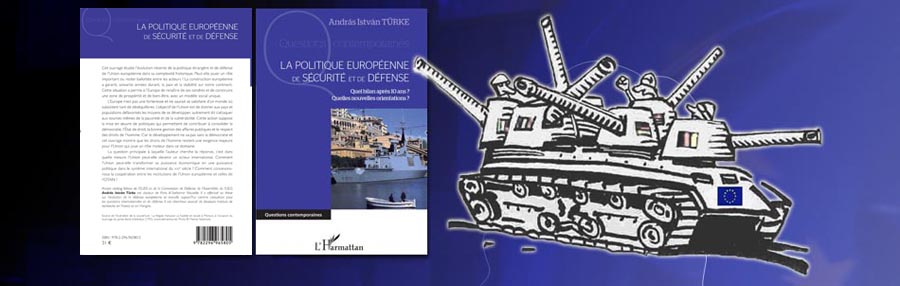
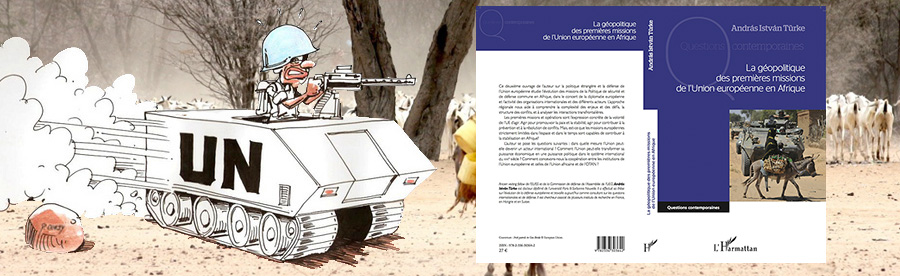
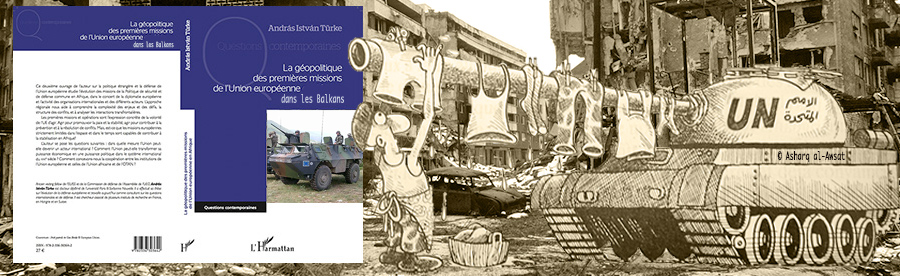
We are looking for sponsors for the English translation of these books, please contact turkeandras(at)gmail(dot)com