
You are here
Feed aggregator
Pauses-café dans l'administration publique : Quand le buffet des ateliers devient la « cantine » des non-invités
Dans certains services de l'administration publique burkinabè, les pauses-café et déjeuners servis lors des ateliers attirent parfois des agents et visiteurs qui ne figurent pas parmi les participants. Dénonçant une pratique devenue, selon elle, trop courante, l'auteure de cette tribune y voit à la fois un gaspillage de ressources publiques et le symptôme d'un recul des valeurs de retenue, d'intégrité et de respect des règles. Elle appelle à une prise de conscience collective pour restaurer la dignité et l'exemplarité au sein de l'administration.
Sous le couvert de la camaraderie ou de la simple opportunité, une pratique insidieuse s'est installée dans certains de nos départements ministériels et structures publiques : la ruée vers les pauses-café et déjeuners par des personnes non participantes aux ateliers.
Décryptage d'une dérive comportementale qui interroge nos valeurs et la rationalisation des ressources de l'État.
De nos jours, il est devenu banal d'assister à un spectacle pour le moins troublant lors des séminaires, ateliers ou rencontres de travail au sein de notre administration publique. Qu'il s'agisse de la pause-café du matin ou du déjeuner, l'on voit s'allonger dans les rangs des visages totalement étrangers aux travaux : cadres, agents d'autres services, stagiaires, vigiles et sympathisants de passage. Sans être enregistrés sur la liste des participants, certains se servent copieusement, comme s'il s'agissait d'un droit acquis.
Typologie d'un « parasitage » assumé
En observant de près cette faune d'opportunistes d'un genre nouveau, on distingue principalement trois figures :
• Le « pistonné » par la camaraderie : Invité par un collègue qui prend part aux travaux. Ce dernier, incapable de céder sa propre ration, n'hésite pas à sacrifier la part d'un autre participant au profit de son ami.
• Le « squatter » d'opportunité : Constatant de loin la tenue d'un atelier, il s'infiltre en rang serré, se sert généreusement (faisant souvent du rab) et s'éclipse sans un mot, le torse bombé, avec la démarche de celui qui a réussi un "coup".
• Le « gastronome » averti : Il s'informe à l'avance du menu du jour auprès des traiteurs ou des organisateurs et ne se présente qu'à l'heure exacte du dressage de la table pour se mettre à l'aise.
Baisse des revenus ou démission morale ?
Face à de tels comportements, une question fondamentale se pose : qu'est-ce qui explique ou justifie cette quête d'un repas gratuit ? Est-ce la faiblesse des revenus ou plutôt l'affaissement de nos valeurs morales et éducatives ?
Disons-le sans détour : c'est avant tout une crise de nos valeurs.
L'éducation traditionnelle que nous avons reçue nous enseignait l'abstention stricte face à toute boisson ou nourriture qui ne nous était pas destinée. Devant un repas, la retenue et la patience étaient de rigueur. On nous apprenait même que, parfois, savoir refuser poliment une invitation à manger était une marque d'élévation d'esprit et de maîtrise de soi, indispensable pour forger une personnalité digne et respectée.
Des conséquences budgétaires et relationnelles
Cette pratique informelle n'est pas sans conséquences :
1. Sur les deniers publics : Anticipant ces présences intempestives pour éviter les pénuries, les organisateurs se voient contraints de commander plus de plats que le nombre réel de participants inscrits. Une dérive financière inacceptable alors même que le contexte national exige une rationalisation rigoureuse des ressources de l'État.
2. Sur le respect et le climat de travail : S'inviter à une table où l'on n'est pas convié expose à un manque de respect latent. Mais dans notre contexte social, comment faire remarquer à un collègue qu'il n'a pas sa place au buffet sans paraître discourtois ? Pire encore, ceux qui osent émettre des critiques légitimes face à ce manquement se voient souvent répondre par des boutades ou de la raillerie.
Retrouver la dignité de l'Homme intègre
À qui la faute et comment y remédier ?
À l'heure où la Révolution progressiste et populaire nous rappelle quotidiennement notre devoir d'intégrité, d'exemplarité et de respect des lois et des coutumes, cette question ne doit plus être occultée.
Il est temps que l'autorité administrative s'en saisisse. Les responsables de structures, de concert avec les partenaires sociaux et les syndicats, doivent sensibiliser les travailleurs au respect des règles élémentaires de bienséance. Renoncer à ces petites facilités comportementales, c'est rehausser l'image de marque de l'agent public et honorer la dignité du Burkinabè.
Le Burkinabè d'antan était celui-là même qui était capable de priver sa propre famille pour offrir son unique plat à l'étranger de passage. Ne substituons pas cette noble hospitalité par un opportunisme mesquin.
Pour la dignité de notre administration et le respect de nos valeurs : Chacun à sa place, chaque chose en son temps !
Vive le Burkina intègre !
Par une citoyenne préoccupée !
Categories: Afrique
Relais-cité de Komsilga : Les travaux de bitumage et d'assainissement pluvial officiellement lancés
Le 11 avril 2025, le ministre de la construction de la patrie procédait au lancement officiel de l'« Opération relais-cité » de Komsilga de 3 000 parcelles viabilisées. Cette initiative, qui s'est déroulée sous le sceau de la transparence et de l'égalité, a intéressé de nombreux citoyens. Passée cette étape des souscriptions, place aux travaux de bitumage et d'assainissement pluvial du site, dont le lancement officiel est intervenu sur le site (sis au sud de la capitale), ce mercredi 12 août 2026, sous la présidence du ministre de la construction de la patrie, représenté par son chargé de mission, l'ingénieur en génie civil, Hamadé Bagaya.
Les travaux consistent en la réalisation de 5,5 kilomètres de voirie bitumée, aménagée en 2×2 voies avec un terre-plein central ; 13,5 kilomètres de caniveaux pour un drainage efficace ; un bassin de rétention pour renforcer la résilience face aux aléas climatiques.
Les notabilités coutumières de Komsilga ont salué cette noble vision du gouvernement qui s'incarne dans la commune.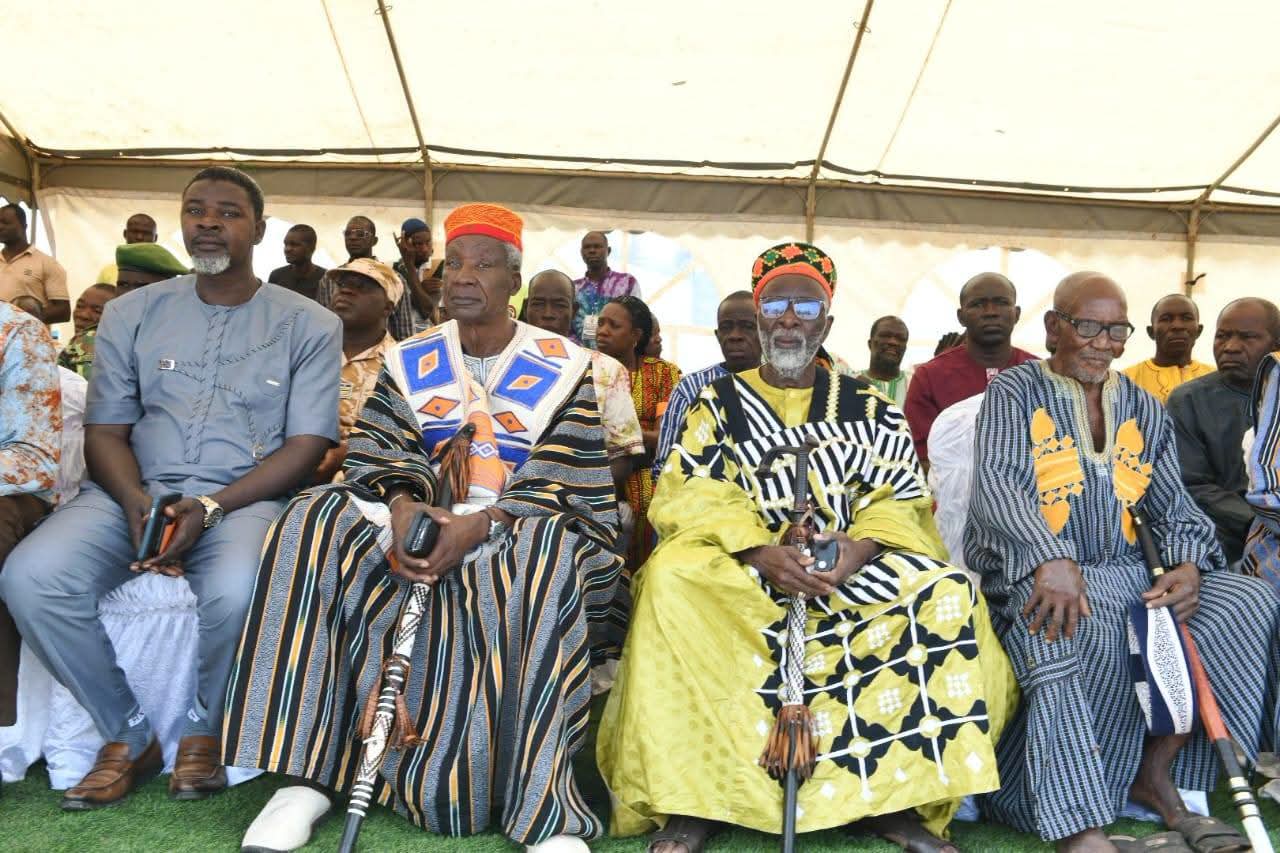
« Ce chantier n'est pas un simple alignement de voies et de caniveaux ; il est le symbole d'une ambition nationale : transformer durablement nos villes, améliorer substantiellement les conditions de vie de nos populations et inscrire chaque réalisation dans la marche irréversible vers un Burkina Faso souverain et prospère. Sous le leadership éclairé du camarade président du Faso, le capitaine Ibrahim Traoré, notre nation s'est engagée dans la dynamique de la Révolution progressiste populaire. Cette révolution place au cœur de l'action publique la souveraineté nationale, l'intérêt supérieur du peuple burkinabè et la responsabilité collective. Elle nous rappelle que le développement ne se décrète pas : il se planifie, il se construit, il se vit au quotidien à travers ses infrastructures utiles, durables et porteuses de progrès. (…). Cette première phase prioritaire constitue une étape déterminante dans la mise en œuvre progressive du projet global qui prévoit à terme 10,4 kilomètres de voiries modernes et 33,8 kilomètres d'ouvrages d'assainissement pluvial. (…). Le chantier que nous ouvrons aujourd'hui est le symbole d'un Burkina Faso qui avance, malgré les défis, d'un État qui planifie et agit, d'un peuple qui croit en ses propres forces et refuse la résignation », a déclaré le ministre de la construction de la patrie, à travers son message livré par son chargé de mission, Hamadé Bagaya.
Le représentant du ministre, Hamadé Bagaya, a traduit la détermination du gouvernement à offrir un cadre de vie propice aux populations.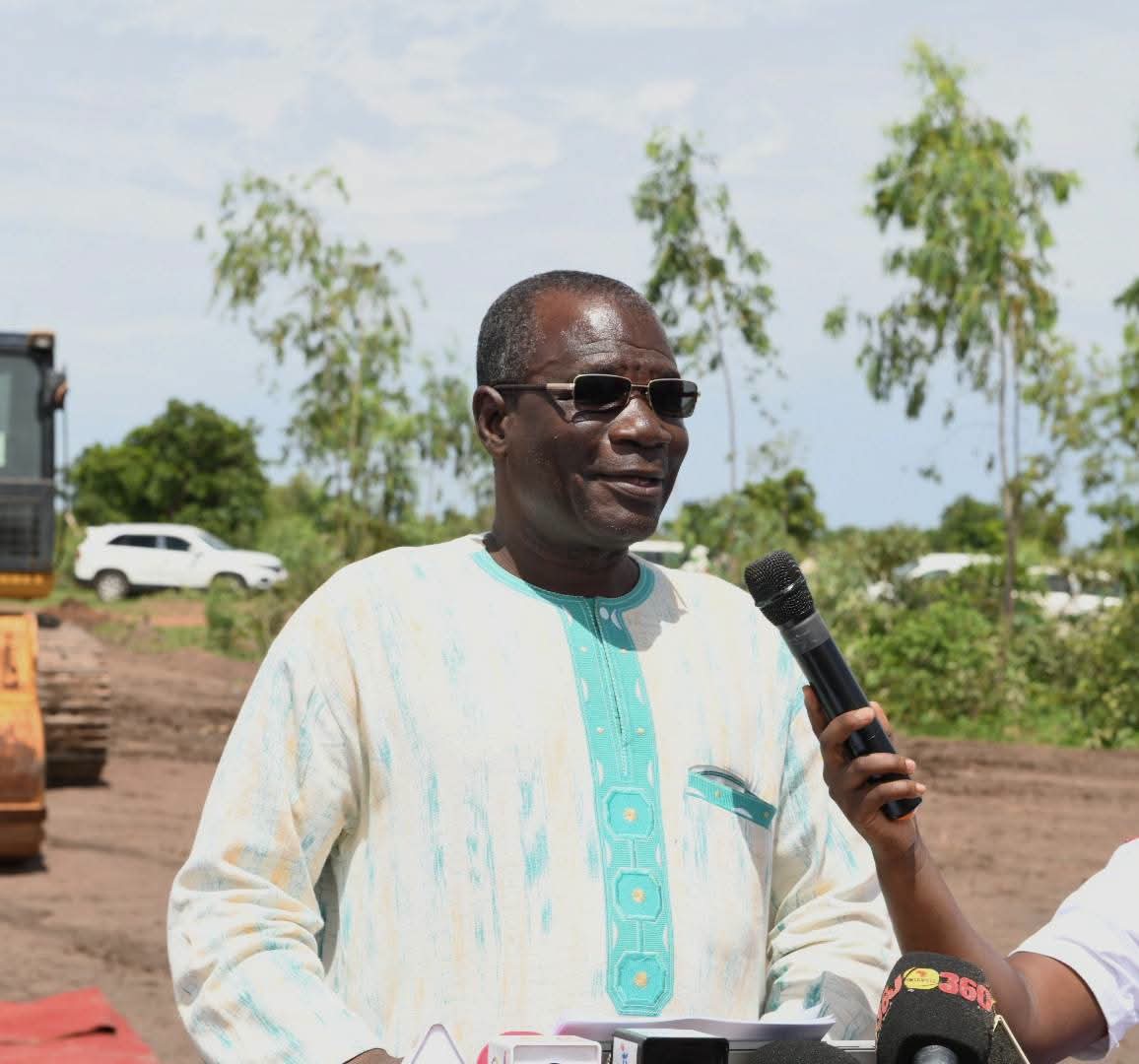
Les travaux, prévus pour tenir dans une échéance de dix mois, s'élèvent à 6,1 milliards de FCFA.
À terme, le relais-cité de Komsilga comprendra, entre autres commodités, un centre commercial et hôtelier, un marché moderne, une gare routière, un espace culturel.
Ici, de gauche vers la droite : le représentant du ministre, le président de la délégation spéciale de Komsilga et le directeur général de l'Urbanisme, de la viabilisation et de la topographie, S. Hamed Ouattara.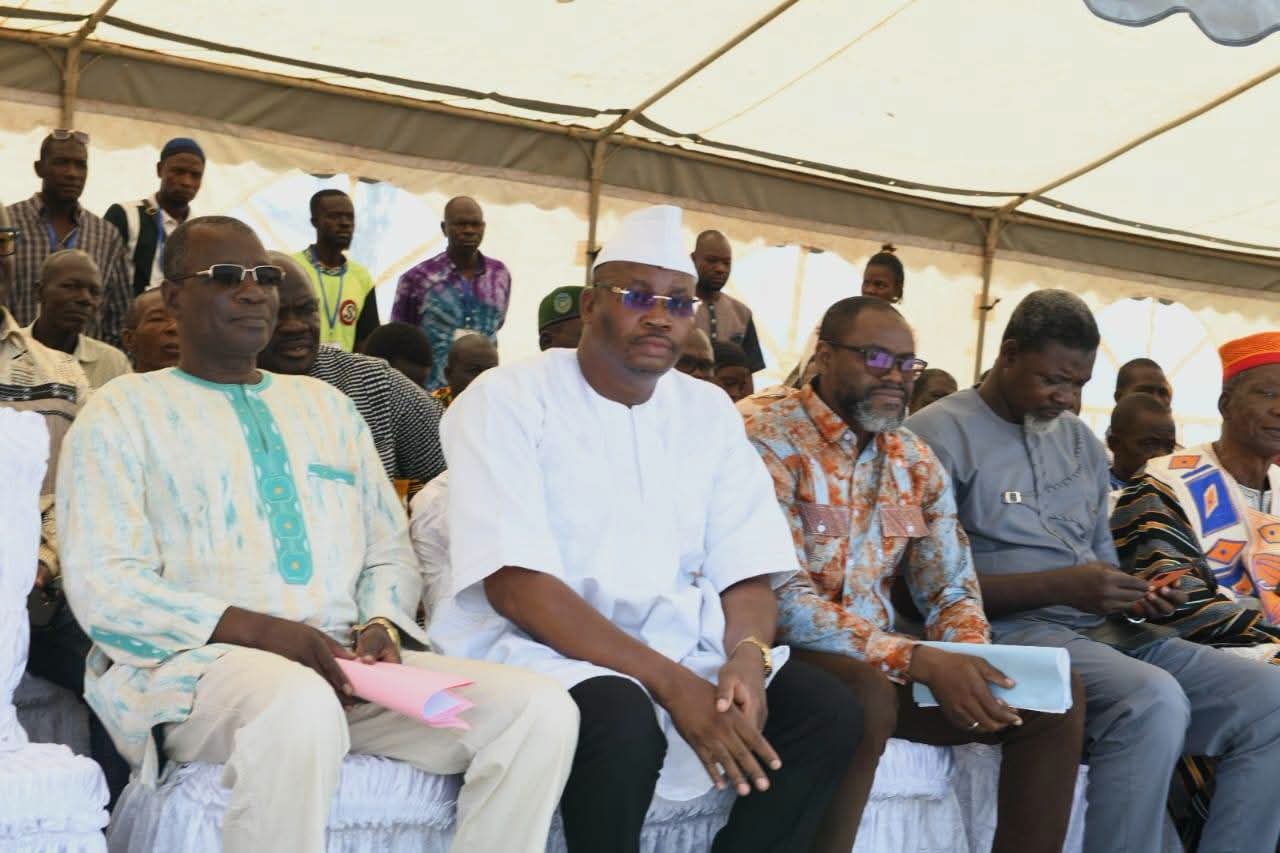
Selon le ministre, par ce chantier, il ne s'agit pas de poser seulement du bitume et du béton ; c'est aussi créer les conditions d'un développement urbain mieux maîtrisé. « Nous améliorons la mobilité, renforçons la sécurité, soutenons l'économie locale et préparons l'avenir. Car aménager une ville, c'est engager la responsabilité de plusieurs générations. La Révolution progressiste populaire nous commande de rompre avec les improvisations et les ouvrages éphémères. Elle nous impose le devoir de résultat et la redevabilité envers le peuple. C'est dans cet esprit que le ministère de la Construction de la patrie conduit ses missions : bâtir des villes planifiées, inclusives et résilientes, où l'urbanisation devient un levier de développement et non une source de vulnérabilité », présente le ministre, invitant les entreprises et les acteurs chargés de l'exécution des travaux au respect de ce qui est attendu par le gouvernement, notamment la rigueur, le professionnalisme et le patriotisme. « Chaque franc investi est une ressource de la nation et doit produire des ouvrages conformes aux normes de qualité, capables de servir durablement les populations », a-t-il insisté avant d'encourager les populations bénéficiaires à faire de ces infrastructures leur patrimoine collectif.
Les explications du projet avec Toudo Emmanuel Toni, ingénieur de conception en génie civil/ministère de la Construction de la Patrie.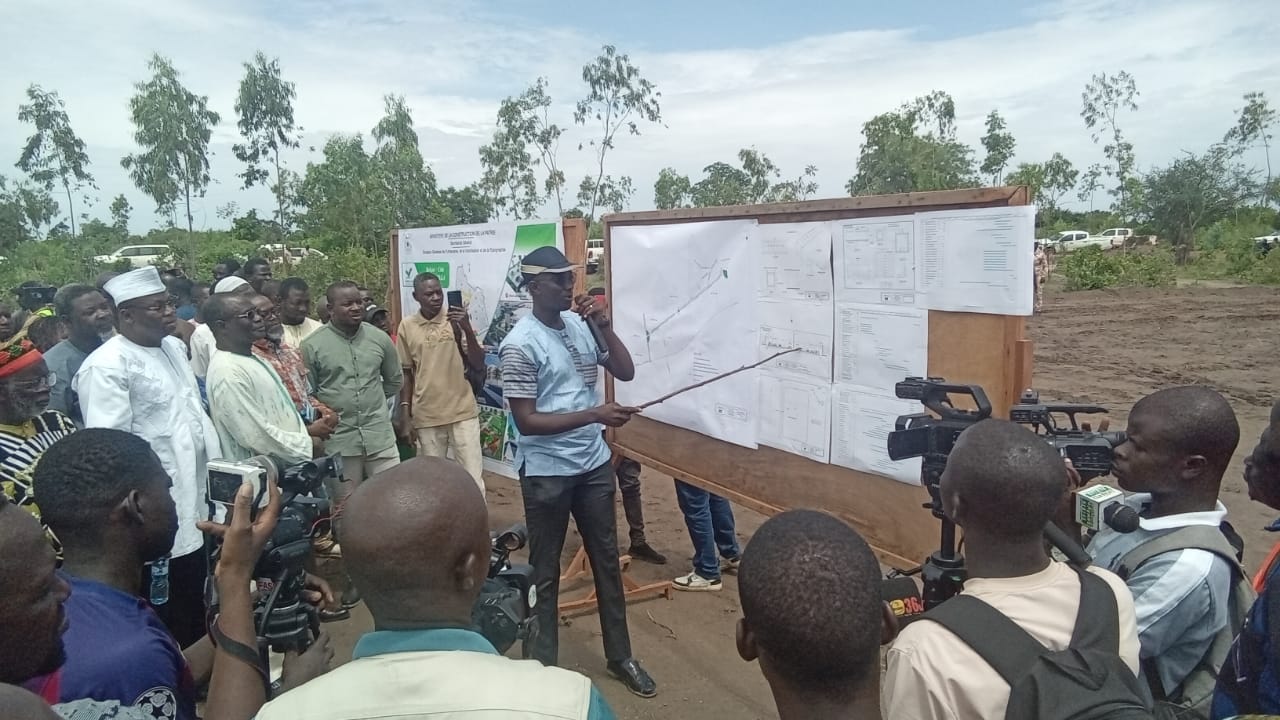
Le président de la Délégation spéciale de Komsilga, Antarest Batiana, estime que ce lancement « traduit l'attention particulière que le gouvernement accorde au développement harmonieux du territoire et à la modernisation durable du cadre de vie des populations ».
Il a saisi l'instant pour témoigner de la reconnaissance de la commune au président du Faso, le capitaine Ibrahim Traoré, dont la vision de développement, relève-t-il, continue de se traduire par des réalisations concrètes au profit des populations. M. Batiana a également salué le leadership, l'engagement et la détermination du ministre de la construction de la patrie à impulser une nouvelle dynamique à la politique nationale de l'habitat, de l'urbanisme et de la construction.
Le représentant du ministre, Hamadé Bagaya, a traduit la détermination du gouvernement à offrir un cadre de vie propice aux populations.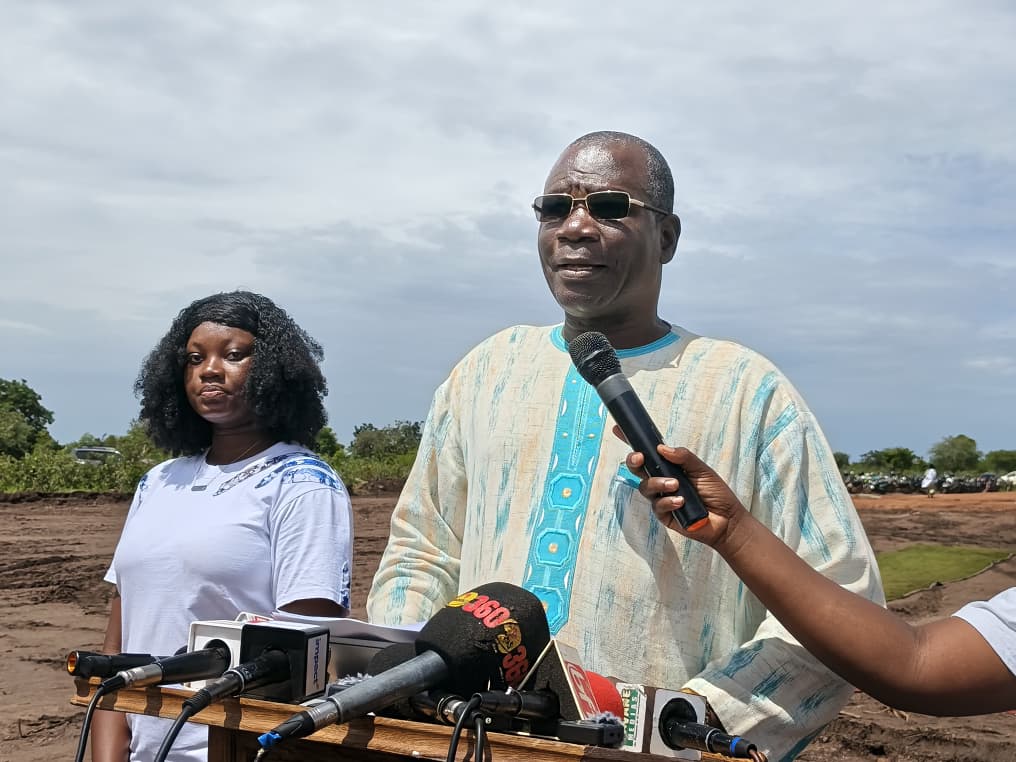
Pour le président de la Délégation spéciale, ce site va changer le visage de la commune et contribuer à faire de Komsilga une ville moderne, mieux structurée et impliquée dans la dynamique de développement du grand Ouaga. « La Délégation spéciale prendra toutes les dispositions relevant de sa compétence pour faciliter la conduite des opérations et favoriser un climat de dialogue en faveur du projet », a exprimé Antarest Batiana, exhortant l'ensemble des franges sociales de Komsilga à accompagner la mise en œuvre.
O.L. et Dominique Ouédraogo
Lefaso.net
Categories: Afrique
Keeper Bihina stars as Cameroon upset Morocco to make Wafcon final
Cameroon's Michaely Bihina saves an extra-time penalty and three more spot kicks in a shootout to send her side though to the 2026 Wafcon final at the expense of host nation Morocco.
Categories: Africa
Inculturation liturgique en Afrique : Les liturgistes plaident pour l'ouverture d'un institut continental de liturgie
Réunis à Dar es-Salaam en Tanzanie du 3 au 8 août 2026, lors du deuxième Congrès des liturgistes africains, 120 experts venus de 11 pays ont réfléchi sur le thème « inculturation liturgique en Afrique : pratique et perspectives ». À l'issue des travaux, ils ont souligné que l'inculturation demeure un défi majeur pour l'Église en Afrique, rapporte Vatican News.
Les participants ont défini l'inculturation liturgique comme l'intégration harmonieuse des expressions culturelles africaines dans la célébration des mystères chrétiens, dans le respect de l'Évangile et des normes de l'Église. Ils ont particulièrement insisté sur trois domaines : le chant, la danse et l'architecture. Concernant la musique liturgique, les congressistes ont appelé à recentrer les compositions sur le message évangélique tout en valorisant les instruments traditionnels africains. Ils estiment que la danse, expression culturelle indissociable du chant en Afrique, peut trouver sa place dans la liturgie à condition de préserver le caractère sacré des célébrations.
Pour garantir la qualité de ces pratiques, ils recommandent une formation doctrinale, liturgique, technique et musicale des acteurs pastoraux, ainsi que la redynamisation des centres de musique sacrée. Sur le plan architectural, les liturgistes souhaitent que les églises reflètent davantage la rencontre entre foi chrétienne et cultures africaines. Ils plaident pour le développement de la recherche en architecture liturgique et en art sacré.
L'une des principales recommandations du congrès est la création d'un institut africain de liturgie, sous l'impulsion du Symposium des Conférences épiscopales d'Afrique et de Madagascar. Cet institut servirait de centre de recherche et de formation pour approfondir la liturgie catholique à partir des richesses culturelles du continent.
Pour les participants, notamment Mgr Henri Chiza et le père Alain Pierre Yao, l'Afrique doit davantage contribuer à la réflexion théologique et liturgique de l'Église universelle. Si des avancées ont été réalisées, ils estiment que beaucoup reste à faire pour permettre aux fidèles africains de vivre pleinement leur foi à travers leurs cultures.
Lefaso.net
Source : Vatican News
Categories: Afrique
Nayala : Le ministre de la santé Robert Kargougou au contact des agents de terrain à Toma et Koin
Après Tougan, le ministre de la santé, Dr Robert Lucien Jean-Claude Kargougou, a poursuivi sa tournée de terrain dans la région du Sourou. Accompagné du gouverneur de la région et de plusieurs responsables administratifs et sanitaires, il s'est rendu successivement au Centre médical avec antenne chirurgicale (CMA) de Toma et au Centre de santé et de promotion sociale (CSPS) de Koin, dans la commune de Toma.
À son arrivée à Toma, le ministre a été accueilli à l'entrée de la ville par une mobilisation de la population. Cette étape a été l'occasion pour les populations et les acteurs locaux de saluer sa présence sur le terrain et de lui témoigner leur soutien.
Première étape de la visite, le CMA de Toma. Le Dr Robert Kargougou y a parcouru plusieurs services et échangé directement avec le personnel de santé sur les conditions de travail, les prestations offertes aux populations et les difficultés rencontrées au quotidien.
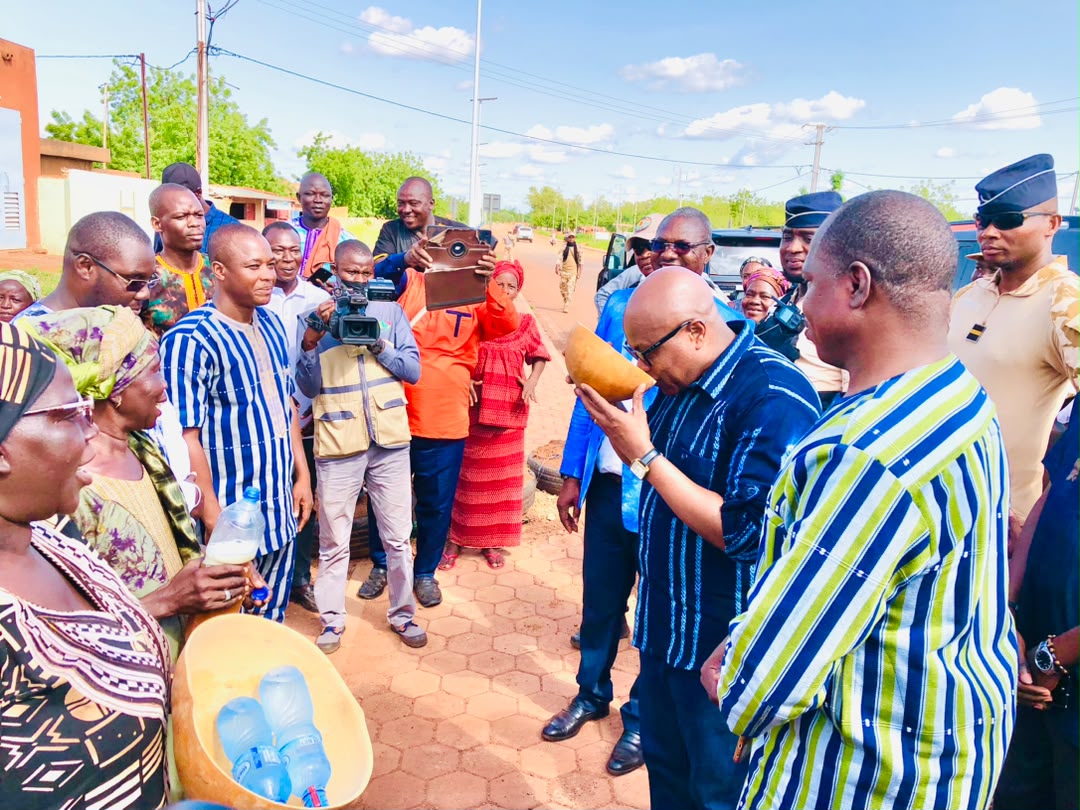
Les préoccupations soulevées par les agents ont notamment porté sur les ressources humaines, les équipements médico-techniques et le passif social des travailleurs.
Sur ce dernier point, le ministre a annoncé des mesures visant à accélérer le règlement des dossiers en instance. Selon lui, une situation doit être établie avec précision par les responsables sanitaires afin que les actes nécessaires soient pris et que les effets financiers puissent être constatés d'ici la fin du mois de septembre 2026. « Nous ne voulons pas qu'un seul agent du CMA n'ait pas son passif social apuré », a-t-il insisté tout en appelant les responsables concernés à accélérer les démarches.
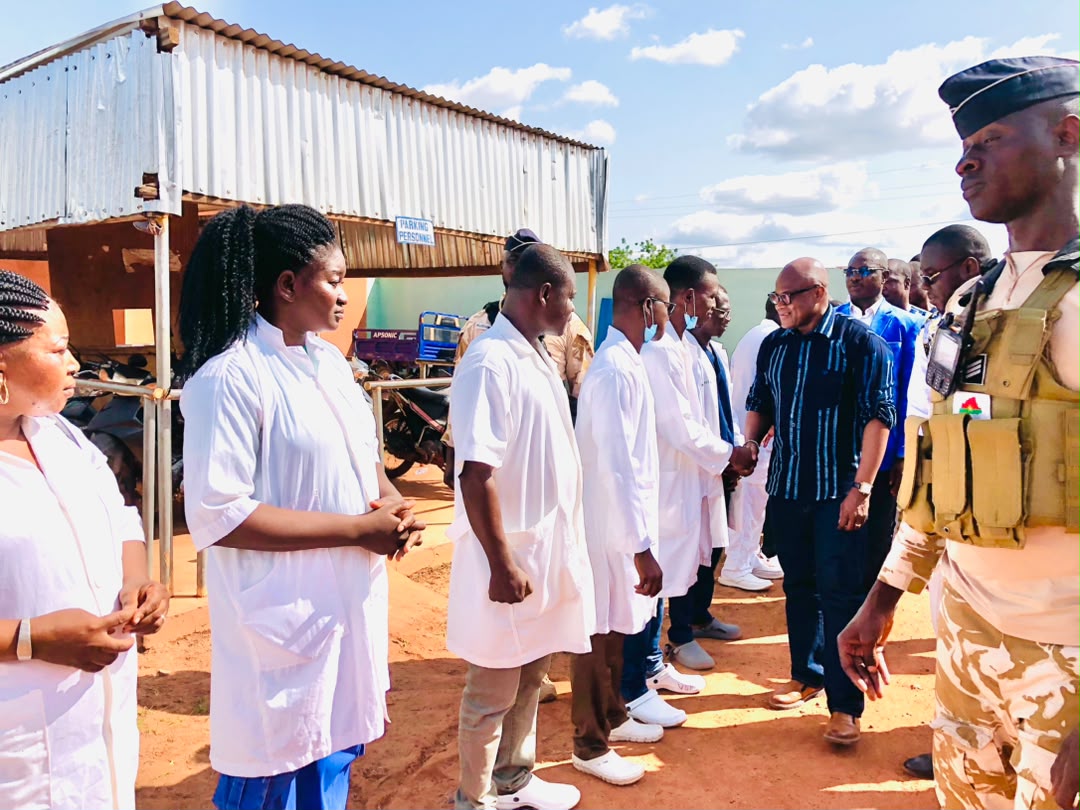
Au-delà des préoccupations materielles et administratives, le ministre a salué l'engagement des agents qui, malgré les difficultés, continuent d'assurer la prise en charge des populations.
Face aux professionnels de santé, le Dr Robert Kargougou a également lancé un appel à la responsabilité, au professionnalisme et au patriotisme.
Il a exhorté les agents à rester engagés dans leurs missions, même dans les moments difficiles, en rappelant les sacrifices consentis par les acteurs qui œuvrent au service de la nation.
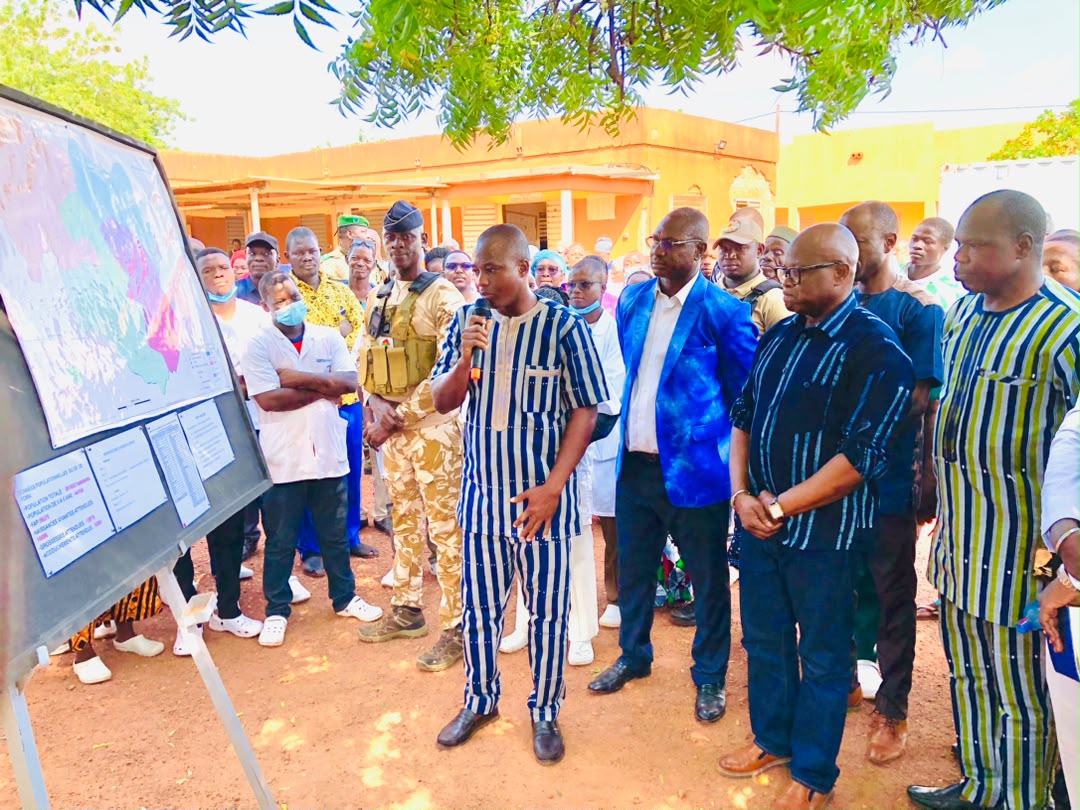
Pour le ministre, les agents de santé doivent également préserver la dignité et les valeurs attachées à leur profession, au-delà des appartenances et des divergences. « Vous devez véritablement donner le reflet de ce que la noblesse de ce métier est », a-t-il souligné, tout en réaffirmant son engagement à œuvrer pour l'apurement du passif social.
En quittant Toma pour poursuivre sa tournée à Koin, la délégation ministérielle a marqué une halte au camp du BIR 23.
Cette escale a permis au ministre de saluer les Forces de défense et de sécurité (FDS), de leur témoigner sa reconnaissance et de les encourager dans leur mission de sécurisation du territoire.
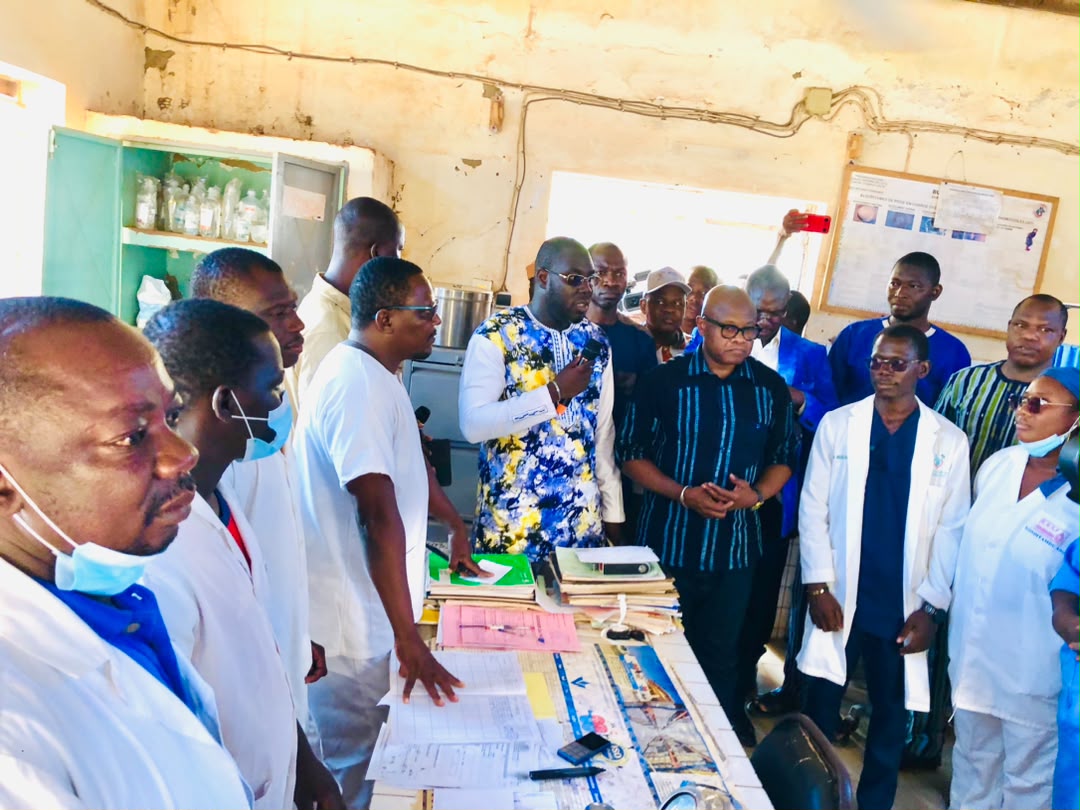
Dr Kargougou a rappelé que la présence des autorités et des services publics dans certaines zones est rendue possible grâce à l'engagement et au sacrifice des FDS. Il leur a ainsi exprimé la fierté et la reconnaissance du secteur de la santé pour leur contribution à la sécurisation des populations et à la continuité des services essentiels.
La tournée s'est poursuivie au CSPS de Koin où le ministre a visité les infrastructures et échangé avec les agents de santé ainsi qu'avec les représentants de la communauté.
Cette étape a particulièrement retenu l'attention du ministre en raison de l'implication de la population dans le développement de la formation sanitaire.
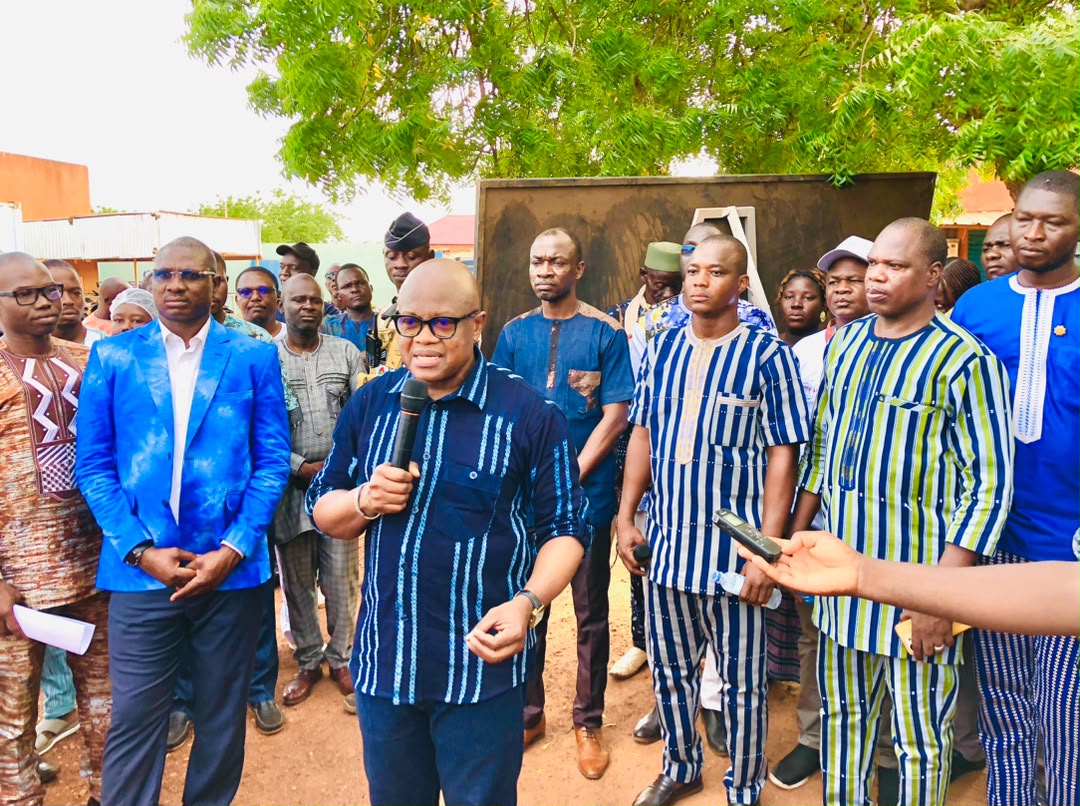
Il a salué les efforts de la communauté de Koin, notamment à travers l'association « Construire Koin », qui a contribué au développement du CSPS. « N'attendez pas seulement que ce soit l'État qui mette chaque fois de l'argent, mais il faut aussi que les populations elles-mêmes mettent la main à la pâte », a déclaré le ministre.
Pour Dr Kargougou, l'engagement communautaire constitue un exemple à encourager dans les autres localités. Il a estimé que lorsque les populations prennent elles-mêmes des initiatives, cela renforce la capacité de l'État à les accompagner dans les domaines où leurs moyens restent limités.
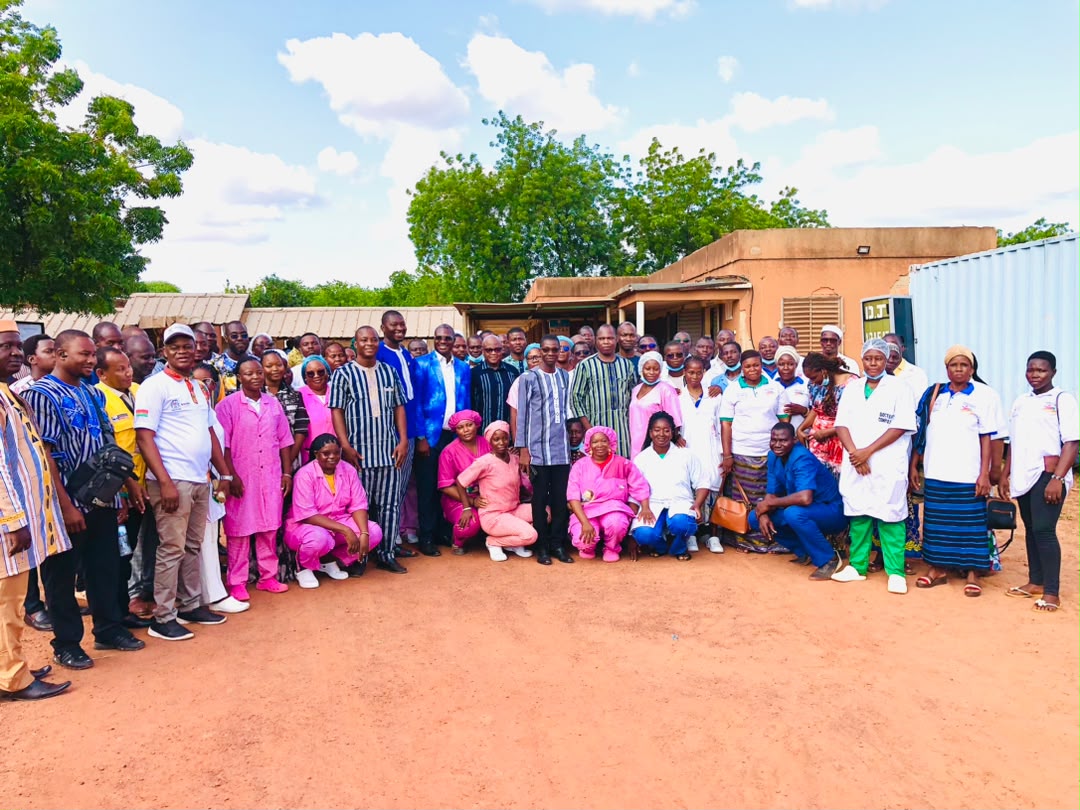
Au CSPS de Koin, les responsables ont également exposé des difficultés liées notamment aux inondations et à l'écoulement des eaux de pluie, qui affectent le fonctionnement de la formation sanitaire et son environnement. Le ministre a indiqué qu'il ne souhaitait pas faire de promesses précipitées, mais a assuré que la situation serait examinée avec les services compétents afin d'identifier les solutions réalisables.
Il a par ailleurs relevé avec satisfaction la disponibilité des médicaments observée au niveau du dépôt du CSPS, estimant qu'il s'agissait d'un élément important pour assurer la continuité des soins.
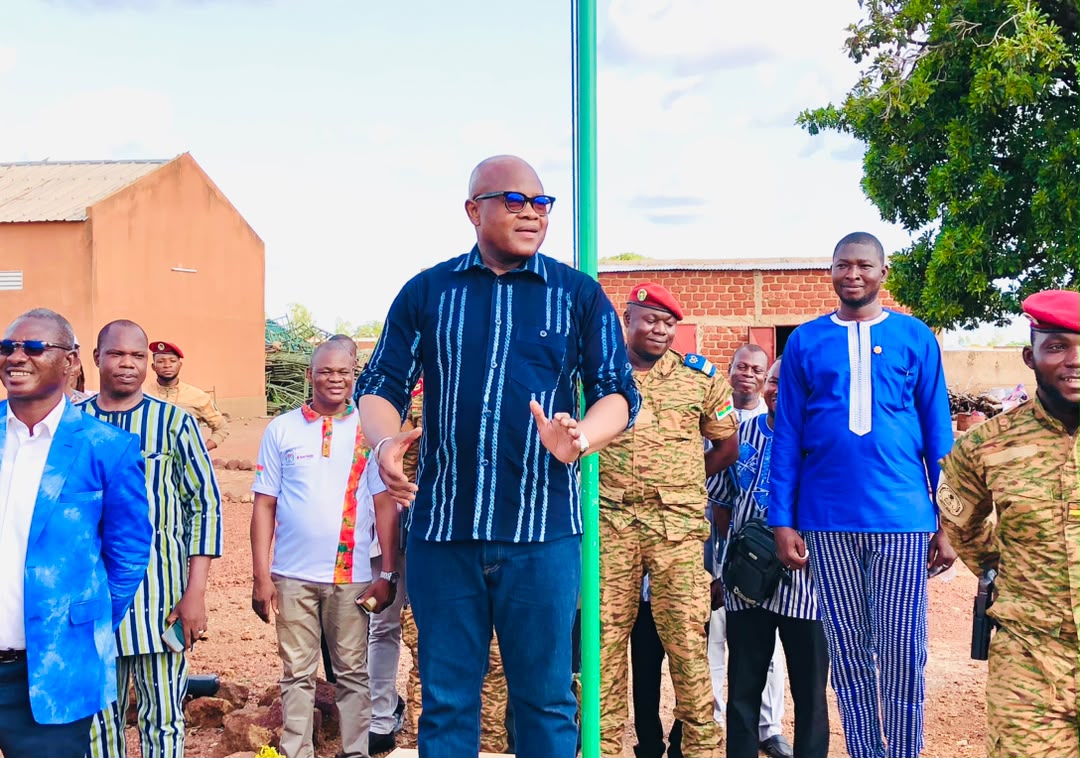
Cette visite s'inscrit dans le cadre de la volonté des autorités de renforcer la présence des membres du gouvernement sur le terrain et de les rapprocher des populations et des agents publics. Le ministre a rappelé que cette démarche répond à une orientation du président du Faso, le capitaine Ibrahim Traoré, invitant les membres du gouvernement à quitter les bureaux de Ouagadougou pour aller à la rencontre des populations et constater directement les réalités vécues sur le terrain.
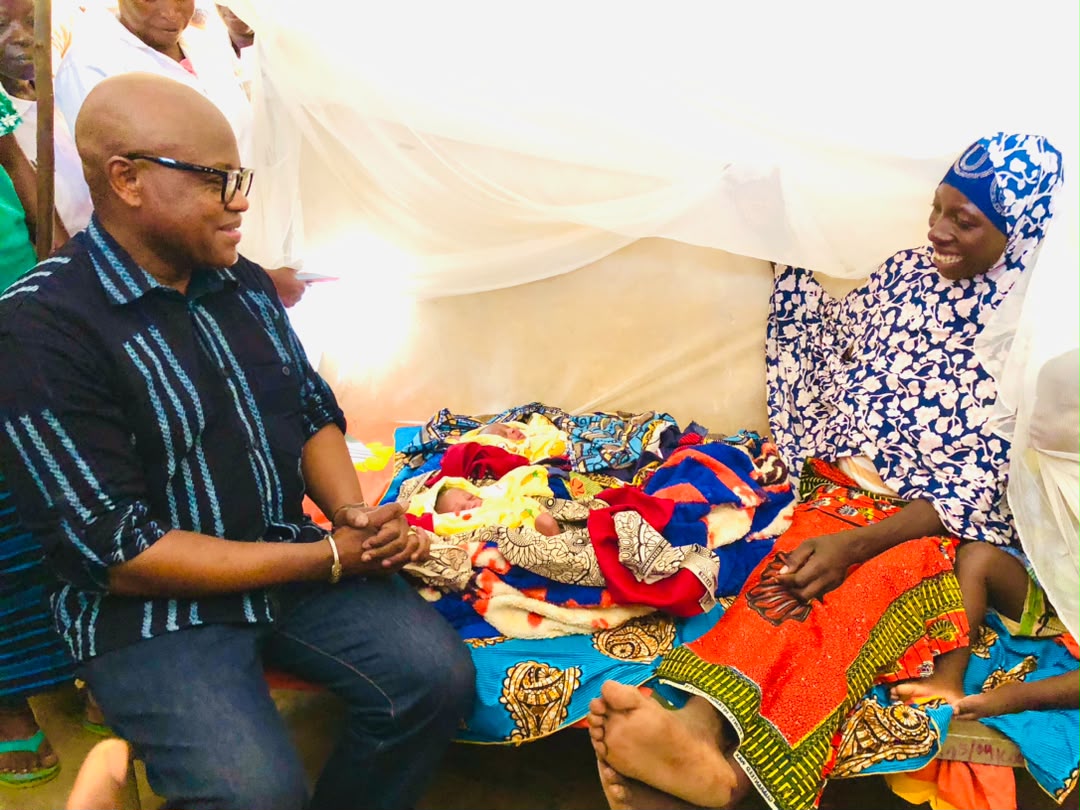
De Tougan à Toma en passant par le BIR 23 et Koin, la tournée du ministre de la santé aura ainsi permis de recueillir les préoccupations des professionnels de santé, de saluer l'engagement des FDS et de mettre en lumière les initiatives communautaires en faveur de la santé.
Y.I K-Z
Lefaso.net
Categories: Afrique
Chawinga sisters fire Malawi into Wafcon final
Malawi's fairy tale run at the 2026 Women's Africa Cup of Nations goes on as sisters Tabitha and Temwa Chawinga share three goals in a 3-1 semi-final win over Algeria.
Categories: Africa
Hivernage : Quand nos engins refusent de coopérer après une pluie
L'hivernage est une bénédiction pour l'agriculture. Mais pour de nombreux usagers de la route, il est aussi la saison des mauvaises surprises. À Ouagadougou, après une bonne pluie, il n'est pas rare de voir des motos qui refusent de démarrer le matin, des véhicules immobilisés en pleine circulation, des batteries qui rendent l'âme ou encore des engins qui prennent l'eau après le passage dans une rue inondée.
Quand on ne dispose que d'une moto ou d'une voiture pour aller au service, faire ses courses ou assurer ses activités quotidiennes, une panne peut rapidement transformer une matinée ordinaire en véritable parcours du combattant. Le retard au travail, le rendez-vous qu'il faut reporter, la course urgente qui tombe à l'eau… et surtout, cette dépense imprévue qui vient s'ajouter aux nombreuses autres. C'est souvent à ce moment que le numéro du mécanicien devient l'un des plus importants du téléphone.
Ce matin, sur une grande artère de Ouagadougou, une scène assez familière a retenu notre attention. Un homme, les bras croisés, observait son garagiste penché sous le capot de sa Mercedes. Le véhicule venait visiblement de le lâcher en pleine circulation. À voir son visage, il y avait sans doute plus que de l'impatience. Peut-être l'inquiétude de savoir combien la réparation allait coûter, peut-être le retard qui commençait déjà à se faire sentir ou simplement la frustration de voir sa journée prendre une autre tournure.
Cette scène est loin d'être exceptionnelle. En cette période de pluies, elle se répète presque quotidiennement. Soit, c'est une moto qui s'éteint après avoir traversé une flaque d'eau, soit c'est une voiture qui refuse de redémarrer après avoir passé la nuit sous une forte pluie. Au pire des cas, c'est un conducteur qui se retrouve à pousser son engin sur le bord de la route, sous le regard compatissant des autres usagers.
Chacun a certainement déjà connu, à son échelle, ce genre de mésaventure. Et quand cela arrive au mauvais moment, la panne peut facilement gâcher toute une journée. Difficile de garder son sourire lorsqu'on doit appeler son supérieur pour annoncer qu'on sera en retard au service ou lorsqu'on commence déjà à imaginer la facture du mécanicien. Pour certains, la réparation peut même représenter une bonne partie du salaire.
Pour autant, faut-il y voir un acharnement du destin ? Certainement pas ! L'hivernage ne crée pas toujours les pannes. Il met simplement à nu les faiblesses de nos engins. Une batterie déjà fatiguée, des bougies usées, un problème électrique, des pneus en mauvais état que la chaussée fait patiner ou un moteur qui n'a pas bénéficié d'un entretien régulier peuvent difficilement résister aux fortes pluies et aux rues parfois transformées en mares.
La saison des pluies devrait donc aussi être une période de vigilance pour les usagers. Vérifier sa batterie, ses freins, ses pneus, son système électrique ou faire contrôler son moteur peut éviter bien des désagréments. Certes, l'entretien a un coût et tout le monde ne peut pas toujours faire face à toutes les dépenses. Mais prévenir une panne peut parfois coûter moins cher que de devoir réparer un engin immobilisé en pleine circulation.
En attendant, dans les quartiers (surtout périphériques), les scènes se ressemblent après chaque forte pluie : des motocyclistes qui poussent leurs engins, des automobilistes sous leurs capots et des « mécanos » sollicités de tous côtés. Et pendant que certains cherchent la panne, d'autres regardent leurs montres en se demandant comment ils vont expliquer leur retard au service.
Quoique la pluie, elle, finira bien par s'arrêter. Mais pour nos engins, mieux vaut ne pas attendre qu'ils nous lâchent au bord de la route pour se souvenir qu'eux aussi ont besoin d'un peu d'attention.
Farida Thiombiano
Lefaso.net
Categories: Afrique
Tierische Ferien: Ski-Star schwimmt mit Schweinen und kuschelt mit Kätzchen
Nach der anstrengenden Saison ist die Zeit gekommen für Ferien und Erholung. Die Ski-Stars ziehts dabei oft in die Wärme. Auf Social Media lassen sie ihre Fans daran teilhaben.
Categories: Swiss News
Ayra Starr on her secret relationship and teasing Stevie Wonder
The musician shares the personal stories behind her third album, and the time she teased a legend.
Categories: Africa, Oroszország és FÁK
Ayra Starr on her secret relationship and teasing Stevie Wonder
The musician shares the personal stories behind her third album, and the time she teased a legend.
Categories: Africa
Vultures are disappearing in Nigeria - but the 'Vulture King' is fighting to reverse the trend
Some see them as sinister or hunt them for ritual use but these birds play a vital role in nature's cycle.
Categories: Africa, Pályázatok
Vultures are disappearing in Nigeria - but the 'Vulture King' is fighting to reverse the trend
Some see them as sinister or hunt them for ritual use but these birds play a vital role in nature's cycle.
Categories: Africa
Super Coupe de l'UEFA : Le PSG s'impose face à Aston Villa et conserve son titre
Le Paris Saint-Germain a remporté la Super Coupe de l'UEFA, ce mercredi 12 août 2026 à Salzbourg, en Autriche, en s'imposant 2-1 face à Aston Villa. Les Parisiens, vainqueurs de la Ligue des champions, décrochent ainsi leur deuxième Super Coupe de l'UEFA consécutive. Le match a été arbitré par Omar Artan, l'arbitre somalien qui avait été recalé lors de la dernière Coupe du monde aux États-Unis alors qu'il était désigné pour officier le mondial.
Tenant du titre, le Paris Saint-Germain a vite affirmé ses ambitions au début de la rencontre. C'est le club de la capitale française qui a ouvert le score, premièrement, grâce au but de Khvicha Kvaratskhelia à la 20e minute.
Après plusieurs tentatives, Aston Villa a réussi à revenir à égalité grâce à John McGinn à la 45e minute. Les deux équipes sont allées à la pause sur le score de 1 but partout.
C'est finalement en deuxième mi-temps que le PSG réussit à passer devant son adversaire. Après de nombreuses occasions, le PSG a repris l'avantage sur Aston Villa avec le but de Désiré Doué à la 61e minute.
Vainqueur de la Ligue des Champions, l'équipe de Luis Enrique remporte une deuxième fois la Super Coupe d'Europe. Les Parisiens entament bien leur début de saison avant le match contre Lens pour le Trophée des champions prévu le dimanche 16 août.
La rencontre a également été marquée par la présence de l'arbitre somalien Omar Artan. Désigné par l'UEFA pour diriger cette finale. Le technicien de 34 ans est devenu le premier arbitre africain à officier lors d'une Super Coupe de l'UEFA.
Cette désignation intervient quelques semaines après son absence de la Coupe du monde 2026. Omar Artan avait été retenu par la FIFA parmi les arbitres appelés à officier lors du Mondial, mais n'a finalement pas pu participer à la compétition, n'ayant pas été autorisé à entrer aux États-Unis.
L'UEFA avait annoncé, en juin 2026, sa désignation pour la Super Coupe dans le cadre du protocole d'accord (« MoU ») conclu avec la Confédération africaine de football (CAF), destiné notamment à renforcer la coopération entre les deux instances dans le domaine de l'arbitrage.
Omar Artan, international FIFA depuis 2018, avait par ailleurs été désigné meilleur arbitre masculin de l'année 2025 par la CAF.
Jean Élysée Nikiéma
Lefaso.net
Categories: Afrique
Restauration : L'eau, ce droit qu'on nous fait payer de plus en plus
Après une journée passée sous un soleil de plomb, quoi de plus naturel que de s'installer dans un restaurant, passer sa commande et attendre son repas avec un verre d'eau pour se désaltérer ? Pourtant, dans de nombreux établissements, le client doit acheter un sachet ou une bouteille d'eau pour étancher sa soif, même lorsqu'il commande un repas coûtant plus de 2 500 francs CFA.
L'eau n'est pas un produit comme les autres. Elle est un besoin fondamental, indispensable à la vie. Mieux, l'eau c'est la vie, pour reprendre le slogan de l'ONEA. C'est d'ailleurs pour cette raison qu'elle occupe une place particulière dans de nombreuses cultures où offrir de l'eau à un visiteur est considéré comme un signe élémentaire d'hospitalité. Le musée de l'eau du sociologue Alassane Samoura ne dira pas le contraire.
L'eau, un besoin vital
Bien entendu, les restaurateurs ont leurs contraintes. Le coût de l'eau, de son stockage, du service et de l'entretien des installations représente une grande charge. Certains établissements préfèrent donc commercialiser uniquement de l'eau conditionnée afin de garantir l'hygiène et de couvrir leurs dépenses. Cet argument est compréhensible.
Cependant, beaucoup de clients estiment qu'un minimum devrait être offert. Un simple verre d'eau servi gratuitement à la demande ne représenterait pas nécessairement un manque à gagner important pour le restaurant. Au contraire, ce geste pourrait être perçu comme une marque d'attention envers la clientèle.
Nous ne disons pas que les restaurants ne doivent pas vendre de l'eau. Les clients qui souhaitent une eau minérale, une marque particulière continueront naturellement à l'acheter. Cela reste une option légitime, notamment pour ceux qui sont soucieux de la provenance ou de la qualité de l'eau. Le problème, c'est l'absence de choix. Offrir un verre d'eau de base permettrait à chacun de se désaltérer sans avoir à sortir systématiquement son portefeuille pour satisfaire un besoin essentiel dans un restaurant.
Lorsqu'un client paie déjà son repas, il peut trouver surprenant de devoir encore payer pour obtenir un simple verre d'eau. Cette perception peut parfois laisser une impression négative de l'établissement, même lorsque la qualité de la cuisine est au rendez-vous.
L'eau, un outil de fidélisation
En entreprise, il est reconnu qu'on ne vend pas que des produits ou des services. Il y a l'expérience, l'accueil et un certain confort qu'il faut prendre en compte. Dans cette logique, offrir de l'eau à ses clients peut être considéré comme un investissement dans la satisfaction et la fidélisation plutôt qu'une perte financière. Les petits gestes gratuits témoignent d'un souci du bien-être du client. Et ce n'est pas rien.
Certains restaurateurs ont d'ailleurs trouvé une approche plus souple. Plutôt que de facturer séparément l'eau, ils intègrent discrètement le coût d'un ou de plusieurs sachets d'eau dans le prix du repas. Le client est ainsi accueilli avec de l'eau sans avoir l'impression de devoir payer un supplément pour satisfaire un besoin élémentaire. Cette pratique contribue à améliorer l'expérience du consommateur tout en permettant à l'établissement de couvrir ses charges.
D'un point de vue marketing, cette stratégie peut également constituer un avantage concurrentiel. Un client qui se sent bien accueilli et considéré est plus susceptible de revenir et de recommander le restaurant à son entourage.
La question reste ouverte. L'accès à l'eau dans les restaurants doit-il être exclusivement marchand ou faire partie des attentions de base offertes aux clients ? Chacun aura son avis. Mais il faut noter que lorsqu'un établissement accueille un client avec un verre d'eau avant même la prise de commande, le geste est souvent apprécié et rarement oublié.
Fredo Bassolé
Lefaso.net
Categories: Afrique
Heirs Life Assurance nomme le pasteur Jerry Eze administrateur indépendant non exécutif
Lagos, Nigéria – 10 août 2026 – Heirs Life Assurance, la compagnie d'assurance-vie spécialisée du groupe Heirs Insurance Group, a nommé le pasteur Jerry Eze au poste d'administrateur indépendant non exécutif de son conseil d'administration, avec effet au 10 août 2026.
Cette nomination renforce l'engagement de Heirs Life Assurance en faveur de l'inclusion financière et de l'accélération de l'adoption de l'assurance, en renforçant la confiance du public, l'éducation des consommateurs et la résilience financière à long terme à travers le Nigéria.
Malgré son statut de première économie d'Afrique, le taux de pénétration de l'assurance au Nigéria reste inférieur à 1 %, ce qui en fait l'un des plus faibles au monde. Cette situation souligne la nécessité d'élargir l'accès à la protection financière et de renforcer la confiance du public dans l'assurance. Alors que Heirs Life poursuit sa mission de rendre l'assurance accessible à tous les Nigérians, la nomination de M. Eze apporte une perspective unique en matière d'engagement communautaire, de leadership fondé sur des valeurs et d'impact sociétal à grande échelle.
Le pasteur Jerry Eze est le fondateur et pasteur principal de Streams of Joy International Ministry, une organisation religieuse multinationale en pleine croissance qui compte 34 assemblées en Afrique de l'Ouest, en Afrique australe, en Europe et en Amérique du Nord. Il est également l'initiateur de New Season Prophetic Prayers and Declaration (NSPPD), l'une des plus grandes plateformes numériques de prière au monde, qui touche quotidiennement des millions de personnes. À travers son ministère et ses initiatives humanitaires, il est devenu l'une des voix les plus influentes d'Afrique, œuvrant en faveur de l'espoir, de la compassion et de la transformation des communautés.
En dehors de ses activités religieuses, M. Eze est le fondateur de la Jerry Eze Foundation, une organisation philanthropique fondée sur la foi qui apporte une aide au logement et des subventions aux communautés vulnérables et défavorisées. En 2026, il a annoncé l'octroi de 1 milliard de nairas de subventions destinées à soutenir de jeunes entrepreneurs dans les secteurs de l'agriculture, des technologies et de l'industrie manufacturière, contribuant ainsi au développement des entreprises et à la création d'opportunités économiques.
Avant de se consacrer à plein temps au ministère religieux, le pasteur Jerry Eze a fait carrière dans la communication pour le développement. Il a notamment travaillé comme spécialiste de la communication dans le cadre d'un programme de la Banque mondiale consacré au VIH/sida, ainsi qu'auprès du Fonds des Nations unies pour la population (UNFPA). Il est titulaire d'une licence en histoire et relations internationales de l'Abia State University et d'un diplôme de troisième cycle en administration des affaires de l'Enugu State University of Science and Technology.
S'exprimant au sujet de cette nomination, Tony O. Elumelu, CFR, président du conseil d'administration de Heirs Life Assurance, a déclaré :
« Le pasteur Jerry apporte une combinaison exceptionnelle d'intégrité, d'influence et de compréhension approfondie des personnes et des communautés. Alors que nous poursuivons notre mission de démocratiser l'accès à l'assurance, sa vision contribuera à renforcer la confiance des consommateurs, à approfondir l'inclusion financière et à consolider notre engagement à protéger l'avenir financier de millions de Nigérians. Nous sommes ravis de l'accueillir au sein du conseil d'administration de Heirs Life Assurance ainsi que dans la grande famille de Heirs Insurance Group. »
Commentant sa nomination, le pasteur Jerry Eze a déclaré :
« Je suis honoré de rejoindre le conseil d'administration de Heirs Life Assurance à un moment déterminant pour le secteur de l'assurance. La sécurité financière permet aux particuliers, aux familles et aux entreprises de poursuivre leurs aspirations avec davantage de confiance et de résilience. Je me réjouis de travailler avec le conseil d'administration et la direction afin de faire progresser la mission de l'entreprise : rendre l'assurance plus accessible, plus pertinente et plus bénéfique pour chaque Nigérian. »

Heirs Life Assurance est devenue l'une des principales compagnies d'assurance-vie spécialisées du Nigéria. Elle figure au 7e rang du classement du Financial Times des entreprises à la croissance la plus rapide en Afrique.
Elle fait partie des trois activités d'assurance de Heirs Holdings, l'un des principaux groupes d'investissement panafricains, qui détient des participations dans 24 pays et sur quatre continents.
Grâce à une présence numérique omnicanale et à un réseau d'agences physiques réparties à travers le pays, Heirs Life continue de redéfinir l'assurance-vie grâce à l'innovation, à des solutions centrées sur le client et à son engagement à rendre la protection financière accessible à tous les Nigérians.
Heirs Insurance Group, qui regroupe Heirs Life Assurance, Heirs General Insurance et Heirs Insurance Brokers, sert collectivement plus de 3 millions de personnes, directement et indirectement. Le groupe joue un rôle moteur dans l'inclusion financière et le développement de l'assurance numérique au Nigéria, concrétisant ainsi sa mission de démocratiser l'accès à l'assurance.
Categories: Afrique
Cinkansé : Scanning Systems célèbre l'excellence scolaire au Burkina Faso et au Togo
À Cinkansé, à la frontière entre le Burkina Faso et le Togo, l'heure est à la célébration de l'excellence scolaire. Scanning Systems a organisé, le mardi 11 août 2026, la cinquième édition de sa cérémonie de récompense des meilleurs élèves et enseignants des deux pays. Une initiative qui vise à encourager le travail, la discipline et la persévérance dans les établissements scolaires.
Dans les écoles, l'heure n'est pas seulement aux cours et aux examens. Elle est aussi à la reconnaissance des efforts fournis tout au long de l'année scolaire. À Cinkansé, localité frontalière et un carrefour commercial situé à cheval sur la frontière entre le Burkina Faso et le Togo, Scanning Systems a réuni des élèves, des enseignants, des parents et des représentants des autorités à l'occasion de la cérémonie de récompense des meilleurs élèves et enseignants du Burkina Faso et du Togo.
Pour cette deuxième édition, huit élèves, soit quatre pour chacun des deux pays, sont distingués dans les différentes catégories, notamment au CEP, au BEPC et au baccalauréat. Six enseignants, trois du Burkina Faso et trois du Togo, sont également récompensés pour leur engagement dans l'encadrement et la formation des élèves. Pour Scanning Systems, cette cérémonie est désormais un rendez-vous important.
« Le coût total de cette initiative s'élève à environ 5 millions de francs CFA », Albert Mané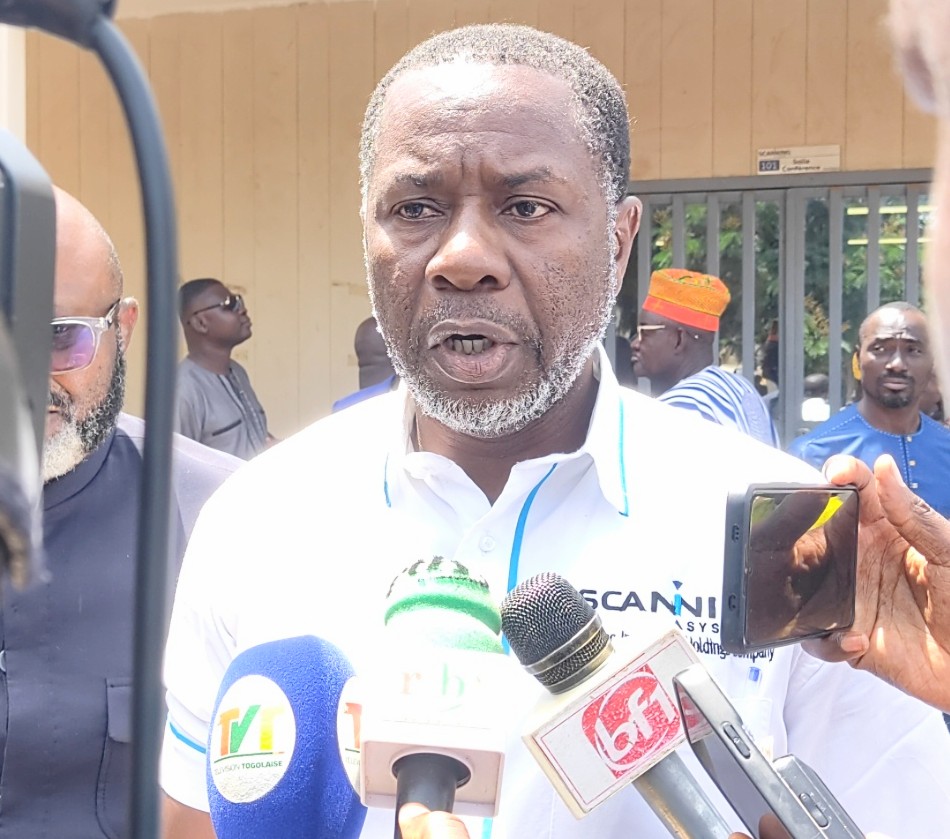
Elle constitue une occasion de mettre à l'honneur « l'espoir, la discipline, la persévérance et le résultat de nos objectifs ». À travers cette initiative, l'entreprise réaffirme son engagement en faveur de l'éducation et sa volonté de promouvoir les valeurs de travail et de persévérance. Albert Mané, représentant pays de Scanning Systems au Burkina Faso, a félicité les élèves pour leurs efforts au cours de l'année scolaire et les a invités à maintenir le cap.
« Aujourd'hui, nous voulons récompenser vos efforts et votre engagement au cours de l'année scolaire. Nous vous félicitons pour votre travail et nous vous encourageons à poursuivre vos efforts. Il faut toujours garder à l'esprit que le travail et la persévérance peuvent vous conduire beaucoup plus loin que vous ne l'imaginez », a-t-il expliqué aux élèves.
Quelques autorités prenant part à la cérémonie de remise de fournitures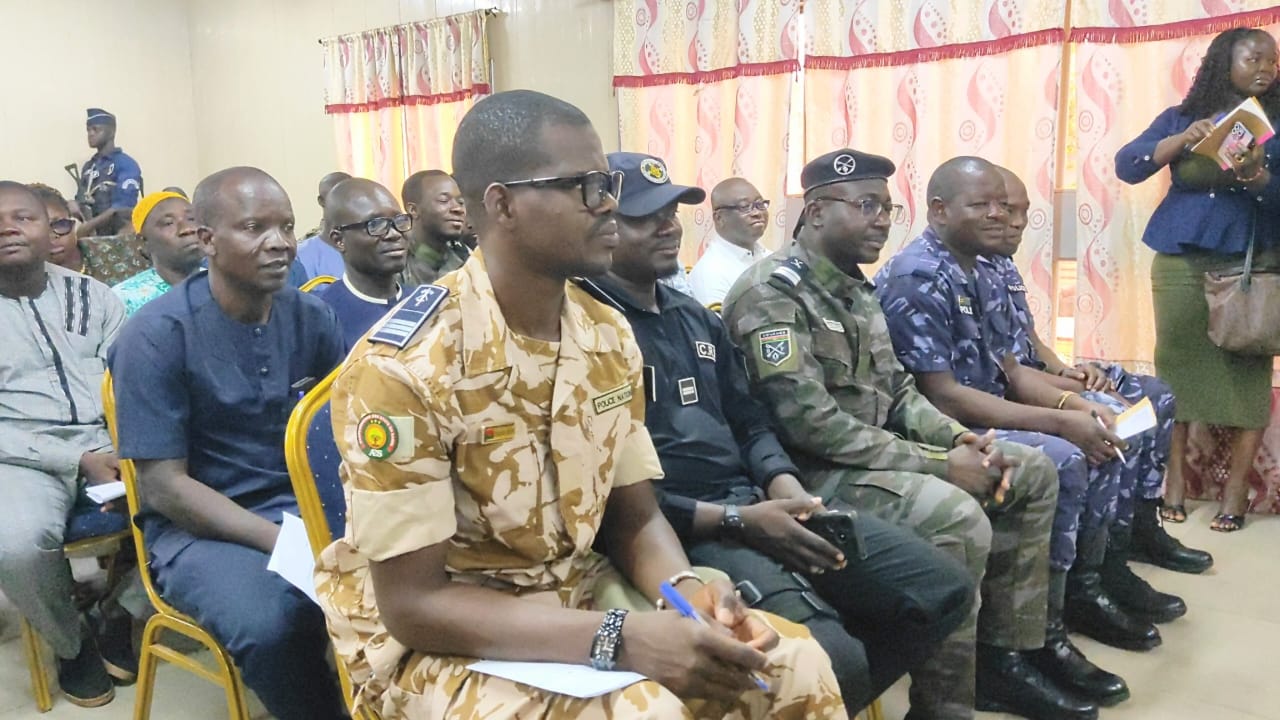
À l'endroit droit des enseignants, son message sera le suivant : « Cette reconnaissance est une manière pour nous de saluer votre engagement et votre rôle important dans la réussite des enfants… Votre mission est exigeante et votre responsabilité est grande. Vous ne transmettez pas seulement des connaissances, vous participez à la formation des femmes et des hommes qui construiront demain nos sociétés. Nous vous en remercions. »
Pour les lauréats au CEP, le prix est composé d'une attestation, de fournitures scolaires, d'un vélo et d'une somme de 100 000 francs CFA. Pour les lauréats au BEPC, le prix est composé aussi d'une attestation, de fournitures scolaires, d'un vélo et de la somme de 150 000 francs CFA. Pour les bacheliers, le prix est une somme de 400 000 francs CFA. Les meilleurs enseignants, eux, ont tous reçu la somme de 250 000 francs CFA.
Dalilatou Wouratane présentant son prix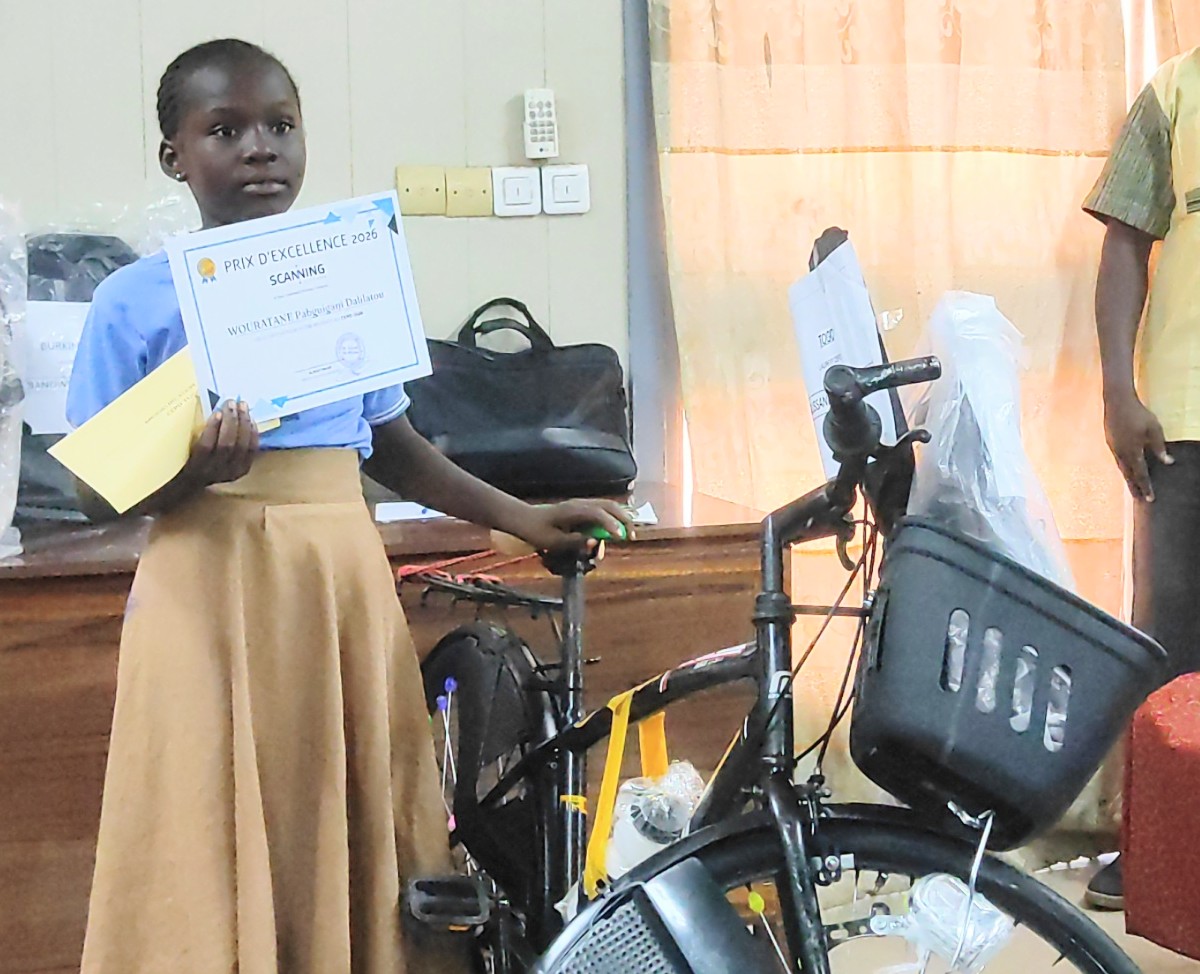
Chez les élèves récompensés, la satisfaction est manifeste. Dalilatou Wouratane, élève en classe de CM2 à l'école Cinkansé, a exprimé sa reconnaissance envers ses parents et ses enseignants pour leur accompagnement durant les neuf mois de cours. Elle a également remercié Scanning Systems pour le cadeau reçu, qu'elle considère comme une marque d'excellence.
De son côté, Waliya Konene, qui a obtenu une moyenne de 9,72 à la session 2026 du CEP, considère son prix comme un encouragement à redoubler d'efforts. « À partir de ce jour, je prends un engagement : celui de bien travailler à l'école pour rendre fiers ceux qui nous épaulent pour qu'on soit meilleurs chaque jour », a-t-elle déclaré.
« Je me sens prête pour débuter la 6ᵉ », Waliya Konene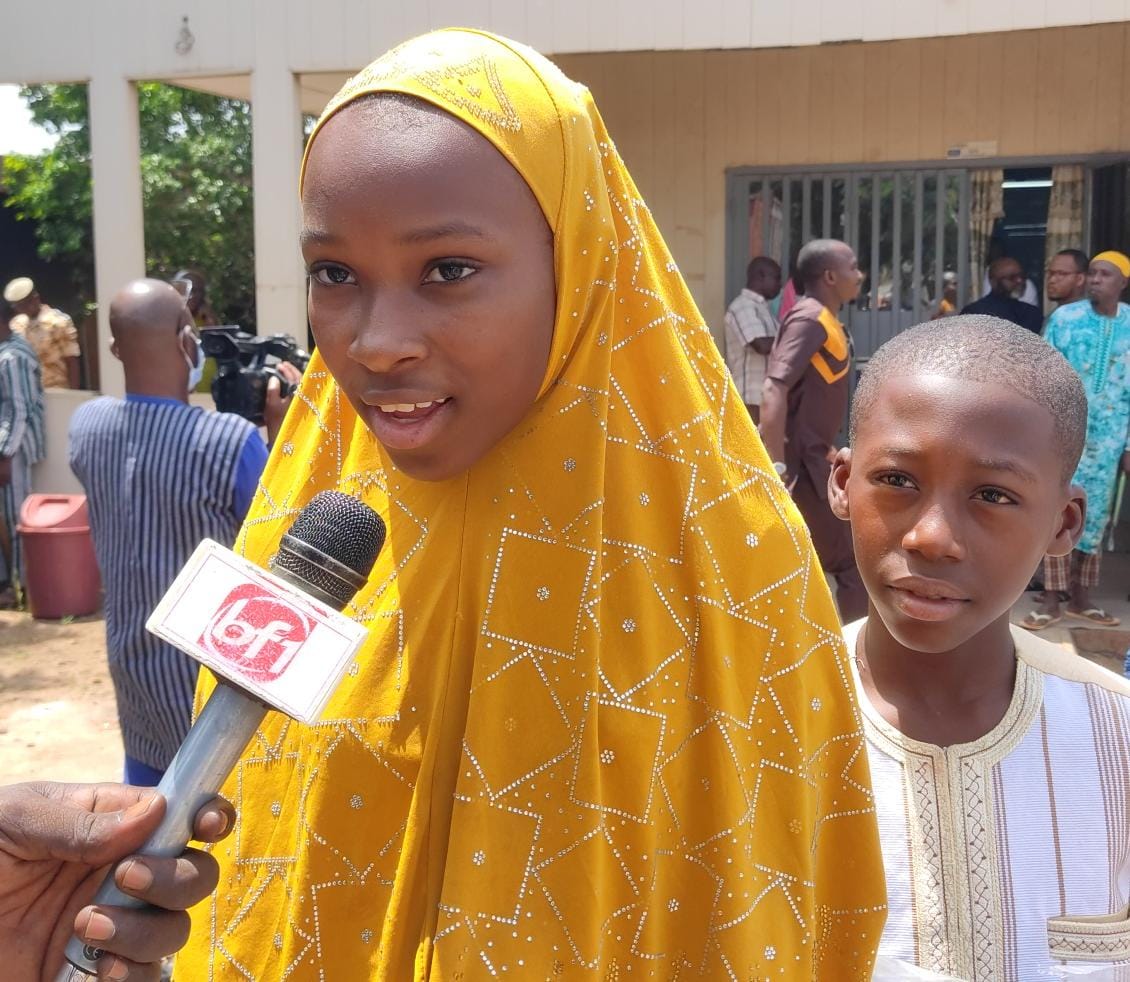
Mouhammad Zampaligré, élève à l'école Cinkansé C, a lui aussi exprimé sa satisfaction. Avec une moyenne de 9,36/10, il estime que le prix reçu constitue une motivation supplémentaire pour la suite de son parcours scolaire. « Je souhaite que les années à venir, Scanning system fasse de même pour ceux qui réussiront à leurs examens, pour aider les parents ».
L'innovation à cette édition concerne la distinction des enseignants. Six éducateurs, trois de chaque côté de la frontière, sont récompensés pour leur contribution à la formation des élèves. Professeur d'anglais au lycée Cinkansé C, Dramane Bansé figure parmi les enseignants distingués. Il a reçu une récompense de 250 000 francs CFA. Pour lui, cette distinction est à la fois une fierté et une source de motivation.
« Je me sens honoré. Je me remercie Scanning Systems », Dramane Bansé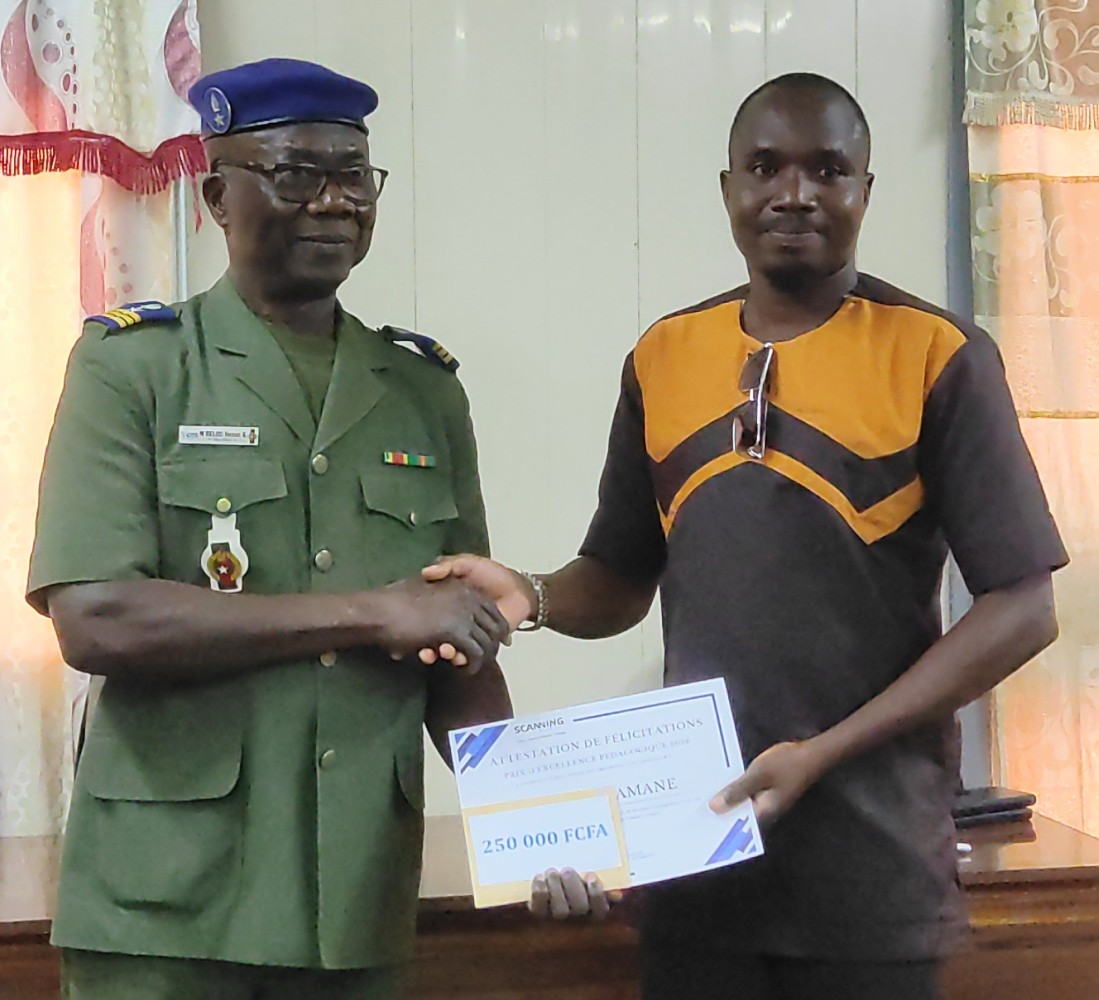
« Récompenser les enseignants, c'est vraiment quelque chose de bien visé. Si cette dynamique se poursuit, je crois que cela contribuera à galvaniser les enseignants », a-t-il déclaré. Rappelons que cette initiative a été saluée par les représentants des communes de Cinkansé des deux pays.
« Cette initiative de la société Scanning Systems illustre la volonté commune de renforcer la coopération transfrontalière et de promouvoir un cadre propice au développement de nos communautés », a salué le représentant de la délégation spéciale de la commune de Yargatenga, tout en invitant la société à poursuivre son engagement pour une éducation de qualité.
« On félicite nos élèves et on prie pour que les années à venir soient meilleures », Abraham Diessongo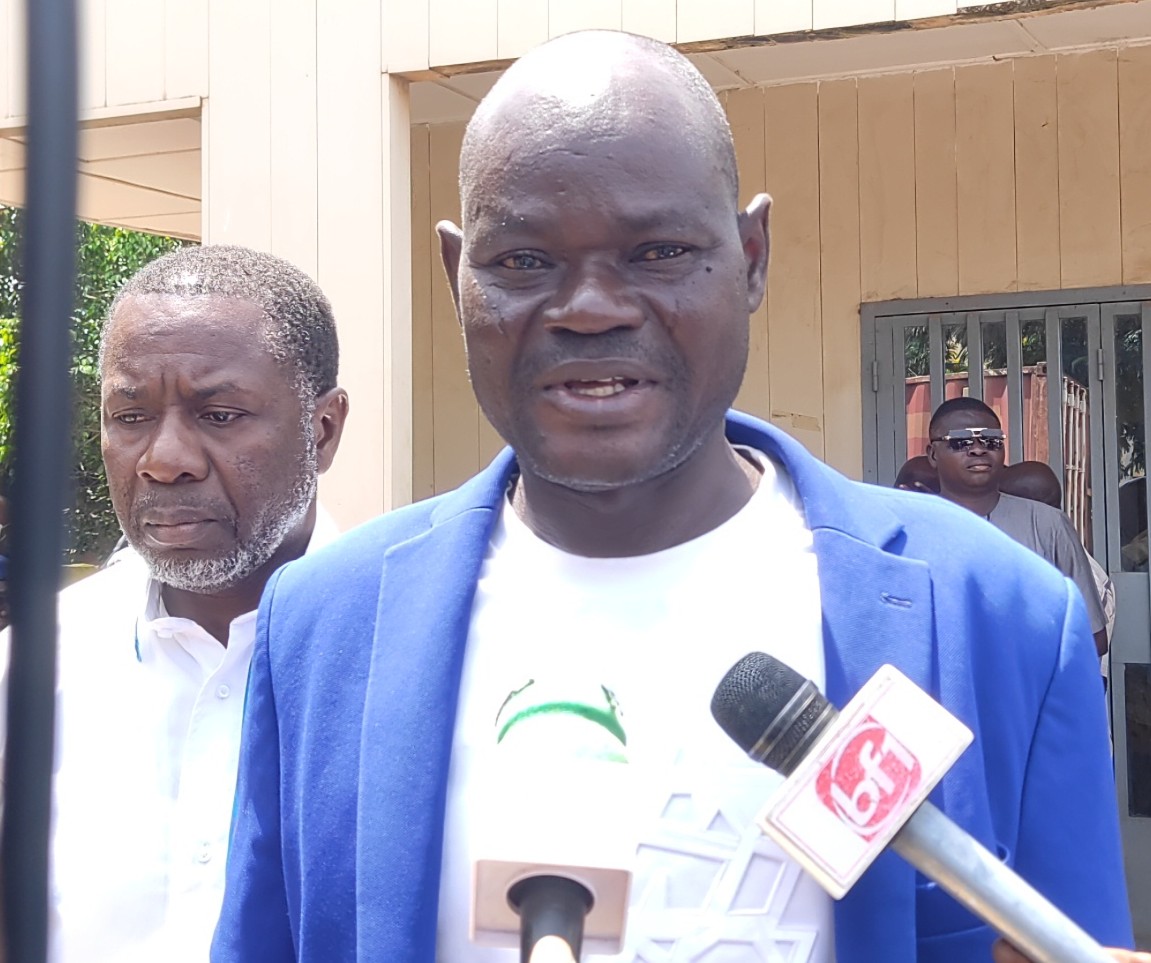
Pour rappel, la société Scanning Systems développe et exploite principalement des Postes de contrôle juxtaposés (PCJ). Ces infrastructures permettent aux administrations de deux pays voisins de regrouper leurs contrôles en un même lieu, toute chose qui contribue à réduire les délais de passage, à améliorer la sécurité et à fluidifier le transport des marchandises et des personnes.
Depuis 2009, l'entreprise exploite le premier PCJ de l'UEMOA, situé à Cinkansé, à la frontière entre le Burkina Faso et le Togo, dans le cadre d'un partenariat public-privé. En modernisant les frontières, la société contribue à faciliter la circulation des marchandises, à améliorer la coordination entre les administrations douanières et policières et à renforcer la sécurité des corridors routiers. Son siège est à Abidjan en Côte d'Ivoire. Et outre le Burkina Faso et le Togo, la société intervient dans d'autres pays de la sous-région.
Erwan Compaoré
Lefaso.net
Categories: Afrique
Das Schweizer Fernsehen boykottierte den FCZ: Vor 50 Jahren löste dieses Trikot einen Skandal aus
Heute geht im Fussball ohne Trikotwerbung nichts mehr. Das war einst anders. Vor einem halben Jahrhundert sorgten der FCZ und der FCB für eine Riesenaufregung, die gar in einem Boykott endete.
Categories: Swiss News
Überangebot und Rabattschlacht: Warum spricht der grösste Fleischverarbeiter der Schweiz trotzdem von steigenden Preisen?
Wegen Trockenheit und Futtermangel werden aktuell in der Schweiz viele Kühe und Rinder geschlachtet. Supermärkte locken mit Rabatten für Fleisch. Trotzdem erwartet der grösste Fleischverarbeiter im Land steigende Preise. «Was denn nun?», fragen sich Konsumenten.
Categories: Swiss News
Die Einheimischen nennen die Region nur «Birmistan»: In diesem europäischen Quartier sind 80 Prozent Muslime!
In Sparkhill, Birmingham, machen Muslime rund 80 Prozent der Bevölkerung aus. Das Quartier ist arm, die kulturellen Unterschiede gross. Warum die Gemeinschaft trotzdem zusammenhält.
Categories: Swiss News
Lutte contre la fraude : Des produits prohibés de plus de 141 millions FCFA saisis
La Coordination nationale de lutte contre la fraude (CNLF) a intensifié ses actions de terrain entre le 20 juillet et le 5 août 2026. En l'espace de deux semaines, les équipes ont mis la main sur des produits frauduleux et prohibés d'une valeur globale estimée à 141 383 500 FCFA, informe la CNLF sur sa page Facebook.
Les opérations ont permis de démanteler plusieurs réseaux impliqués dans le détournement de carburant subventionné, l'introduction illicite de produits médicaux, le commerce de produits interdits ainsi que le trafic de diverses marchandises. Parmi les saisies les plus importantes figure l'interception, le 20 juillet sur la voie de contournement de Ouagadougou, de 10 000 litres de gasoil subventionné destinés illicitement à une usine. Les investigations menées par la suite à Kouba et à Koubri ont conduit à la saisie respectivement de 3 000 litres et de 13 000 litres de gasoil destinés à des entreprises. Selon la CNLF, ces pratiques causent un important manque à gagner pour le Trésor public.
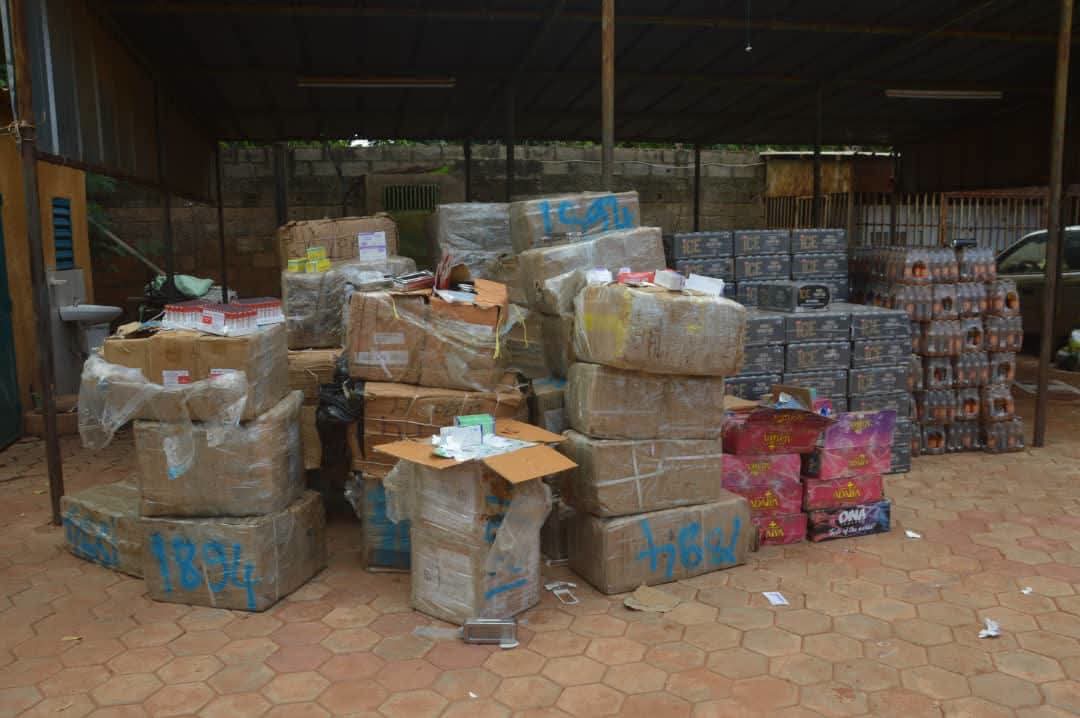
Dans le domaine de la santé, une opération réalisée le 3 août à Ouagadougou a abouti à la saisie de consommables médicaux et de produits assimilés introduits en contrebande, pour une valeur estimée à 68,017 millions de FCFA. Parmi les produits interceptés figurent notamment 76 cartons d'anabolisants, dont la circulation illégale représente un risque pour la santé des populations.
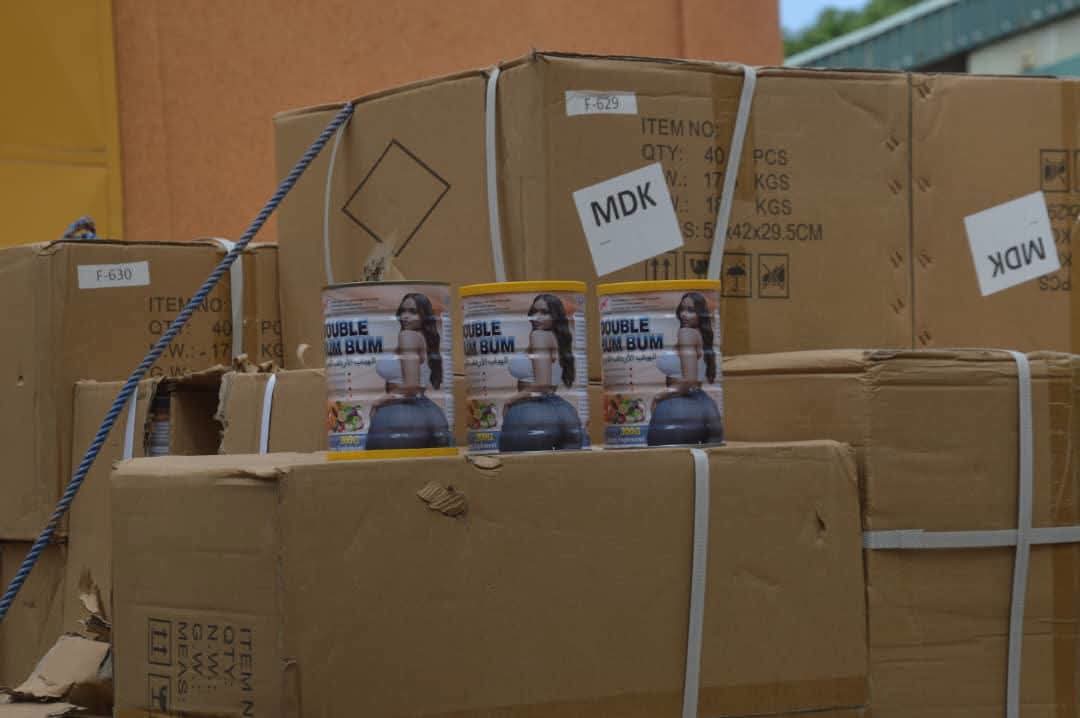
À Zabré, une enquête menée durant plus de deux mois a permis l'interception d'un camion-remorque transportant frauduleusement plusieurs produits de grande consommation. La cargaison comprenait du sucre, de l'huile, du riz, de la farine, des boissons alcoolisées, de la tomate, des cubes alimentaires et des spaghettis. La valeur de cette saisie est estimée à 34,447 millions de FCFA.
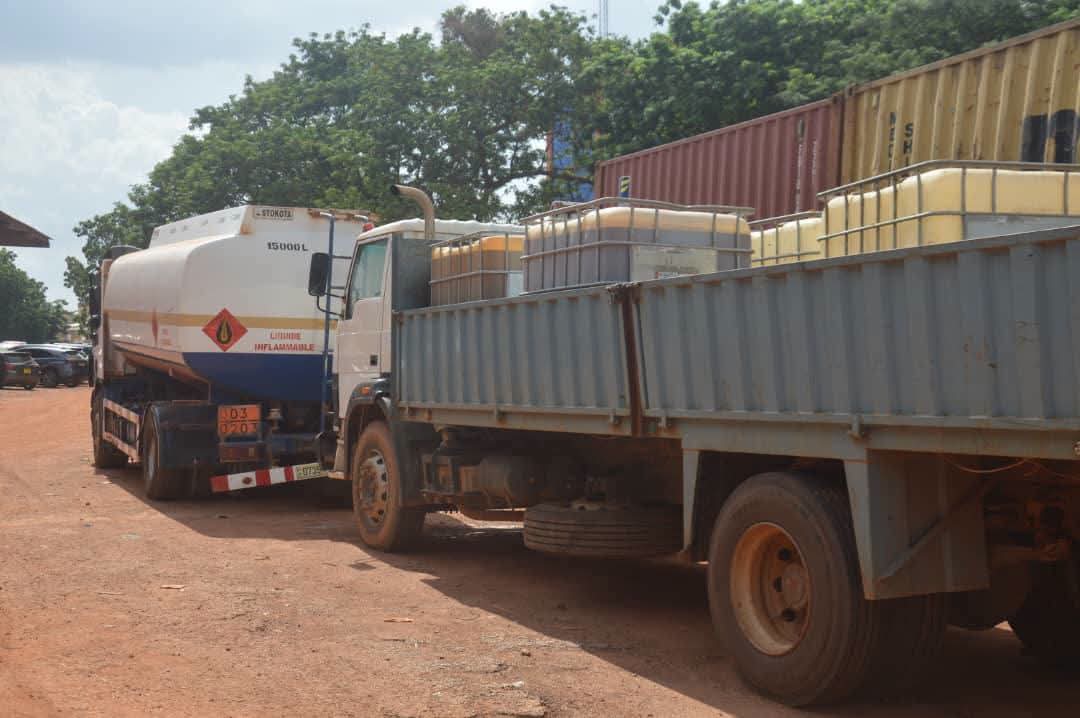
Les agents de la CNLF ont également saisi 160 colis de sachets plastiques interdits à Poè, ainsi que des boissons énergisantes alcoolisées et de la chicha dans le quartier Karpala.
À travers ces différentes opérations, la Coordination nationale de lutte contre la fraude réaffirme sa volonté de protéger l'économie nationale, de préserver les ressources publiques et de garantir la sécurité sanitaire des citoyens. Elle invite par ailleurs les populations à demeurer vigilantes et à collaborer avec les services compétents dans la lutte contre la fraude et la contrebande.
Lefaso.net
Source : Page Facebook Coordination nationale de lutte contre la fraude
Categories: Afrique
Pages



© 2012-2018 Europa Varietas Foundation © 2015-2018 Europa Varietas Association
www.europavarietas.org | info(@)europavarietas(dot)org | Switzerland




We are looking for sponsors for the English translation of these books, please contact turkeandras(at)gmail(dot)com