
Vous êtes ici
Agrégateur de flux
EU-India: Joint Press Release on the 7th Strategic Partnership Review Meeting in New Delhi
The European Union and India held the 7th EU-India Strategic Partnership Review Meeting (SPRM) in New Delhi on 9 November. The meeting was co-chaired by Shri Sibi George, Secretary (West) of the Ministry of External Affairs and Mr. Matti Maasikas, Deputy Secretary-General for Geoeconomics and Interinstitutional Issues of the European External Action Service.
Catégories: Defence`s Feeds
Joint Press Release : 7th India-EU Strategic Partnership Review Meeting
India and the European Union held the 7th India-EU Strategic Partnership Review Meeting (SPRM) in New Delhi on 09 November 2026. The meeting was co-chaired by Shri Sibi George, Secretary (West) of the Ministry of External Affairs and Mr. Matti Maasikas, Deputy Secretary General for Geoeconomics and Interinstitutional Issues of the European External Action Service.
Catégories: Defence`s Feeds
INS SURAT AT MUSCAT, OMAN
Indian Naval Ship Surat arrived at Muscat, Oman, on 08 Nov 2026 to participate in the 15th edition of the bilateral maritime exercise 'Naseem Al Bahr' (Sea Breeze), followed by a Coordinated Patrol (CORPAT) between the Indian Navy and the Royal Navy of Oman.
Catégories: Defence`s Feeds
INAUGURAL INDIA-MYANMAR BILATERAL TRI-SERVICES HADR EXERCISE 'RAHAT MITRA' CONCLUDES AT CHENNAI
The inaugural bilateral Tri-Services Humanitarian Assistance and Disaster Relief (HADR) Exercise 'RAHAT MITRA', conducted between the Defence Forces of India and Myanmar on 05 and 06 Nov 2026, concluded at Chennai. The two-day exercise brought together personnel from the Indian Navy, Indian Army and Indian Air Force, along with a delegation from the Myanmar Defence Forces, to enhance operational interoperability, improve coordination and facilitate the exchange of Best Practices in disaster response operations.
Catégories: Defence`s Feeds
Foreign Minister Wadephul prior to his departure for Paris for the G7 Foreign Ministers meeting
Foreign Minister Wadephul issued the following statement today (9 November 2026) prior to his departure for Paris:
Catégories: Defence`s Feeds
Overcoming global challenges with strong partners: G7 Foreign Ministers meet in Paris
In a world dominated by diverse crises and new challenges, close cooperation between the democracies with the strongest economies and their partners is crucial in order to safeguard freedom and prosperity. The G7 Foreign Ministers Meeting in Paris will focus on urgent global issues such as Russia's war of aggression against Ukraine, the crisis in the Middle East and the opportunities and risks of artificial intelligence.
Catégories: Defence`s Feeds
Secretary Rubio's Meeting with German Foreign Minister Wadephul
No description
Catégories: Defence`s Feeds
Secretary Rubio's Meeting with French Foreign Minister Barrot
No description
Catégories: Defence`s Feeds
Cuba preparing to defend against possible US military aggression: UN envoy
Cuba's Permanent Representative to the United Nations says Havana is taking the threat of a possible US military aggression against the island seriously.
Catégories: Defence`s Feeds
State media new footage offers rare, multi-angle look at GJ-11 drone, revealing design details behind its stealth
CCTV News military channel released new footage on Monday offering a close-up, multi-angle look at the Chinese People's Liberation Army (PLA) Air Force's GJ-11 stealth drone. It also revealed that two of the Air Force's first batch of self-trained female drone operators scored a first-round hit during the GJ-11's first live-fire strike mission. A military affairs expert explained how the design features shown in the video contribute to its stealth performance, and said the model has likely achieved combat and support capability, with technical maturity sufficiently assured.
Catégories: Defence`s Feeds
Foreign Ministry Spokesperson Guo Jiakun's Regular Press Conference on November 9, 2026
No description
Catégories: Defence`s Feeds
China in communication with relevant parties regarding meeting between the Chinese, Russian and US presidents at APEC: FM
China is in communication with relevant parties regarding the meeting between the Chinese, Russian and US presidents, Chinese Foreign Ministry spokesperson Guo Jiakun said on Monday.
Catégories: Defence`s Feeds
AUKUS partners demonstrate autonomous systems at scale through Maritime Big Play Pacific
Australia, the United Kingdom and the United States have conducted the largest demonstration of interoperable maritime autonomous systems to date under the AUKUS Pillar II Maritime Big Play initiative.
Catégories: Defence`s Feeds
Ukraine Battles To Restore Power After Russian Attacks, Ahead Of Abu Dhabi Talks
Ukrainian authorities battled to restore power to hundreds of thousands of people in the east of the country following Russian air strikes, while officials said external power had been restored to the Zaporizhzhya nuclear plant, which is currently occupied by Russian forces.
Catégories: Defence`s Feeds
Trump says renewed strikes on Iran "highly unlikely" if talks progress
U.S. President Donald Trump said Sunday that renewed military strikes on Iran were "highly unlikely" as long as negotiations made progress, but did not rule out further military actions.
Catégories: Defence`s Feeds
Trump Says 'Very Unlikely' To Launch Fresh Iran Strikes If Talks Progress
US President Donald Trump said he is "highly unlikely" to launch fresh air strikes against Iran as long as progress is seen taking place in the peace process.
Catégories: Defence`s Feeds
Explainer: Can Eisenkot form Israeli gov't after getting mandate?
Former Israeli military chief Gadi Eisenkot received a presidential mandate on Sunday to form a government, giving him the first opportunity to unseat Prime Minister Benjamin Netanyahu, Israel's longest-serving prime minister, after an October election stripped his right-wing coalition of a parliamentary majority.
Catégories: Defence`s Feeds
New trends in international investment agreements: tracing the emergence of investment facilitation
The focus of investment treaty-making has shifted from protecting foreign investors towards investment facilitation. Investment facilitation refers to policies that ease investment without granting investors special rights or legal protection. This study provides a comprehensive mapping and comparison of investment facilitation provisions across international investment agreements (IIAs), and evaluates their level of legalisation using the Investment Facilitation Index (IFI). Of the 4,037 IIAs with available texts as of August 2026, 102 explicitly reference “investment facilitation”. A few agreements, such as the Investment Facilitation for Development Agreement (IFDA), the EU–Angola Sustainable Investment Facilitation Agreement (SIFA), the Economic Community of West African States (ECOWAS) Common Investment Code (CIC), the Brazilian cooperation and facilitation investment agreements (CFIAs) and the African Continental Free Trade Area (AfCFTA) Investment Protocol, stand out due to the breadth of measures they incorporate; these could serve as blueprints for future treaties. The data also suggest that although “normative” commitments are relatively well reflected in IIAs, notably on transparency and responsible business conduct, “functional” dimensions such as electronic governance and streamlined application processes remain under-represented. There is also a trade-off between breadth and bindingness: while, on average, almost 57 per cent of covered provisions are framed in mandatory terms, the most comprehensive treaties rely heavily on hortatory language, whereas narrower agreements often achieve higher levels of legalisation. Geopolitical tensions and rising economic security screening, however, limit multilateral buy-in and may constrain the effectiveness of investment facilitation. These findings could be helpful to policymakers and investment promotion agencies, who can gain an overview of existing investment facilitation measures and their bindingness in order to design treaties and reforms of national investment frameworks that turn commitments into effective outcomes.
Dr Rodrigo Polanco is a Titular Professor at the World Trade Institute (WTI), University of Bern and a legal adviser at the Swiss Institute of Comparative Law.
Catégories: Diplomacy & Defense Think Tank News
Pages


© 2012-2018 Europa Varietas Foundation © 2015-2018 Europa Varietas Association
www.europavarietas.org | info(@)europavarietas(dot)org | Switzerland
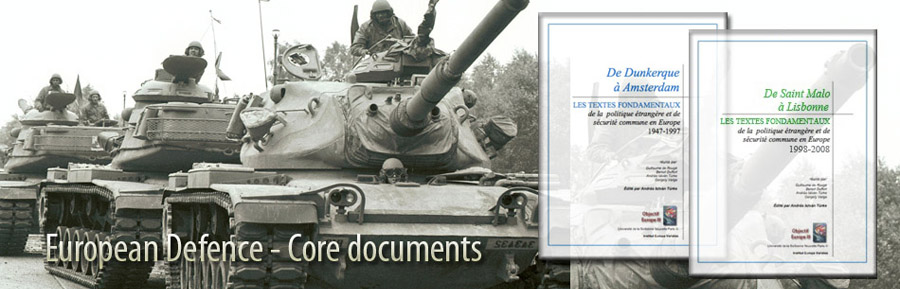
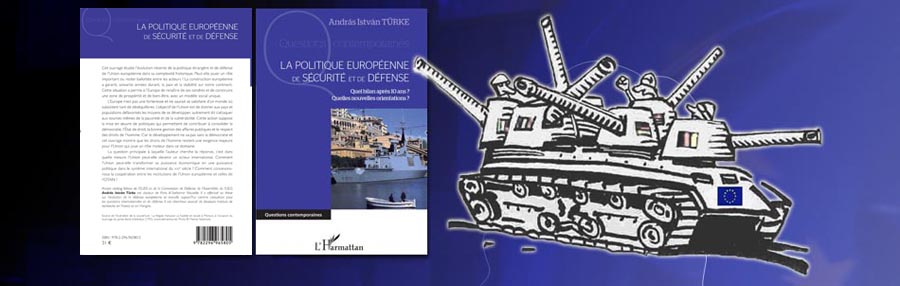
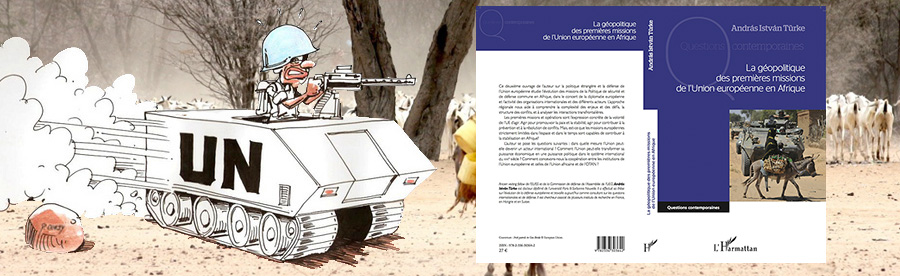
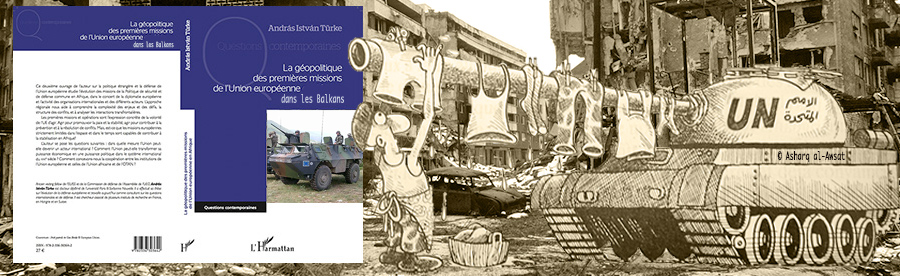
We are looking for sponsors for the English translation of these books, please contact turkeandras(at)gmail(dot)com