
You are here
Africa
Champions League: Erling Haaland scores winner as Manchester City edge out RB Leipzig
Erling Haaland scored the winner to continue his formidable goalscoring record against RB Leipzig as Manchester City returned to winning ways by collecting three points in the Champions League. Enzo Maresca 39;s side have fallen to back-to-back defeats in the Premier League and edged past Brighton on penalties in the Carabao Cup, but eme .
Categories: Africa
Champions League: Gyokeres stars as unbeaten Arsenal see off Slavia
Viktor Gyokeres scored and provided an assist as Arsenal continued their unbeaten start in the league phase of the Champions League with a win over Slavia Prague. Manager Mikel Arteta made six changes to the team that beat Liverpool in the Premier League on Sunday, with Gyokeres leading the line in place of Kai Havertz.
Categories: Africa
Como put nine past Lens to match Champions League record
Como produced a stunning away performance as they put nine goals past a hapless Lens side to match the record for most scored by a team in a Champions League game. The Italian side equalled Bayern Munich 39;s tally against Dinamo Zagreb in 2024 as a remarkable debut European campaign for the Cesc Fabregas 39; team continued in France.
Categories: Africa
'Ghana should also organise midterm elections to boot out lazy MPs' – Solomon Owusu
United Party Director of Communications Solomon Owusu has called for midterm elections in Ghana, arguing that poorly performing parliamentarians should face voters before completing their four-year mandates.
Categories: Africa
Learn AI or risk being left behind – A Plus advises Ghanaians
Gomoa Central MP Kwame A Plus has urged Ghanaians to embrace artificial intelligence (AI), warning that people who refuse to learn how to use emerging technology risk being left behind as industries continue to evolve.
Categories: Africa
British man infected with Ebola in DR Congo to be flown back to UK
The wider risk to the UK public from the deadly virus remains low, a government spokesperson says.
Categories: Africa
Mugabe's son arrested over 'assault' during luxury car smuggling probe
The son of Zimbabwe's late former President Robert Mugabe will appear in court on 5 November with four other men.
Categories: Africa
'Most difficult days of my life' for keeper Owono
FC Andorra goalkeeper Jesus Owono puts out a statement through his club, expressing his sorrow and pain after Tenerife forward Jesus de Miguel's death.
Categories: Africa
The young politicians with African roots making history in the US midterms
For some young Africans, these victories offer a glimpse of what a new generation of voters could do at home.
Categories: Africa
The young politicians with African roots making history in the US midterms
For some young Africans, these victories offer a glimpse of what a new generation of voters could do at home.
Categories: Africa
Mother of Ghanaian boy killed in US 'wants justice' as she flies for funeral
Police have not made any arrests and an investigation is ongoing as authorities search for three teenage boys.
Categories: Africa
ANC under pressure to reverse South Africa decline
As South Africans vote in local elections, residents tell the BBC they are tired of the poor quality of services they get.
Categories: Africa
Rwanda's army team removed from Africa league after US sanctions, NBA says
The US imposed sanctions on Rwanda's army over its role in the conflict in DR Congo.
Categories: Africa
Rwanda's army team removed from Africa league after US sanctions, NBA says
The US imposed sanctions on Rwanda's army over its role in the conflict in DR Congo.
Categories: Africa
The UAE’s Great Leap: Building the City of the Future
Abu Dhabi, United Arab Emirates
By James Alix Michel
VICTORIA, Seychelles, Nov 4 2026 (IPS)
I have stood on the corniche of Abu Dhabi at many moments over more than thirty years. Each time, I reflect on the distance this city has travelled: from a shoreline shaped by modest commercial buildings and dwellings to a capital whose architecture, institutions and ambitions look far beyond the horizon. Glass towers catch the Gulf light. The dome of the Louvre Abu Dhabi scatters sunlight across the water. Yet the transformation that interests me most is not the skyline itself. It is the thinking behind it.
What does it take to build a city of the future? Wealth, certainly. Technology, increasingly. But neither is sufficient without a vision of the society that city should serve. As a frequent visitor, a resident and a longstanding friend of the United Arab Emirates, I have watched that vision take shape. What I see is not a finished model, but a remarkable, evolving example of a country turning resources into possibilities.
That vision did not begin with glass and steel. Some leaders build institutions. Sheikh Zayed bin Sultan Al Nahyan built a nation, and gave it a soul. With wisdom, patience and an open heart, he brought the emirates together in 1971 and planted the seeds of unity, tolerance and generosity that still shape the UAE today. He believed in his people, cared for the land and the sea, and reached out to the world with kindness. The newly declared Zayed the Founder Day, to be observed each year on 7 January, is a beautiful way to honour a man whose vision lives on in every corner of this country. May Allah bless his soul.
No honest account of the UAE’s rise can overlook hydrocarbons. Oil provided the means for an extraordinary transformation. But natural wealth does not automatically produce lasting prosperity. Resources alone cannot build the institutions, skills and economic diversity needed to sustain development. What distinguishes the UAE, in my view, is its determination to treat oil revenue not simply as income to be spent, but as capital with which to prepare for a different future.
Trade, tourism, finance, manufacturing and technology have broadened its economy. Investment in education, healthcare and research reflects an understanding that the most enduring national resource is human capability. For small island states such as Seychelles, the lesson resonates. Our circumstances differ greatly, but the question is familiar: how do we use today’s opportunities to strengthen tomorrow’s resilience? The answer cannot be to wait until vulnerability becomes crisis.
One of the most revealing aspects of Abu Dhabi’s transformation is its investment in culture. The Louvre Abu Dhabi and the wider Saadiyat Cultural District express an ambition extending beyond tourism. They place art, history and encounters between civilisations within the country’s vision of development. The preservation of Qasr Al Hosn and other heritage sites provides an important counterpoint. A city moving rapidly towards the future must also maintain a conversation with its past. Modernity is too often measured in height, speed and scale. Museums, libraries and places of learning offer something less easily measured: space for reflection, creativity and understanding.
The same principle applies to education and healthcare. Institutions such as NYU Abu Dhabi, Sorbonne University Abu Dhabi and Cleveland Clinic Abu Dhabi illustrate the effort to make knowledge and specialised care part of the country’s foundations. Here, the city of the future acquires its deeper meaning: not only in what it displays, but in what it enables people to become.
Artificial intelligence has become central to the UAE’s ambitions. Its digital investments and the establishment of the Mohamed bin Zayed University of Artificial Intelligence signal a determination to help shape technological change. The value of that ambition lies in its human purpose: improving services, healthcare and education, and helping communities manage resources more intelligently. That responsiveness is also felt in ordinary moments.
I have often been struck by Abu Dhabi’s maintained public spaces, walkways and the sense of ease I experience walking its streets. The UAE ranks among the world’s safest places by residents’ perceptions of nighttime safety. Gallup’s 2025 Global Safety Report found that 90 percent of people surveyed in the country felt safe walking alone at night. For me, this is more than a statistic. That quiet freedom from fear is a precious part of daily well-being.
So, too, is the greening of a desert city. Trees, gardens and flowering verges soften the urban landscape. Abu Dhabi’s continuing tree-planting programmes, including native ghaf trees, seek to expand shade and improve the environment along walking and cycling routes. These are not merely decorative touches. They express care for how people experience the places they inhabit. As an islander and an advocate for ocean conservation, I am particularly interested in how urban ambition connects with environmental responsibility.
The UAE’s investment in solar power and other low-carbon energy sources, together with its net-zero commitment, reflects an effort to prepare for a changing energy future. Its continuing dependence on hydrocarbons also makes clear the complexity of that transition. The journey requires sustained implementation: cleaner energy, responsible water use, reduced emissions and habitat protection. The UAE’s mangrove restoration and marine conservation efforts are especially meaningful to me. Mangroves protect coastlines, shelter marine life and store carbon. Coral reefs sustain biodiversity and coastal livelihoods, even as warming seas place them under pressure. For Seychelles and other island nations, these are not abstract concerns. They are questions of security, identity and survival. A city’s relationship with the natural world does not end at its waterfront.
Another defining feature of the UAE is the diversity of those who live and work there. People from across the world contribute to its economy and daily life. Such diversity calls for more than mutual respect. It calls for belonging—and the assurance that every person’s safety matters, whatever their nationality. During the regional conflict, His Highness Sheikh Mohamed bin Zayed Al Nahyan gave powerful expression to that responsibility, placing the protection of citizens, residents and visitors at the top of the UAE’s priorities. “In the UAE,” he said, “everyone is Emirati through their love for this land and their contributions to it.” I find those words deeply meaningful. They speak of belonging not simply as something felt, but as a responsibility embraced by leadership. The Abrahamic Family House, bringing a mosque, a church and a synagogue together within one complex, offers another expression of coexistence. That spirit must also be lived beyond symbolic spaces. Workers’ dignity, fair treatment and opportunities across different backgrounds remain essential measures of progress. Recognising achievements need not mean overlooking the work that remains.
My perspective is also deeply personal. Over decades, I have witnessed the friendship between the UAE and Seychelles develop into practical cooperation. During my years in public office, I saw that partnership support water and electricity infrastructure, renewable energy, healthcare, housing and education. For a small island country, such cooperation is felt in families’ lives: access to treatment, reliable water, a home, or better opportunities for children. I remember with gratitude the late Sheikh Khalifa bin Zayed Al Nahyan. I also deeply value my longstanding friendship with President Sheikh Mohamed bin Zayed Al Nahyan, whose visionary leadership and commitment to his country’s development I have had the privilege of observing at close quarters. That friendship informs my account. It reinforces my belief that national achievement acquires greater meaning when it helps others strengthen their resilience.
The UAE’s experience cannot simply be replicated. Its resources, scale and circumstances are distinctive. The lesson here is not to imitate its skyline, but to draw inspiration from its willingness to imagine beyond present constraints—and to translate that imagination into action. Perhaps that is the deepest meaning of the UAE’s great leap. What I see taking shape is more than a skyline: it is a vision of prosperity that brings knowledge, culture, human well-being and care for the natural world into the same frame. Still evolving, still confronting the challenges that accompany rapid change, the UAE offers a beautiful example of what becomes possible when imagination is matched by the resolve to act.
Along Abu Dhabi’s corniche, the towers catch the light, but it is the horizon that holds my gaze. As someone who has returned to these shores over many years, and whose friendship with this country has deepened along the way, I find both beauty and inspiration in its unfolding story. I leave each walk with a feeling that reaches far beyond this waterfront: that the future need not simply be something we await. It can be something we have the courage to imagine—and the determination to build.
James Alix Michel is Former President of the Republic of Seychelles.
IPS UN Bureau
Categories: Africa
U.S. Strikes Iranian Targets Along Strait of Hormuz Ahead of Midterm Elections as Diplomatic Talks Stall
Ship transits through the Strait of Hormuz have dropped by over 90 per cent since the crisis escalated in late February 2026. Credit: Unsplash/Angus Gray
By Oritro Karim
UNITED NATIONS, Nov 4 2026 (IPS)
On November 2, the United States launched a series of limited, defensive strikes on Iranian targets on Qeshm Island and strategic areas along the Strait of Hormuz. Fired in response to earlier strikes from the Islamic Revolutionary Guard Corps (IRGC) on U.S. aircraft and drones over the Strait, U.S. President Trump noted that the operation does not signal a broader escalation of hostilities and that a diplomatic solution could still be reached.
“I’m not looking to, you know, kill lots of people, but if we have to, we’ll have to. But I’m not looking to do that. And we’re very strong right now,” Trump told Fox News on November 3. “Every ship is at the bottom of the sea. They had 288 airplanes. Every airplane is laying on small little pieces, tiny little pieces all over the runways of Iran. They have no airplanes.”
“They have no anti-aircraft. We took some out last night. It’s just a minor attack. It wasn’t war. They built an anti-aircraft facility. It took them about two months. We watched it get built; as soon as it was completed, we hit it last night very nicely,” he continued.
Occurring on the eve of the U.S. midterm elections, the strikes contradict Trump’s previous statement that the U.S. would not strike Iran ahead of the vote. The U.S.’s role in the Iran War has proven to be increasingly unpopular domestically, largely due to rising fuel prices and economic shocks resulting from the closure of the Strait of Hormuz. This has created significant headwinds for the Republican Party as it aims to consolidate control over Congress.
The strikes, launched with no warning, came as Iran announced a two-day plan to reopen the Strait of Hormuz and resume nuclear talks with Washington. Iranian officials previously stated that the plan could be enacted within one week if the U.S. met seven of its core conditions. This includes lifting the U.S. naval blockade on Iranian ports and coastal areas, establishing a shipping route for the reopened Strait agreed upon by Iran and Oman, removing U.S. sanctions on Iranian oil, and agreeing to a ceasefire that extends to Lebanon.
On November 3, Mohammad Bagher Qalibaf, Speaker of Iran’s Parliament and chief negotiator, declared that Iran had “delivered a firm and rational response” to Washington, adding that “the ball is now in America’s court” to accept its conditions and prevent further escalation. He warned that Iran’s military is readily prepared to retaliate against future attacks from the U.S.
“If Washington makes another strategic miscalculation, it should know that this time, it will face a new battlefield and will find itself even more desperate than it is today,” he cautioned.
Regional officials in the Middle East reported that Israeli Prime Minister Benjamin Netanyahu urged Trump to intensify military strikes, citing concerns over Iran’s nuclear infrastructure and the need to establish absolute deterrence before Iran can rebuild its capabilities. Danny Danon, Permanent Representative of Israel to the United Nations, rejected these claims, stating that the U.S. is making its own foreign policy decisions without Israeli influence.
Before the strikes, U.S. Vice President JD Vance told reporters on November 2 that both he and the president felt “pretty good” about the prospects of reaching a negotiated settlement with Tehran.
“The Iranians are always a little unpredictable, and as the president always says, he retains kinetic options. He retains non-kinetic options, but we’ve certainly made some progress. We’ll see if we can make some more,” said Vance. “Having destroyed their nuclear program, we want to make sure they don’t rebuild it or try to rebuild it. That’s what matters most to the United States. We do think that there is a pathway there, but it really does require a firm commitment and a verifiable commitment that they don’t rebuild that nuclear program,” he added.
Hours earlier, Trump told reporters at the reopening of the Lincoln Memorial Reflecting Pool in Washington that Iran reportedly “want(s) to make a deal, and that could happen.” He added that Tehran previously requested Washington stop targeting its leaders, with Trump affirming that the U.S. would comply.
On November 3, Mohsen Rezaei, Secretary of Iran’s Supreme National Security Council, stated that Washington’s response to Iran’s demands was unsatisfactory, casting doubts that mediation efforts from Pakistan and Qatar have been effective.
“America’s response to Iran’s rights and demands was not convincing,” Rezaei wrote in a statement shared to X (formerly known as Twitter). “They must fully and explicitly address Iran’s seven conditions and act upon them; only in this case will the Strait of Hormuz be reopened.”
On November 2, Iranian authorities announced plans to train a paramilitary force of over 1 million volunteers amid fears of renewed hostilities. Ali Kowsari, deputy head of training for the Basij—a paramilitary force affiliated with the IRGC—announced that starting this week, 1,5000 training bases across the country will aim to train 1 million “sacrificial volunteers.” This follows the previous openings of similar facilities in Tehran in August and September.
IPS UN Bureau Report
Categories: Africa
Pacific Scientists Build a Regional Picture of a Changing Ocean
Dr Lindon Havimana from Solomon Islands National University (SINU) and Dr Christopher Cornwall from Victoria University of Wellington collect intertidal samples from the rocky shore for incubation experiments during PIOAC training in Wellington.
By Sera Sefeti
SUVA, Fiji, Nov 4 2026 (IPS)
The Pacific Ocean connects thousands of islands, and understanding how ocean acidification is unfolding across the region requires more than individual research projects or monitoring stations.
Scientists need observations from different island environments, collected over time, to understand how seawater chemistry is changing and what those changes could mean for marine ecosystems and the communities that depend on them.
The work is being strengthened through regional collaboration, with Pacific scientists sharing data, technical knowledge and research experience to build a more complete picture of a changing ocean.
Dr Katy Soapi, Pacific Community (SPC) Coordinator for the Pacific Community Centre for Ocean Science and a Pacific scientist, says the broader scientific community is aware that ocean chemistry is changing. The priority is now building local evidence to understand how those changes may affect different island environments.
“What Pacific scientists are now doing is building the local evidence needed to understand how those changes may impact our different island environments,” Soapi said.
“At many of our monitoring sites, we are seeing considerable natural variability in pH over days, months and seasons, which is normal,” she said. “It is important to capture this data over time because coastal waters are influenced by temperature, rainfall, freshwater inputs, biological activity, land-based pollution and local oceanographic conditions.”
PIOAC members with Salesa Nihmei from SPREP and a representative from the Asian Development Bank (ADB) at the 6th International Symposium on the Ocean in a High-CO₂ World, Tākina Wellington. Credit: SPC
Monitoring programmes are at different stages across the region. Fiji has an established programme, with monitoring in the Suva area since 2023 and data that contribute to Sustainable Development Goal 14.3.1 reporting.
Samoa has received support through access to monitoring equipment, training and technical advice, while the Solomon Islands programme is newer, with scientists from Solomon Islands National University receiving regional and in-country training as they establish the technical capacity for long-term monitoring. Kiribati and Papua New Guinea also have their own monitoring histories and research priorities.
These differences matter when comparing observations across the Pacific.
“This variation is important; a harbour in Fiji, a lagoon in Kiribati, coastal waters in Samoa or reef environments in Solomon Islands and Papua New Guinea can experience very different combinations of temperature, rainfall, freshwater input, current, biological activity and human pressure,” Soapi said.
“The Pacific is connected, but it is not environmentally uniform.
“This is why local monitoring is important and why we cannot rely solely on regional or global averages.”
Manibua Rota from the Ministry of Fisheries and Ocean Resources (MFOR), Kiribati, presents on ocean acidification monitoring in Kiribati at the 6th International Symposium on the Ocean in a High-CO₂ World, Tākina, Wellington. Credit: SPC
Connecting the Science Across the Pacific
The Pacific Islands Ocean Acidification Centre (PIOAC), established in 2021, supports efforts to connect national monitoring programmes and strengthen scientific capacity across the region.
The Centre brings together the SPC, the University of the South Pacific, the University of Otago and Earth Sciences New Zealand, formerly NIWA.
PIOAC’s work spans the Pacific, through joint work and ongoing discussions with nine Pacific Island countries and territories: Fiji, Papua New Guinea, Solomon Islands, Vanuatu, Tuvalu, Kiribati, Samoa, Tokelau and New Caledonia.
Its work includes providing monitoring equipment, technical advice, training, sensor troubleshooting, data management and quality assurance. It also connects Pacific researchers with international monitoring networks and supports countries in contributing data to regional and global reporting processes.
For scientists working in small teams across geographically dispersed islands, this support helps build the technical capacity needed to maintain monitoring programmes and generate reliable data over time.
Azaria Pickering, an ocean monitoring and technical officer at SPC in Fiji, says regional cooperation has changed how scientists approach monitoring.
“We’ve moved from monitoring our waters as individual countries to building a collective understanding of what’s happening across our Pacific Ocean,” she said.
“Through the Pacific Islands Ocean Acidification Centre and regional partnerships, we’ve created a community where knowledge is shared and challenges are solved together.”
She said the use of common equipment, methods and training was helping countries strengthen their monitoring programmes at home.
“We’re beginning to close critical data gaps across the region and use that evidence to engage our governments, shape national priorities and bring the Pacific’s experience of ocean acidification into global conversations, including at COP.”
For Dr Aleluia Taise of the National University of Samoa, the research is closely connected to the future of Pacific communities.
“As Pacific Islander marine scientists, we believe it is our responsibility as citizens and custodians of the Pacific Ocean to address priority issues affecting our livelihoods and wellbeing,” she said.
Taise says there remains a critical lack of scientific evidence needed to understand the effects of ocean acidification on coral reefs and coastal ecosystems.
“Research must be supported by stronger institutional backing, policy alignment and collaboration with regional and international partners to ensure it can continue.”
Azaria Pickering from SPC selects macroalgae from the holding tank for the biological incubation tests during PIOAC training at the Victoria University of Wellington Coastal Ecology Lab (VUCEL). Credit: SPC
From Measuring Seawater to Understanding Marine Life
While monitoring seawater chemistry provides information about changing ocean conditions, scientists also need to understand how these changes affect marine organisms.
This is the next area of research being developed by Pacific scientists.
In Wellington, scientists from Fiji, Samoa, the Solomon Islands and Kiribati took part in biological experiments training from 5 to 9 October, gaining practical experience in studying how marine organisms respond to ocean acidification and higher temperatures.
The training is intended to strengthen research connecting changes in seawater chemistry with their potential effects on corals, shellfish and other marine organisms.
Soapi said biological research would help scientists develop studies around locally important species and better understand the implications for reefs, fisheries and livelihoods.
“Monitoring seawater chemistry tells us how conditions are changing, while biological research helps us understand what those changes could mean for the organisms that support our reefs, fisheries and livelihoods,” she said.
For Dr Lindon Havimana of Solomon Islands National University, the research is also about ensuring scientific knowledge reaches communities before the impacts become more pronounced.
His interest in ocean acidification research stems from a responsibility to understand, anticipate and communicate changes taking place in the ocean and to consider how communities can prepare for a threat whose impacts may not yet be fully visible.
“I believe that the greatest value of science lies not only in understanding environmental change but also in ensuring that knowledge reaches people early enough to make a difference,” Havimana said.
“As scientists, we have a responsibility to bridge the gap between scientific discovery and community preparedness, transforming evidence into awareness, awareness into action, and action into resilience.”
He said the implications extended beyond ocean chemistry to the health of marine ecosystems, coastal fisheries, food security and the continuation of traditional practices.
Participants from Samoa, Kiribati and Solomon Islands remove their monitored species after a 30-minute incubation at different pH and temperature conditions on Day 1 of the experiment during PIOAC training. Credit: SPC
Taking Pacific Research to the International Stage
These regional efforts were represented at the sixth International Symposium on the Ocean in a High-CO₂ World, held in Wellington, New Zealand, from 13 to 16 October.
The symposium brought together the international scientific community under the theme Moving from Understanding to Action using Multiple Knowledge Systems.
Discussions examined ocean acidification alongside ocean warming, deoxygenation and other pressures affecting marine ecosystems, with a focus on strengthening scientific understanding and connecting research with action.
For Pacific scientists, participation provided an opportunity to present regional research, exchange knowledge and strengthen relationships with the international scientific community.
It also highlighted the challenges facing island countries, including limited monitoring coverage, equipment maintenance, technical expertise and sustained funding.
Dr Kim Currie, an ocean acidification consultant working with SPC, said access to scientific resources differed across Pacific countries.
“Some countries like Fiji, Samoa and the Solomon Islands have the resources to do the careful measurements that are needed, but other countries do not yet have the scientist and equipment necessary to do this work,” she said.
“Working with regional and overseas partners to share knowledge and skills is one important step towards understanding how the Pacific Ocean will cope in the future.”
For Soapi, the importance of that support is also shaped by her own experience as a researcher.
Reflecting on her early work in ocean acidification, she recalled the challenges of deploying monitoring equipment and working in a field where regional scientific support was limited.
“I had received training, but I was nervous about deploying equipment – this was all part and partial of being isolated and being new in a field,” she said.
That experience has stayed with her and influenced her commitment to supporting other Pacific scientists, particularly those working in small teams across large distances.
“For me, coming together means building a Pacific community of scientists who can support each other, share knowledge and collectively understand the changes taking place across our ocean.”
The work underway across the region is still developing. More monitoring, biological research, technical training and sustained support are needed to strengthen the evidence available to Pacific countries.
But by connecting national research programmes and bringing scientists together, the region is building a stronger foundation for understanding ocean acidification.
The aim is not to produce one picture of the entire Pacific but to bring together the different observations and experiences that explain how a changing ocean is affecting individual islands, ecosystems and communities.
IPS UN Bureau Report
Related Articles
- Beyond the Horizon: Raising a Generation to Protect the Blue Pacific
- Pacific Ocean Under Pressure — Now a Region Finally Armed With Evidence
- Bridging Knowledge Systems: How Pacific Communities Are Reclaiming Climate Solutions Through Nature
Excerpt:
From Fiji and Samoa to the Solomon Islands, Kiribati and Papua New Guinea, Pacific scientists are connecting research, monitoring and expertise to better understand how changing ocean chemistry is affecting the region's marine environments.
Categories: Africa
Bad Zionist and Good Zionist? – The Arabs Should Choose the Devil They Know
By Anis Chowdhury
SYDNEY, Nov 4 2026 (IPS)
As in previous elections, the latest Israeli national election offered people no real choice. They had to choose between bad Zionists and good Zionists. Thus, unsurprisingly, there is no clear winner – both major blocs are neck and neck as usual. The only difference this time is the Arab voting power. By uniting and turning out in record numbers, the Arab coalition secured 19 seats (nearly double the 10 it won in 2022), against the Netanyahu-led bloc’s 53 and the Gadi Eisenkot-led bloc’s 48. Neither bloc has a governable majority, so many are looking to the Arab bloc as a kingmaker, either joining formally or supporting one of the blocs on the no-confidence and supply bills. But they are on the horns of a dilemma, caught between a rock and a hard place.
Anis Chowdhury
Bad Zionist and Good ZionistThe Gaza genocide and state-sponsored unprecedented settler violence have made Benjamin Netanyahu and his extreme rightist coalition partners bad Zionists. They have become indefensible to the so-called liberal Zionist friends of apartheid Israel. So, they have pinned their hope on a good Zionist retired General Gadi Eisenkot. To them, General Gadi Eisenkot is a good Zionist, not because he will stop Gaza genocide or ethnic cleansing of the occupied West Bank, but because he will apparently manage it better or make Zionism’s ugly face less visible to the world. So, in the lead-up to Israel’s 27 October election, the liberal Zionists declared this would be “the most consequential” in Israel’s history.
However, there is no good Zionist for the Palestinians or Arabs. The so-called good Zionist Eisenkot served in Netanyahu’s government for eight months during the Gaza genocide. He resigned not because he opposed the Gaza genocide; he differed with Netanyahu only on strategies. So, he is responsible for a long list of war crimes and crimes against humanity. Eisenkot was the Israeli military’s chief of staff when Israeli soldiers massacred nearly 200 unarmed Palestinians in Gaza in 2018. He is credited with being the mastermind of the Israeli’s army’s “Dahiya Doctrine”, which calls for disproportionate force against civilians. Eisenkot opposes Palestinian statehood, wants to perpetuate Israel’s apartheid system, and supports Israel’s illegal settlement in the occupied West Bank.
Eisenkot’s coalition partner, former Prime Minister Naftali Bennett, entered politics as Netanyahu’s chief of staff. He served in the Sayeret Matkal and Maglan special forces units of the Israel Defense Forces (IDF) and was accused of involvement in the massacre of more than one hundred Lebanese civilians in Qana in 1996. Bennett has openly called for the extrajudicial killing of Palestinians, while he reportedly told a national security advisor, “If you catch terrorists (i.e., a Palestinian), you simply have to kill them”.
Eisenkot’s other coalition partner, Avigdor Liberman, a former Netanyahu minister, has advocated that Israel’s citizens should sign a loyalty oath or lose their right to vote.
Lieberman justified the killing of at least 189 unarmed Palestinian protesters during the great March of Return in April 2018 by declaring that there are “no innocents in Gaza”.
Another Eisenkot coalition partner, General Yair Golan, considered the most “left-wing”, was previously the army’s deputy chief of staff. He has been one of the most strident advocates of genocidal crimes against Palestinians in Gaza. On 13 October 2023, Golan said in an interview with Ynet: “First of all, close all the electricity switches to Gaza. I think that in this battle, it is forbidden to allow a humanitarian effort. We need to say to them: listen, until the [captives] are released, from our side, you can die from starvation. It’s totally legitimate”. Thus, Golan echoed Defense Minister Yoav Gallant’s infamous statement that Gaza would receive “no power, no food, no gas” because Israel is “fighting human animals, and will act accordingly.”
Therefore, the Eisenkot-led coalition cannot offer any hope to the Palestinians. If bad Zionist Netanyahu is a rock, Eisenkot-led anti-Netanyahu is a hard place for them.
No good Zionist
There is simply no good Zionist. As the UK Green Party’s recently adopted motion says, Zionism is a form of racism. Pulitzer Prize winner Benjamin Moser, a Jewish child of Holocaust survivors, exposed the ugly truth about Zionism in his rigorously researched book, Anti-Zionism: A Jewish History.
Another child of Holocaust survivors, political scientist Norman Finkelstein has been more critical of the Zionist project, as contained in his several books, the most recent being Gaza’s Gravediggers: An Inquiry Into Corruption in High Places. His research has exposed the darkest side of the Zionist project, the apartheid state of Israel.
The Devil you know and the Devil you don’t know
The newly found Arab power will be most effective by accelerating the downfall of the apartheid state. This can only happen if the known Devil Netanyahu remains in power and the delusion of good Zionism is buried. Netanyahu is not the problem as the so-called liberal Zionists are trying to present; the problem is the Zionist project itself.
The New York Times insists “Israel has always been two things: a Jewish state and a liberal democracy”. One should not be misled by such nice slogans. An apartheid state cannot be a liberal democracy. It is an oxymoron.
Anis Chowdhury, Emeritus Professor, Western Sydney University (Australia). He held senior UN positions in Bangkok and New York and served as Special Assistant to the Chief Advisor for Finance (with the status and rank of State Minister) in the Professor Yunus-led Interim Government. E-mail: anis.z.chowdhury@gmail.com; a.chowdhury@westernsydney.edu.au
IPS UN Bureau
Related Articles
Categories: Africa
Reviewing the UN Charter: Diplomatic Groundwork Should Begin
Credit: metamorworks / Shutterstock
By Jordan Ryan
Nov 3 2026 (IPS)
Article 109 of the UN Charter provides a mechanism for reviewing the Charter itself. It allows a General Conference of all UN members to be convened by a two-thirds vote of the General Assembly and a vote of any nine members of the Security Council. As the Article provides, “Each Member of the United Nations shall have one vote in the conference.”
Even if the prospect of amending the Charter is bleak, a review conference could matter. It would give the wider membership a formal forum to set out the changes it seeks and put the five permanent members of the Security Council under public pressure to respond. That political value is reason enough for member states to begin the diplomatic groundwork, despite the formidable obstacles.
Paragraph 3 of Article 109 set a separate, lower threshold for consideration at the General Assembly’s tenth session. If no conference had been held before then, the proposal to call one was to be placed on the Assembly’s agenda, and the conference was to be held if a majority of Assembly members and any seven Security Council members so decided. Acting under that provision in November 1955, the Assembly decided that a review conference “shall be held at an appropriate time,” and the Security Council concurred the following month despite a Soviet vote against. Seventy-one years later, no conference has been held.
The idea has now returned to the diplomatic mainstream. In November 2024 the leaders of Brazil, India and South Africa called for “a wide-ranging reform of the UN Charter, including the convening of a review conference” under Article 109. At the General Assembly this September, Japan’s Prime Minister, Sanae Takaichi, told the hall that the Charter, “which is now 81 years old, should also be reviewed.” Advocates grouped in the Article 109 Coalition now present a review conference as the most promising route to structural change.
Recent work published by the Toda Peace Institute and the Dag Hammarskjöld Foundation on reinventing the United Nations has reached a similar diagnosis. Several of the changes the organisation needs would require Charter amendment: a more representative Security Council, limits on the veto, and a Human Rights Council with the standing of a principal organ. That makes the case for Article 109 worth testing against the strongest objection to it.
That objection sits in the second paragraph of Article 109. Any change the conference recommends takes effect only when two-thirds of members ratify it, “including all the permanent members of the Security Council.” With 193 members, that means 129 ratifications, and every one of the five must be among them. The privilege that reform seeks to constrain thus returns at the moment of decision. Any permanent member could take part in years of negotiation and then decline to ratify the result. Sceptics conclude that a conference would raise expectations it cannot meet and leave multilateralism weaker than before.
That is an exacting rule, and some advocates of review pass over it too quickly. No procedural device removes it. Yet Article 108, which governs ordinary amendments, also requires ratification by two-thirds of members, including all five permanent members. The incremental path sceptics prefer offers no escape from the veto; it meets it one proposal at a time.
History suggests that permanent members can change position. In December 1963 the General Assembly adopted amendments that enlarged the Security Council from eleven to fifteen members and the Economic and Social Council from eighteen to twenty-seven. France and the Soviet Union voted against, while the United Kingdom and the United States abstained. All five nevertheless ratified, and the amendments entered into force on 31 August 1965. The weight of a membership transformed by decolonisation appears to have altered their calculation. The lesson has limits. Enlarging the Council left the veto untouched, and asking powerful states to surrender privilege is harder than asking them to share a table.
A realistic case for Article 109 therefore has to rest on what a conference can achieve whatever the permanent members decide at the end of the process.
The convening decision itself does not require all five permanent members to assent. Under Article 109(1), a two-thirds majority in the Assembly and votes from any nine Council members can call a conference. The 1955 vote, taken under paragraph 3’s lower thresholds, showed that Soviet opposition did not prevent the Council from concurring. More than 140 of today’s 193 members were not among the 51 states that founded the organisation. A conference would give them a formal voice in reviewing its founding text.
A conference could also generate political commitments that need no Charter ratification. Governments might adopt declarations or agree on interpretations of existing provisions. They could reaffirm Article 27(3), which requires a party to a dispute to abstain from voting on decisions under Chapter VI or paragraph 3 of Article 52, a provision rarely applied in practice. They could build on the General Assembly’s 2022 decision requiring a debate within ten working days after a veto. Such steps would not amend the Charter, but could raise the political cost of obstruction.
The risks run in both directions. Some governments fear that a conference could reopen existing commitments on human rights and gender equality, giving others an opportunity to dilute them. A Charter alteration would require a two-thirds vote in the conference and ratification by two-thirds of UN members, including all five permanent members. Those thresholds would make a regressive amendment difficult to secure, though they would not by themselves prevent non-binding declarations. A careful modalities resolution could define the proposed scope and open the conference by reaffirming the purposes and principles in Articles 1 and 2. Such preparation would take years, which argues for beginning the diplomatic groundwork now.
The strongest argument for Article 109 lies in the alternatives. Security Council reform negotiations have continued since 2009 without agreement on a reform package. Voluntary restraint has not prevented vetoes in the gravest crises. A conference cannot guarantee a revised Charter, but it would give the great majority of states a lawful forum to set out their terms and put each permanent member under pressure to explain its position publicly. The Charter provides this mechanism for review. Member states should decide whether to use it.
Related articles:
Reinventing the United Nations policy brief series
At Hammarskjöld’s Grave, Sixty-Five Years After Ndola
Governing the Ungovernable
Jordan Ryan is a Senior Consultant to the Folke Bernadotte Academy and Senior Counsel (Social Impact) for Hamilton Advisors. He is also a former Vice President for Peace Programs at The Carter Center, where he led strategic planning and implementation of peacebuilding initiatives worldwide from 2015-2018.
This article was issued by the Toda Peace Institute and is being republished from the original with their permission.
IPS UN Bureau
Categories: Africa
Pages


© 2012-2018 Europa Varietas Foundation © 2015-2018 Europa Varietas Association
www.europavarietas.org | info(@)europavarietas(dot)org | Switzerland
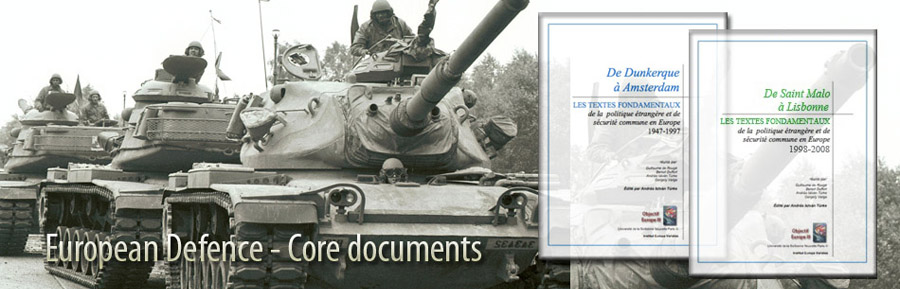
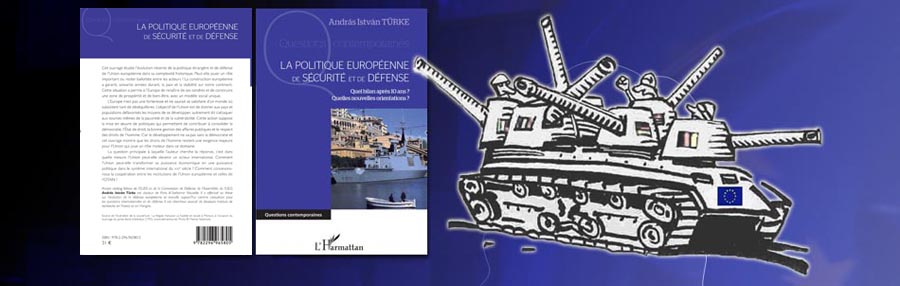
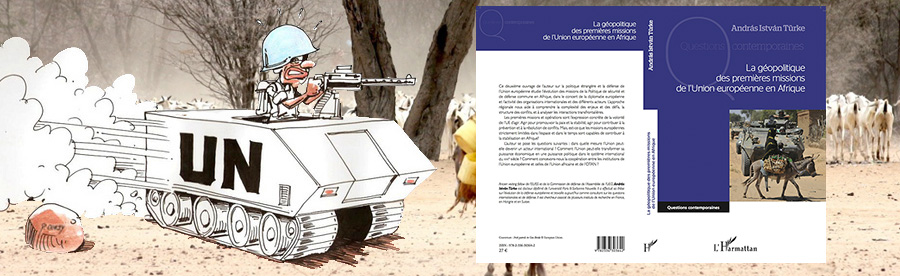
We are looking for sponsors for the English translation of these books, please contact turkeandras(at)gmail(dot)com