
You are here
Feed aggregator
Article by Foreign Minister of the Russian Federation Sergey Lavrov, The Impact of Global Economy on International Security (based on remarks at the G20 Foreign Ministers' Meeting on October 30-31, 2026)
No description
Categories: Defence`s Feeds
Impeachment resolution against US war secretary submitted to Congress
Republican Representative Thomas Massie has introduced an eight-count impeachment resolution against US Secretary of War Pete Hegseth, pointing to his role in the war against Iran and US operations in Yemen and Venezuela.
Categories: Defence`s Feeds
Hamas slams 'Board of Peace' for covering up Israel's role in Gaza flood disaster
Hamas rejects blame for stalled roadmap and urges unrestricted relief and accountability for unmet commitments.
Categories: Defence`s Feeds
Yemeni oil company building, gas station damaged in fresh Saudi strikes
Saudi airstrikes have targeted a building owned by the Yemeni oil company and a gas station in the Yemeni capital, Sana'a.
Categories: Defence`s Feeds
Coalition: Air Defenses Intercept, Destroy Ballistic Missile Launched by Terrorist Houthi Militia Toward Riyadh
Official Spokesperson for the Coalition to Restore Legitimacy in Yemen Major General Turki Al-Malki stated that air defenses intercepted and destroyed a ballistic missile launched by the terrorist Houthi militia toward Riyadh
Categories: Defence`s Feeds
Coalition: Air Defenses Intercept, Destroy Cruise Missile Launched by Terrorist Houthi Militia Toward Riyadh
Official Spokesperson for the Coalition to Restore Legitimacy in Yemen Major General Turki Al-Malki stated that air defenses intercepted and destroyed a cruise missile launched by the terrorist Houthi militia toward Riyadh
Categories: Defence`s Feeds
US must submit to Iran's seven conditions: Security chief
Secretary of the Supreme National Security Council Major General Mohsen Rezaee says the time has come for the United States to submit to Iran's seven conditions.
Categories: Defence`s Feeds
Iran criticizes Grossi's double standard in condemning attack on nuclear facilities
The Iranian delegation in Vienna has criticized the double standard employed by the Director General of the International Atomic Energy Agency (IAEA) Rafael Grossi regarding the condemnation of attacks on nuclear facilities, saying that when Iranian facilities were bombed, Grossi deemed issuing a condemnation to be outside the scope of his mandate.
Categories: Defence`s Feeds
Respected Comrade Kim Jong Un Has Photo Session with Participants in Tenth Congress of UAWK
Respected Comrade Kim Jong Un, General Secretary of the Workers' Party of Korea and President of the State Affairs of the Democratic People's Republic of Korea, had a photo session with the participants in the Tenth Congress of the Union of Agricultural Workers of Korea on November 9.
Categories: Defence`s Feeds
Iron Bird takes flight
The ability to operate far from home depends on more than aircraft. It requires personnel who can establish a forward location, sustain operations and adapt when conditions change.
Categories: Defence`s Feeds
Inspiring the next generation of defence industry professionals
The Schools Pathways Program open competitive grant opportunity continues to strengthen Australia's defence industry workforce.
Categories: Defence`s Feeds
Strengthening Australia against AI-driven cyber incidents
No description
Categories: Defence`s Feeds
Thales confirme l’acquisition de radars GM200 MM/C par la Belgique
Privée de capacités terrestres de défense aérienne depuis trente-sept ans alors qu’elle abrite plusieurs organisations internationales et que ses infrastructures critiques, à commencer par ses ports, peuvent être menacés par des attaques de drones, la Belgique met les bouchées doubles pour se doter d’un bouclier antiaérien multicouche, dans le cadre d’un programme qui, appelé Blue...
Cet article Thales confirme l’acquisition de radars GM200 MM/C par la Belgique est apparu en premier sur Zone Militaire.
Categories: Défense
Without Action, Climate Change Could Push Women Further Behind by 2050, CGIAR Warns
A CGIAR report warns that climate change will further reduce the availability of water and increase the amount of time women spend collecting water by 30%. Credit: Busani Bafana/IPS
By Busani Bafana
BULAWAYO, Zimbabwe &, Nov 10 2026 (IPS)
Fetching water was once a back-breaking daily reality – one that Nomuhle SibandaMpofu will never forget.
Mpofu, from Inyathi village in Bubi District in Matabeleland North Province, is a horticulture farmer and livestock farmer. Water is everything to her livelihood. She has had to overcome the challenge of travelling many kilometres to fetch water for her family and for irrigating her crop and livestock farming enterprise.
For millions of women in the rural areas, increasing droughts, worsened by climate change, are not just an environmental crisis but mean a labourious and time-consuming daily water collection marathon.
Water scarcity could increase women’s water-collection time by 30%, while the shift of rural women into off-farm jobs could either create more resilient livelihoods or entrench inequality, finds a CGIAR GENDER Accelerator report, Advancing equality, transforming futures.
The CGIAR gender report warns that without deliberate policy action, climate change and economic disruption could leave women further behind in food, land and water systems by 2050. The report was released ahead of the 31st Conference of the Parties to the UN Framework Convention on Climate Change (COP31) underway in Antalya, Türkiye, until 20 November 2026.
Farmers like Mpofu have insulated themselves against the risks of water insecurity by drilling boreholes and adopting water-saving methods.
“Before I drilled a borehole I used to fetch water from a community borehole and from a seasonal dam nearby,” Mpofu tells IPS. “I used a wheelbarrow to collect water from the dam, which dried up mid-year, and the community borehole more than a kilometre away was the closest source of water.”
Mpofu grows spinach, tomatoes, kale, onions, and occasionally potatoes on her two-hectare fenced plot.
“I used to wheel three 20-litre containers of water from the borehole before I bought a scotchart and donkey and was able to carry 24 containers of water for my vegetable garden. I would skip two days before I made another water run because of the labour of the task,” Mpofu recalled.
Long Walk to Water Freedom
Then three years ago she saved enough money and drilled a borehole in her homestead and erected a 5000 litre water tank, enabling her to easily water her garden and her goats, sheep, pigs and cattle.
“Before I had a borehole it was difficult collecting water, a tough task which I had to balance with other chores in the homestead, but now that difficulty is past, I now turn on the tap, and water flows.”
Drilling a borehole within her homestead helped Mpofu end at least five hours a day she spent collecting water, a chore that challenges millions of women in rural areas in Africa.
In April this year, ICRISAT helped and installed the Chameleon water-saving tool in Mpofu’s field. The Chameleon Tool is an easy-to-use tool that helps farmers apply the right amount of water to their crops. It consists of three sensors permanently installed at different depths in the soil. A hand-held reader shows blue light for wet soil, green light for moist soil or red light for dry soil.
“Before I used to water my crops almost every two days, but now I water after four days when it is hot and after five days when it’s cloudy, saving a lot of water that way,” said Mpofu.
The International Crops Research Institute for the Semi-Arid Tropics (ICRISAT) has helped smallholder farmers in Southern Africa manage irrigation water more efficiently using the Chameleon soil moisture sensor.
With the El Niño phenomenon – a natural climate pattern characterised by the unusual warming of surface waters in the central and eastern tropical Pacific Ocean – now underway, there are growing fears of widespread drought in Southern Africa. The 2026–2027 El Niño is projected to cause water shortages and severely disrupt agriculture production across Southern Africa.
The CGIAR GENDER Accelerator report notes that the global food crisis — fuel, fertiliser, climate extremes, trade disruptions — has disproportionately impacted women over the past year. At the same time, women are central to building resilient food systems needed to guard against emerging threats.
Els Lecoutere, senior officer at the CGIAR Gender Impact Platform and one of the report’s authors, highlights that the report was motivated by the need to predict and prepare for an uncertain future, as negative impacts of climate change are seen in increasing droughts and water scarcity, which affected women differently.
“We do know that climate change is widening gender gaps, so what should we do now so that we avoid a future that could be more unequal in food systems rather than more unequal if all these crises happen?” Lecoutere said. “We sought to look into the future and learn from what we know now, as we have a lot of evidence of what works to increase gender equality.”
Projections based on the current trends show that by 2050 in a business-as-usual scenario, the Middle East and North Africa region will still have a female unemployment gap and a female earnings gap, and in South Asia the female earnings gap will improve, but a big female earnings gap will remain. While in Sub-Saharan Africa employment will go up in the most optimistic scenario, the female earnings gap remain stagnant.
“Water will be scarcer in some regions, and we already know that the task of collecting water falls on the shoulders of women and girls, and they spend so much time on that task, meaning the education of girls is affected, and women, for instance, cannot open their shops or attend to other activities,” Lecoutere said.
“Given the norm that women and girls are in charge, given the lack of infrastructure, the implications for women and girls are clear: that without a change of customs, the choices and options they have are reduced.”
Closing the Gender Gap
Opportunities to reduce gender inequality include institutional, legal and social reform, inclusive infrastructure, social protection, improved data-gathering and the responsible use of emerging technology, the CGIAR GENDER Accelerator report recommends.
Ismahane Elouafi, Executive Managing Director of CGIAR, notes that we cannot feed our future without including women in our food systems.
“The choices we make over the coming years will determine whether food, land, and water systems become more equitable or more unequal, more resilient or more fragile,” said Elouafi.
The Rome Declaration on Water Scarcity in Agriculture, adopted during the High-level Rome Water Dialogue in Italy in 2024, acknowledged that drought responses are contributing to crop failures in parts of the world and an acute food insecurity crisis in vulnerable countries. The Declaration noted changing rainfall patterns are resulting in increased droughts.
“I am aware that with any drought women are in a difficult situation where they have to collect water over a long distance. I encourage women to invest in boreholes; they are one solution to surviving the drought by bringing water closer to home and relieving them from the task of collecting water from afar,” Mpofu says.
The report also finds that digital technologies hold significant potential to bridge gender inequities across food systems, despite the current digital divide between men and women. It cites research showing that in Kenya, for example, women are up to 25% less likely than men to access digital climate advisory services due to structural gender barriers. The report calls on technology developers to involve women in the development of breakthrough technologies like AI before scaling their use.
“Investing in women, not as labourers, but as leaders, is the path towards unlocking the full potential of our food, land and water systems,” said Nicoline de Haan, Director of the CGIAR GENDER Accelerator.
IPS UN Bureau Report
Related Articles
Categories: Africa
Grosse perturbation sur l'axe Iita-carrefour Godomey ce mardi
La circulation sur l'axe Iita-carrefour et le pont de Djonou a été fortement perturbée dans la matinée de ce mardi 10 novembre 2026. Un accident de la circulation survenu sur cet axe stratégique en serait la cause.
Grosse perturbation sur le tronçon Iita-carrefour Godomey ce mardi 10 novembre 2026. Les usagers en provenance d'Abomey-Calavi pour Cotonou ont dû emprunter les voies de contournement ; notamment l'axe Iita-carrour-carrefour-Tankpè-Womey-Cocotomey pour se rendre à Cotonou.
Selon les forces de sécurité déployées sur les lieux pour réguler le trafic, un accident de la circulation serait à l'origine des perturbations observées cette matinée. Des agents de la Police républicaine sont fortement déployés pour rétablir le trafic.
F. A. A.
Categories: Afrique, Oroszország és FÁK
India’s Diwali: How Irresponsible Celebrations Spoil the Festival for Many
Traditionally a festival of lights, essentially lamps, Diwali has become a celebration of noise. Firecrackers are creating massive sound and air pollution.
Categories: Diplomacy & Crisis News
Le Bénin renforce ses capacités de diagnostic et d'entretien avec deux équipements de pointe
Le secteur routier béninois franchit une nouvelle étape dans la modernisation de ses outils de diagnostic et d'entretien. Un déflectographe et un ScanRoad ont été acquis dans le cadre du partenariat entre le Bénin et les États-Unis, notamment le Millennium Challenge Corporation (MCC).
Le Bénin dispose désormais de deux équipements technologiques spécialisés de diagnostic et d'entretien de route. Il s'agit d'un déflectographe et d'un ScanRoad, acquis dans le cadre du partenariat avec les Etats-Unis d'Amérique, notamment le MCC, et devient ainsi le premier pays de la sous-région à disposer simultanément de ces deux outils dédiés à l'évaluation de l'état des infrastructures routières.
L'acquisition de ces équipements s'inscrit également dans le cadre du projet Infrastructure du Corridor (IC), mis en œuvre au titre du Compact. Elle vise notamment à renforcer les capacités techniques des acteurs du secteur des transports et à améliorer les pratiques d'entretien du réseau routier national.
Grâce à ces équipements, les services techniques disposeront de données plus précises et fiables pour apprécier l'état des chaussées, détecter les dégradations et déterminer les interventions nécessaires à leur entretien ou à leur réhabilitation.
Le déflectographe pour évaluer la résistance des chaussées
Le déflectographe est un appareil destiné à mesurer les déformations des différentes couches d'une chaussée sous l'effet d'une charge. Il permet d'analyser le comportement structurel d'une route lors du passage d'un véhicule et d'évaluer sa capacité à supporter les sollicitations du trafic.
Les données recueillies permettent notamment de repérer les zones de fragilité, d'apprécier la résistance des chaussées et d'identifier les risques potentiels de dégradation. Ces informations constituent une base technique importante pour définir les travaux à réaliser et mieux planifier les opérations d'entretien et de réhabilitation.
Le ScanRoad pour un diagnostic détaillé du réseau routier
Le ScanRoad vient compléter les fonctionnalités du déflectographe. Cet équipement permet de collecter des données sur les caractéristiques des infrastructures routières et de relever les dégradations susceptibles d'affecter leur état.
Son utilisation contribuera à améliorer la connaissance du patrimoine routier et à fournir aux professionnels des éléments objectifs pour orienter les choix techniques. Associés, le déflectographe et le ScanRoad offrent ainsi des possibilités d'analyse plus approfondies pour évaluer les routes et hiérarchiser les interventions.
Vers une gestion plus préventive des infrastructures routières
La mise à disposition de ces deux équipements représente une avancée pour le secteur routier béninois. Elle renforce les moyens nationaux de surveillance et de diagnostic des chaussées, tout en favorisant une gestion de l'entretien davantage fondée sur des données techniques.
L'objectif visé est de réduire le recours aux interventions tardives, souvent plus coûteuses, au profit d'une approche préventive permettant d'anticiper les dégradations et d'intervenir au moment opportun.
À terme, cette modernisation devrait contribuer à améliorer la qualité et la durabilité des infrastructures routières, à optimiser l'utilisation des investissements publics et à limiter les coûts liés à la détérioration avancée des routes. Elle devrait également favoriser de meilleures conditions de circulation et renforcer la sécurité des usagers.
À travers cette acquisition, le Bénin consolide ainsi ses capacités techniques en matière de gestion du réseau routier et se dote de nouveaux moyens pour améliorer durablement la qualité de ses infrastructures de transport.
F. A. A.
Loto Fortune 11 H : les numéros gagnants
LES RÉSULTATS LOTO FORTUNE SONT LÀ !
TIRAGE N°180/26 Mardi 10 Novembre 2026 (11H)
62 • 53 • 17 • 55 • 33

Félicitations aux heureux gagnants !
Pas encore gagné ? Gardez le sourire !
Rendez-vous au prochain tirage de 14H pour une nouvelle chance.
Jouez dans les centres de jeux ou en ligne : Tapez 590# ou lnbloto.bj
Jouez avec modération et responsabilité. Le jeu doit rester un plaisir.
A TOI DE JOUER #Akaxòa
#LNBSA #XòGbɔnAlɔkpaVo #JeuResponsable #LaChanceAvecModération
Pages


© 2012-2018 Europa Varietas Foundation © 2015-2018 Europa Varietas Association
www.europavarietas.org | info(@)europavarietas(dot)org | Switzerland


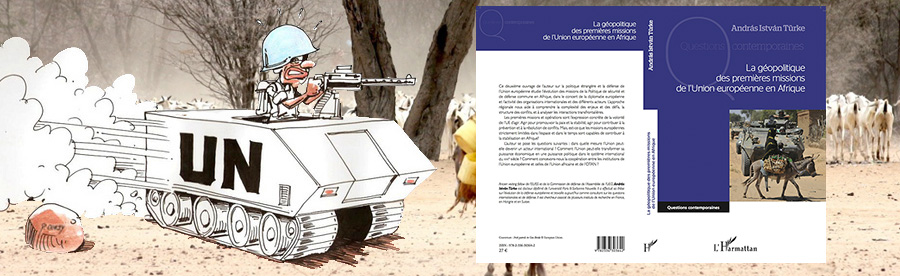
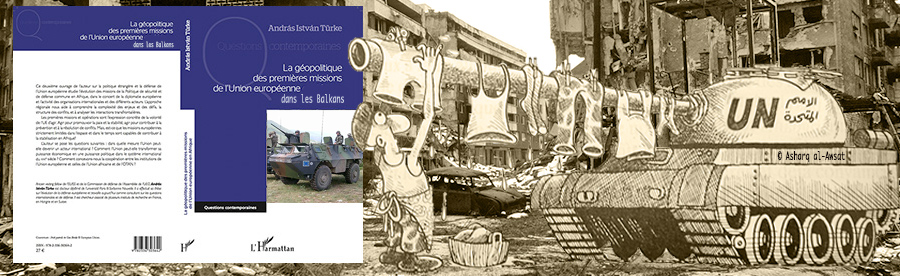
We are looking for sponsors for the English translation of these books, please contact turkeandras(at)gmail(dot)com