
Vous êtes ici
Defence`s Feeds
Germany : BND's new diplomat-VP embodies spy service's sweeping reform drive
It's not an obvious match, especially in Germany. But on 1 July, it was indeed a diplomat, one who enjoys the company of spies, who was appointed vice-president of Germany's BND foreign intelligence service. In his new role, Maximilian Rasch [...]
Catégories: Defence`s Feeds
China/France/Russia/Vietnam : French spy's daughter and SVR, French combat swimming facilities, Hanoi and French security archives, CCP and rare earths
Russia – Georges Pâques's daughter guest of honour at CIS intelligence vets' reunionThe daughter of Georges Pâques (IO, 16/06/25), the [...]
Catégories: Defence`s Feeds
China : Beijing's spies recruiting foreign intermediaries for LinkedIn operations
The fact that an operational procedure is made public – and, moreover, by five intelligence agencies at once – often [...]
Catégories: Defence`s Feeds
France/Russia/Ukraine : Silver Eye, the PR firm helping Ukrainian tycoon Vadim Iermolaiev after Monaco attack
The crisis communications and reputation monitoring specialist Silver Eye has been approached by the family of Ukrainian oligarch Vadim Iermolaiev following the attack on him on 29 June in Monaco.
Catégories: Defence`s Feeds
This LEO will never see the job the same way again
A female police officer in North Charleston, South Carolina was jumped by a group of teenagers during a "teen takeover." pic.twitter.com/Ibf8lj0sDf
— Daily Loud (@DailyLoud) July 5, 2026
Catégories: Defence`s Feeds
Meeting between Prime Minister Muhammad Shehbaz Sharif and President Recep Tayyip Erdoğan
No description
Catégories: Defence`s Feeds
Royal Navy Trials First At-Sea Strike Drone Launch
A Nyan One Way Effector (OWE) was launched from the experimental testbed vessel XV Patrick Blackett while the ship was underway off the south coast of England.
The trial, which according to image data took place in early June 2026, is billed as the next step towards the operational integration of one way effector (OWE) drones into the British military. The Nyan OWE, designed by BAE Systems subsidiary Callen-Lenz, was previously tested from land by British Army personnel in Estonia.
The Royal Navy has successfully launched a strike-capable drone from a ship at sea, marking a significant step forward in the UK’s drive to create a hybrid naval force to defend against evolving threats. | Source: Crown Copyright 2026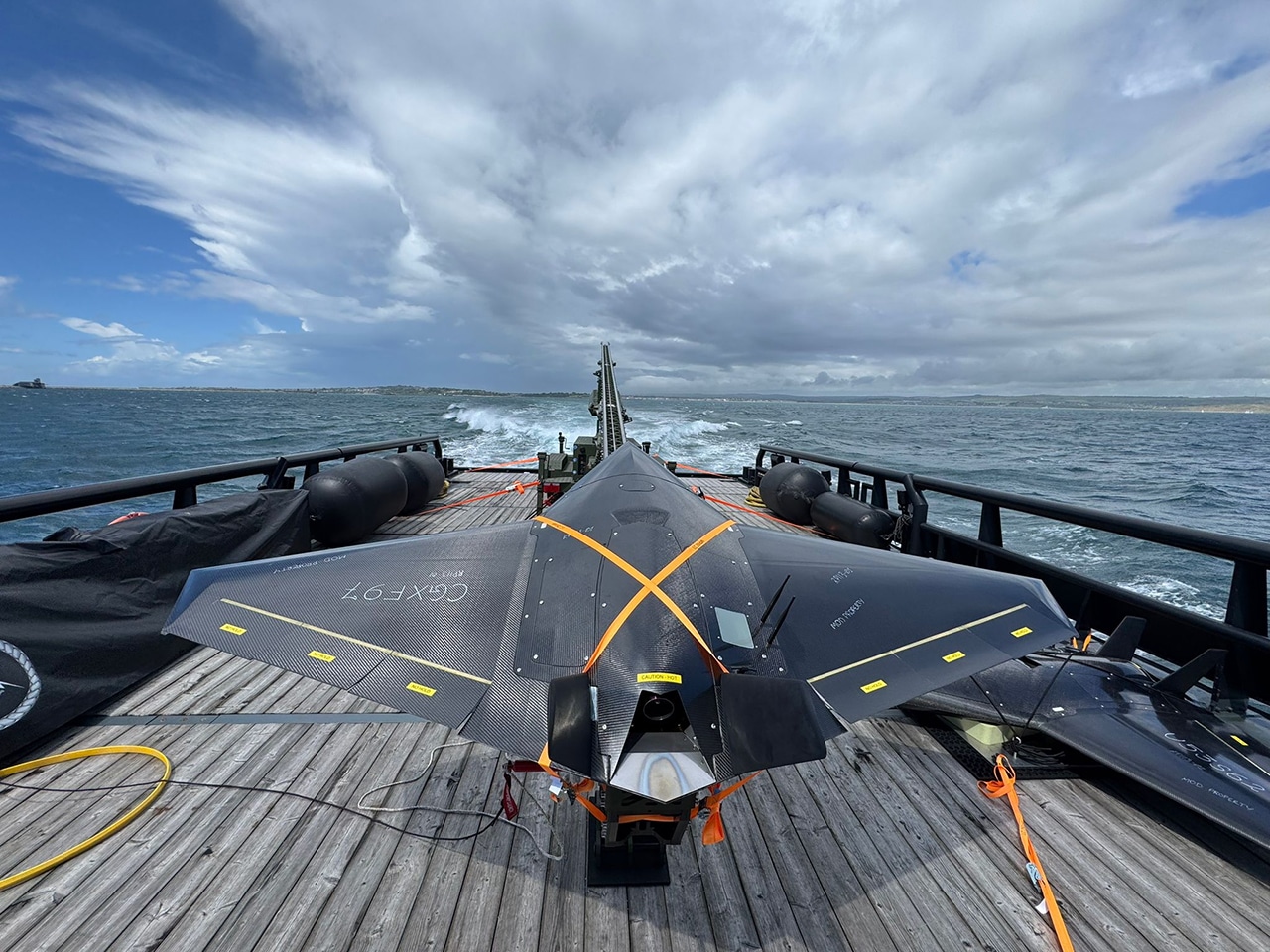
Organised under Operation Neptune Reach, the launch brought together personnel from the Royal Navy, Royal Air Force, and the British Army. Launching an OWE drone from a Royal Navy vessel has been listed as the first goal of Project VANTAGE, with latter stages focused on spreading OWE launch capability to vessels across the fleet, up to and including the Queen Elizabeth class aircraft carriers. This is a key part of the Ministry of Defence’s aim to transform the Royal Navy into a ‘hybrid navy’, leveraging a tailored blend of crewed and uncrewed systems with the mantra ‘crewed where necessary, uncrewed wherever possible‘.
.@BAESystems @callenlenz Nyan One-Way Effector launched from @XVPTBK https://t.co/KR68KfHm3I pic.twitter.com/VA8vH69274
— Navy Lookout (@NavyLookout) July 3, 2026
Lieutenant Commander David Burton, Maritime OWE capability sponsor, Royal Navy, said: “This trial makes a significant step forward in delivering Maritime One-Way Effectors at pace.
“Under Project Vantage we are planning to integrate these capabilities into the Hybrid Navy, combining crewed platforms with uncrewed systems to expand reach, increase tempo and enhance lethality. Working closely with our army colleagues, this activity demonstrates how we are accelerating Atlantic Strike concepts into practical, deployable capabilities of the Fleet,” he added.
Luke Pollard MP, Minister of State for Defence Readiness and Industry, said: “Britain is serious about the transition to a Hybrid Navy with new, powerful drones at the heart of the Royal Navy. By bringing together Army and Navy expertise to field strike drones from a ship at sea, we are accelerating the capabilities our forces need to stay ahead of our adversaries.”
View this post on Instagram
A post shared by 26th Regiment Royal Artillery (@26royalartillery)
The Nyan OWE, designed for precision strike missions, is powered by a small ‘microturbine’ jet engine, and has a wingspan of 2.9 metres. In a February 2026 direct award contract notice, the MoD noted it as the only off-the-shelf product of its type registered with the UK Military Aircraft Register, stating: “it is the only feasible option to bring into service in the near term on the grounds of safety and legality”.
British Army crews in Estonia move a Nyan OWE on the ground. | Source: via BAE Systems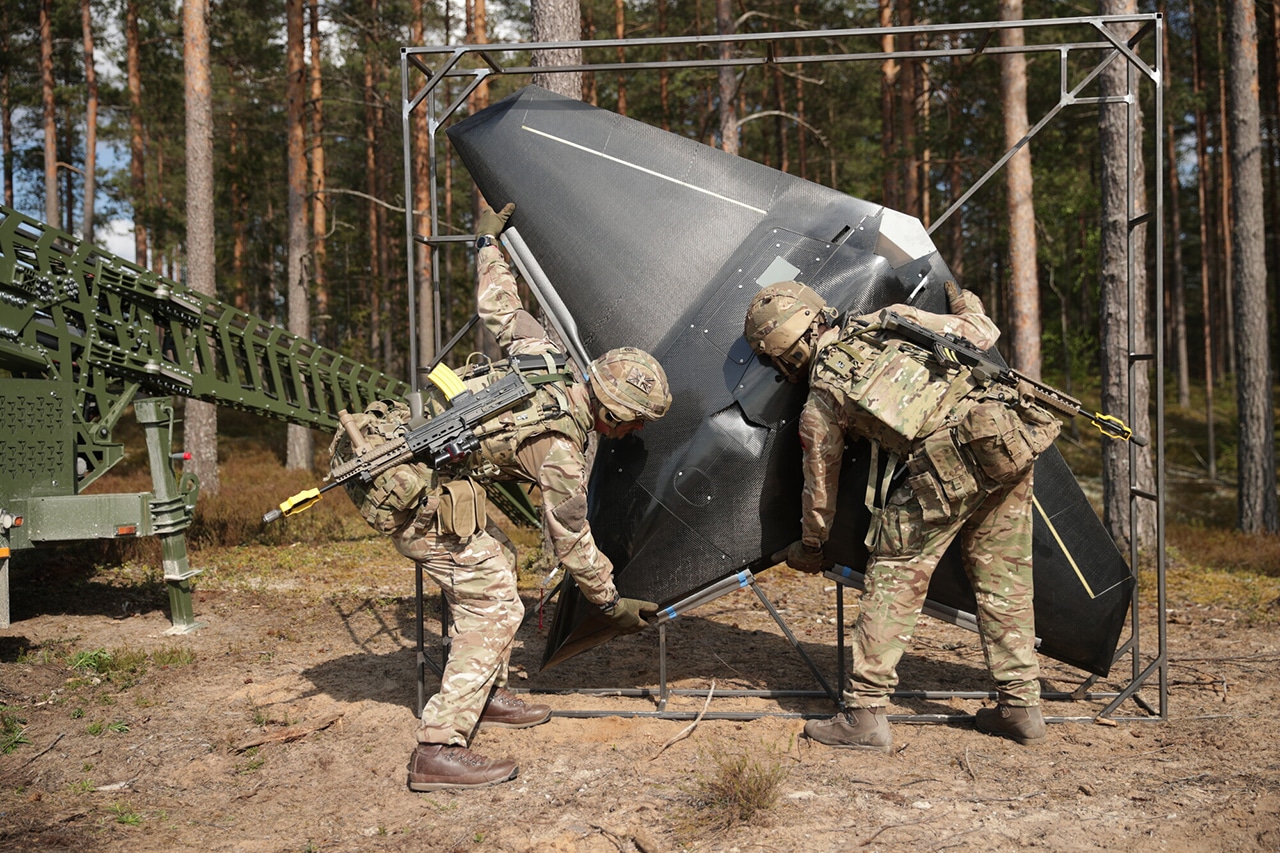
Matt Foster, CEO of BAE Systems’ Callen-Lenz, says over 1,000 Nyan units have been produced so far, and it has proven itself during land-based trials. “Now it has successfully demonstrated its ability to add real value in a maritime environment too. These trials reflect strong collaboration across the services and industry, highlighting the pace at which we can deliver innovation to advance the UK’s integrated, multi-domain defence capability.”
The drone was launched from a rail installed on the Patrick Blackett’s rear deck, and then directed towards a pre-designated target. Data from the test is now being analysed by a specialist Royal Navy team as well as the Royal Air Force’s Air and Space Warfare Centre (ASWC).
The Royal Navy has successfully launched a strike-capable drone from a ship at sea, marking a significant step forward in the UK’s drive to create a hybrid naval force to defend against evolving threats. | Source: Crown Copyright 2026 XV Patrick Blackett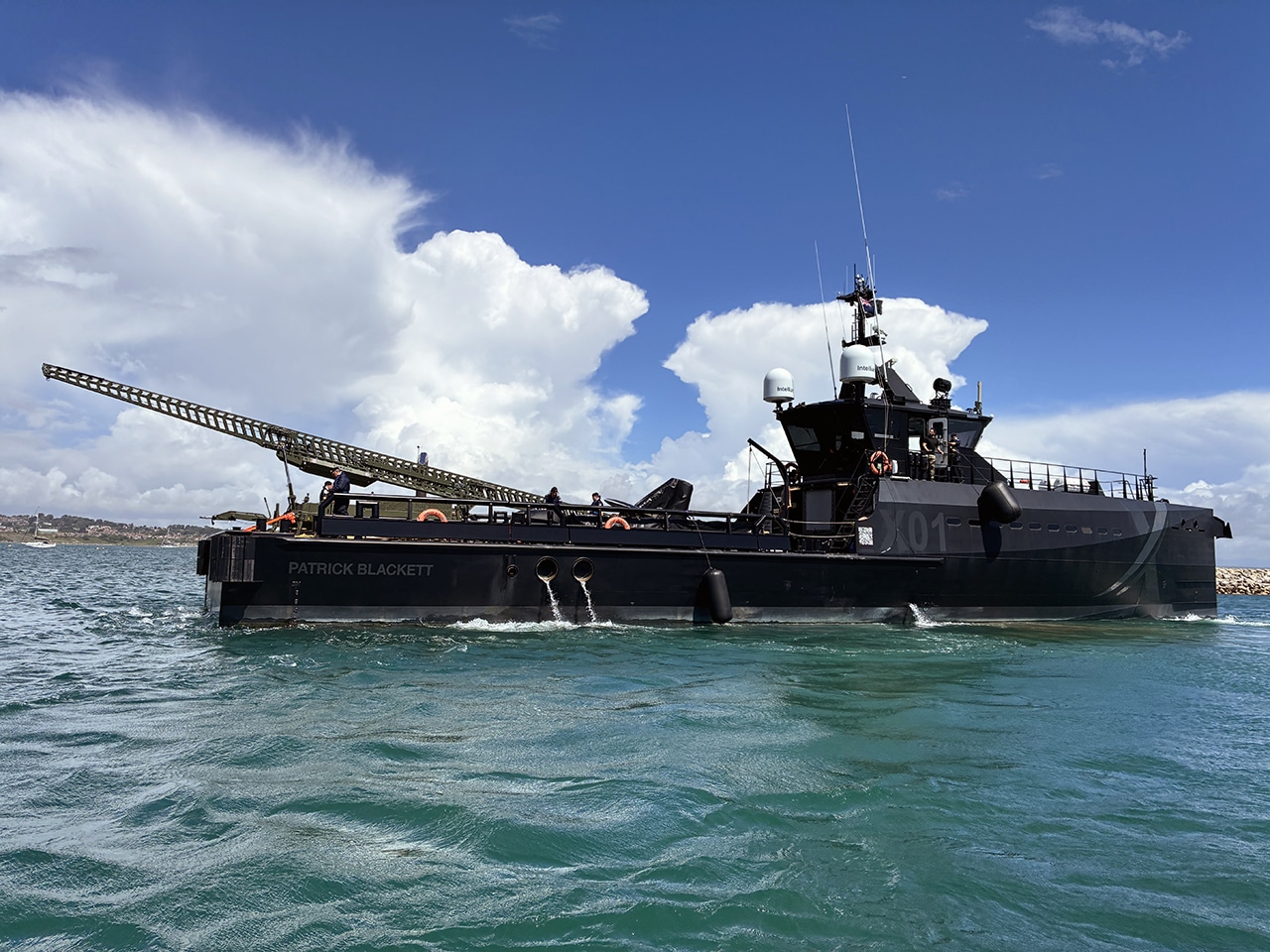
The futuristic all-black trials vessel XV Patrick Blackett was acquired by the Royal Navy in 2022, and officially began acceptance trials in February 2023. Although not a commissioned Royal Navy vessel, it is crewed by Royal Navy personnel and is wholly owned by the UK Government.
Its primary role is supporting trials of uncrewed surface and sub-surface vessels, which are in line to become a major part of the Royal Navy’s overall fleet structure in the coming years.
Confimation of the new RN construction plan, as radical as Fisher’s new navy. These were revealed in the recent Frazer-Nash NDP renders (below).
Type ?? Common Combat Vessel, smaller crewed command hub (possibly AH140 based?) to be in-service by early 2030s.
Type 91 – uncrewed… https://t.co/NJcFFPFeE3 pic.twitter.com/l2mpWVInfI
— JamesFennell MBE (@FennellJW) June 29, 2026
The ship’s large, open rear deck area is ideal for frequent configuration changes to support different programs. In this case, it provides ample room for the rail launcher. In one previous exercise, the deck area has even been used as a target area for dummy bombs dropped from a drone.
UAV Roton conducts a successful artificial bomb drop on XV Patrick Blackett as part of a training exercise in Portugal during exercise REPMUS24. | Source: LPhot Daniel Bladen/Crown Copyright 2024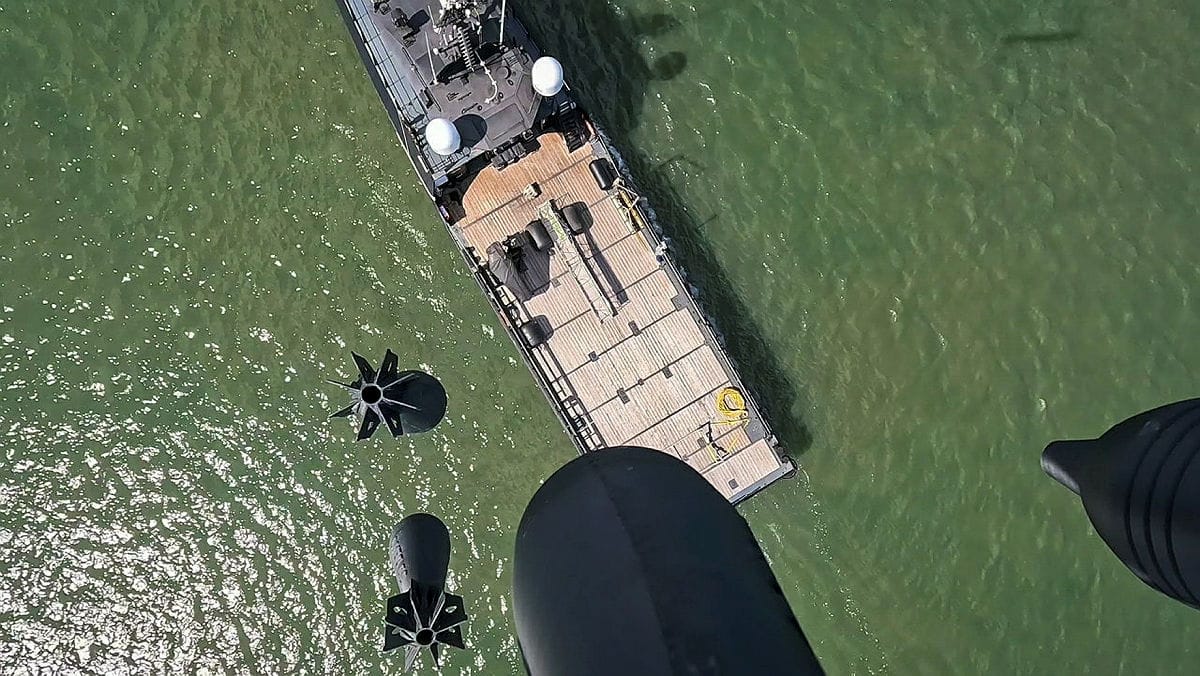
A lesser seen but vitally important additional part of XV Patrick Blackett’s duties is pioneering the use of quantum navigation equipment at sea. These systems use atom interferometry to provide inertial navigation, meaning that it could provide the answer to the problems posed by the vulnerability of GPS. Additionally, quantum navigation would work in places where GPS simply can’t – under the sea, underground, or in some of the few locations in the world where access to reliable global navigation satellite systems (GNSS) cannot be guaranteed.
The first UK test of airborne quantum navigation systems took place from MoD Boscombe Down in 2024, backed by BAE Systems and Qinetiq.
Catégories: Defence`s Feeds
France/Syria : Several CAC 40 leaders set to join Macron in Damascus
Several French business heavyweights will join the French delegation heading to Damascus with French President Emmanuel Macron next week. Those [...]
Catégories: Defence`s Feeds
Prime Minister attends Funeral Ceremony of late Supreme Leader of Iran
At the invitation of the President of the Islamic Republic of Iran H.E Dr Masoud Pezeshkian, Prime Minister Muhammad Shehbaz Sharif attended the funeral ceremony of the late Supreme Leader of the Islamic Republic of Iran, Ayatollah Seyyed Ali Khamenei, who had embraced martyrdom on 28th February, 2026 during the attacks on Iran.
Catégories: Defence`s Feeds
Press conference with Federal Chancellor Merz and the B3 heads of state and government - "The security of the Baltic States is also the security of Germany"
Press conference with Federal Chancellor Merz and the B3 heads of state and government
Catégories: Defence`s Feeds
New Report Blames Russia’s Shadow Fleet for Europe Drone Incursions
A report by the International Institute for Strategic Studies (IISS) assesses that it is ‘highly likely’ many of recent drone incidents throughout Europe were ordered by Moscow as part of a wider hybrid campaign against NATO.
The investigation focuses on incidents taking place between August 2024 and February 2026, including incursions into the airspace of thirteen individual countries. All but one of these nations, the exception being Ireland, are members of NATO.
Among the incursions documented in the report are those which targeted U.S. Air Force sites in the UK – which The Aviationist covered in depth across three articles – as well as the incident over the French Navy ballistic missile submarine base at Île Longue.
This report assesses that it is highly likely the Kremlin conducted a coordinated Uninhabited Aerial Vehicle (UAV) campaign over Europe between August 2024 and February 2026, spanning a dozen NATO states and Ireland.
It is also likely that Russian-linked vessels and the shadow… pic.twitter.com/pGRtWRHPtE
— IISS News (@IISS_org) July 2, 2026
By corroborating the various reports of drone incursions with data relating to ships that are known or suspected to belong to Russia’s shadow fleet, the IISS has named several vessels in particular that it believes were responsible for launching and/or directing the drones.
It notes that the cargo vessel Hav Dolphin (IMO 9073854), investigated by both Germany and the Netherlands after drone incursions in the spring of 2025, was in fact docked in Hull, UK, while British and American authorities were dealing with the drone sightings over military sites in November 2024.
Suspected drone carrier / cargo ship HAV DOLPHIN entered Baltic Sea via Kiel kanal, last port Antwerp. Stated destination Vasa, FI
The Russian crewed ship is suspected if being behind drone flights over military installations in NW Germany a few months ago. pic.twitter.com/i4QfsyLyzi
— auonsson (@auonsson) August 24, 2025
At the same time, the tanker Seasons I (IMO 9308950) travelled eastbound through the Straits of Dover and routed approximately parallel to the southern coast of East Anglia where RAF Lakenheath, RAF Mildenhall, and a number of other sensitive U.S. and UK military facilities are located.
Positions of selected Russian shadow-fleet tankers around Germany and the UK, 26 November 2024 | Source: The International Institute for Strategic Studies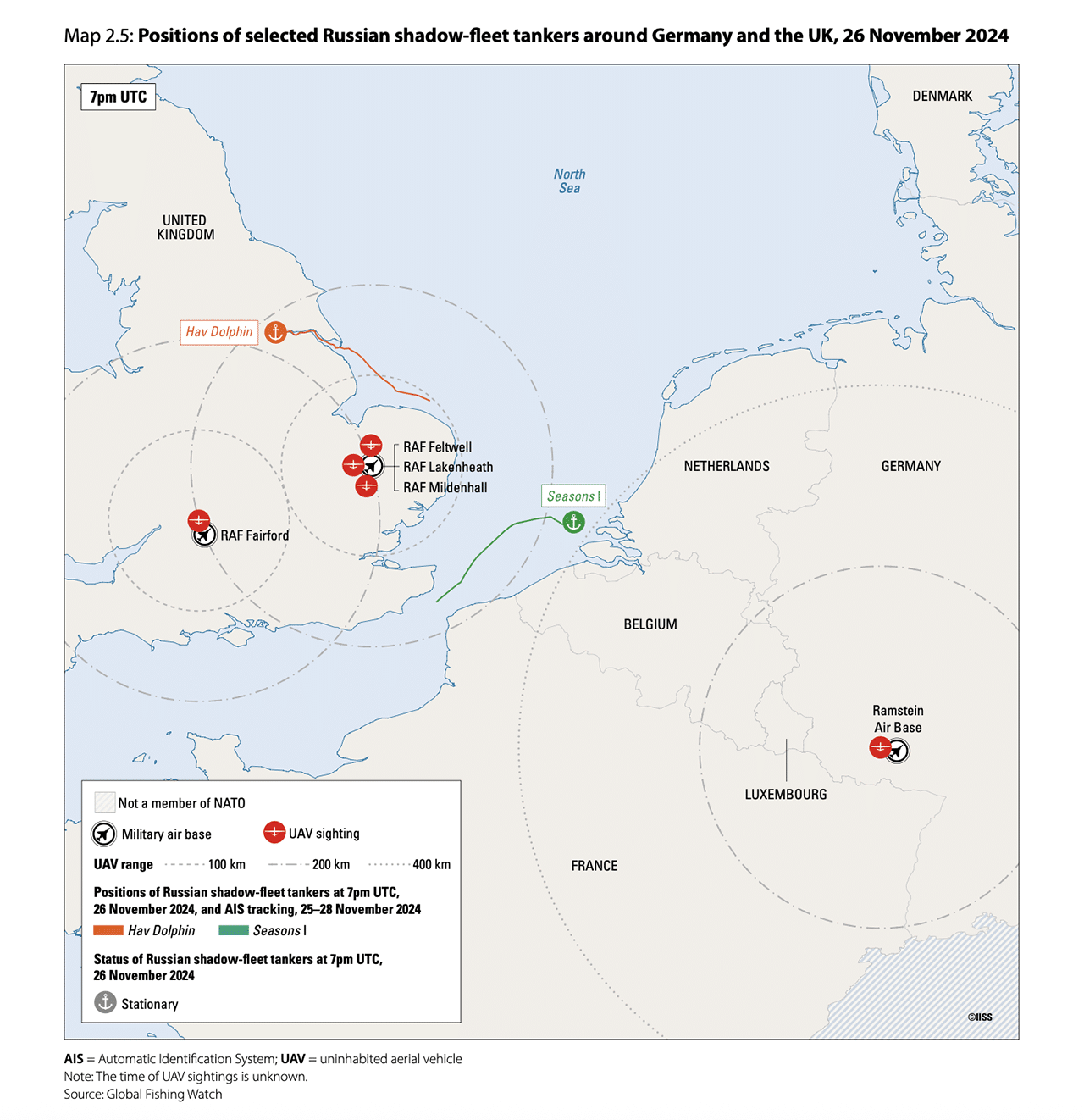
Comment from anonymous U.S. officials at the time of the incursions suggested that the drones were of a sophistication beyond what would be expected for commercially available civilian drones. As we noted, the incursions over these important U.S. bases came just days after then President Joe Biden gave Ukraine the long awaited all-clear to use long range missiles to strike targets deep inside Russian territory.
Selected reported UAV sightings in Europe by location and site, August 2024–February 2026 | Source: The International Institute for Strategic Studies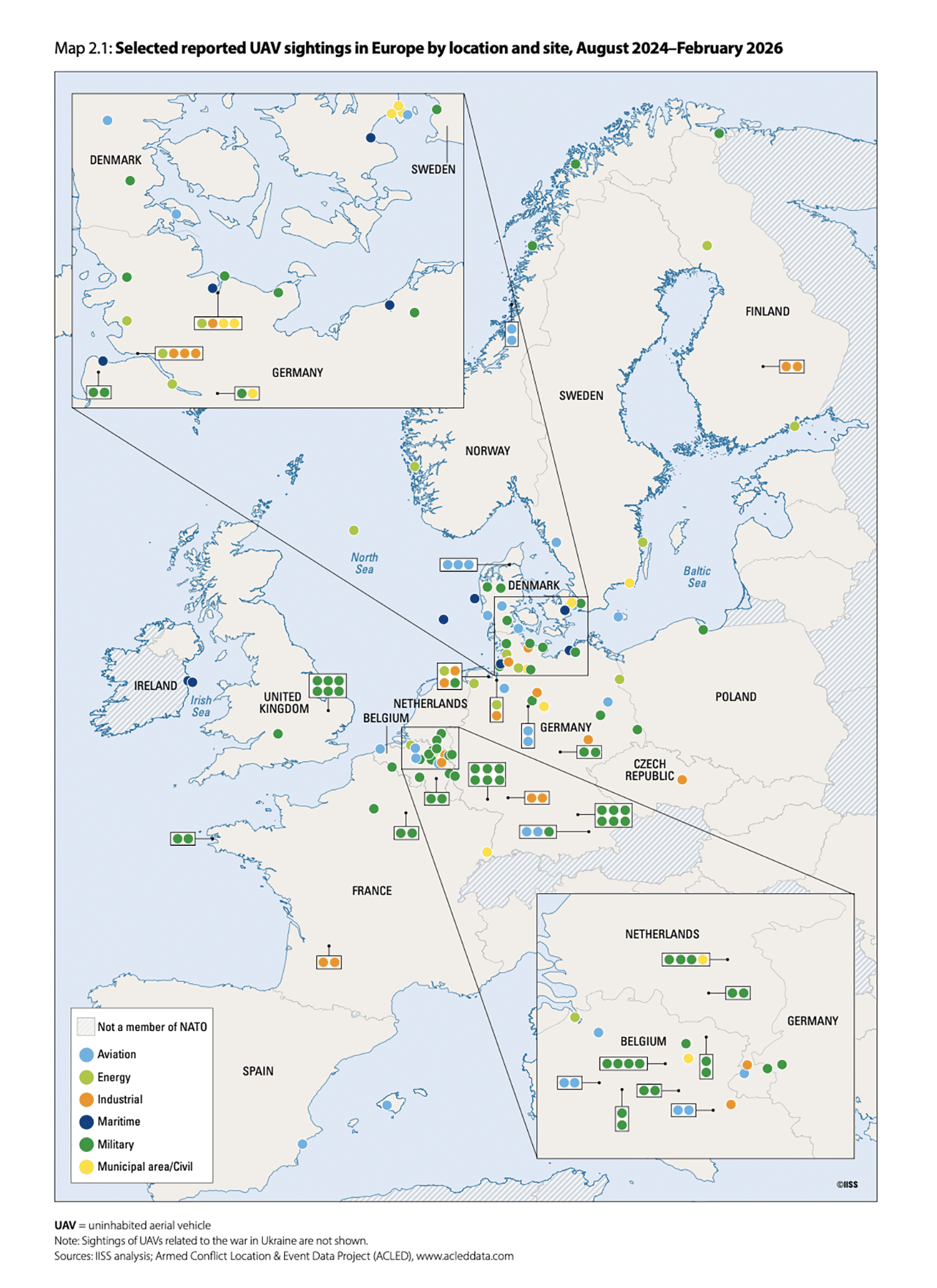
In its executive summary of the lengthy report, the IISS argues that while not every UAV incident during this period is likely to have been linked to Russia, “the aggregate pattern of UAV sightings cannot be adequately explained by misidentification, hobbyist activity or opportunistic harassment alone.”
Careful ScrutinyThere is no smoking gun that definitively proves Russia’s involvement, and none of the nations affected in these drone incursions have yet directly pointed their finger in Russia’s direction, though IISS researchers have suggested that these countries have given their tacit approval of the report. “Every government we spoke to said they would welcome the report being published,” said Charlie Edwards, Senior Fellow for Strategy & National Security.
Without the smoking gun, some have questioned the report’s findings. Dronewatch Europe have said: “The conclusions are striking. However, they also deserve careful scrutiny.”
“The report does not present physical evidence linking any specific drone to any specific vessel. No launch has been observed, no command links have been intercepted, no wreckage has been recovered, no credible video footage was recorded, and no telemetry or forensic data has been released tying a drone to a Russian ship.”
New IISS report revives ‘Russian shadow fleet drone’ theory, but fails to provide evidence https://t.co/aQNZoaX2O3 pic.twitter.com/efG2r4BgCD
— Dronewatch Europe (@DronewatchEU) July 2, 2026
This forensic data is, of course, difficult for a non-state actor to obtain. Primary radar data and advanced intelligence (including the use of electro-optical sensors, signals intelligence (SIGINT), and human intelligence (HUMINT)) capabilities would be of paramount importance to gathering the definitive facts in cases like this.
Whether the capable intelligence agencies – in many cases, world leading – of the nations involved have in fact collected these facts is unclear. While one could argue that the fact no country has stepped forward and set out a comprehensive case for Russia’s involvement, it is also true that doing so could prejudice some of the capabilities and/or sources of intelligence available to them. Proving Russia’s guilt in the public domain might not outweigh the value of these intelligence assets.
The @RoyalAirForce has recently deployed its Counter-Uncrewed Aerial System to Belgium in response to rogue drones interrupting flights at Brussels Airport. This comes just a month after the system was deployed to Denmark.
The RAF’s C-UAS capability is called ORCUS, which is a… pic.twitter.com/bS6buQuCDc
— Leonardo Electronics (@LDO_Electronics) November 11, 2025
Dronewatch’s own investigation into 61 drone sightings across Europe in 2025 found that, in many cases, “reported drones turned out to be perfectly ordinary aircraft, helicopters, stars, planets or other explainable phenomena. In numerous cases there was simply no evidence that a drone had ever been present.”.
The IISS report does touch on these earlier investigations, though it argues that “In an operating environment where European detection capability was demonstrably insufficient to reliably track low-altitude, non-cooperative UAVs, a high non-confirmation rate is the expected outcome regardless of whether the sightings were genuine.”
“A high false-positive rate in public reporting is, if anything, analytically consistent with Russian operational design: engineering an environment of ambiguity in which genuine incursions are difficult to distinguish from noise is itself a feature of the campaign,” the report continues.
Whether any of the drones were in fact linked to Russia or not, the IISS states that Europe’s counter-UAS (C-UAS) strategy has not kept up with the threat now posed by these systems: “detection is uneven, legal authorities are fragmented, response options are often disproportionate, and attribution remains too slow to support timely deterrence.”
Catégories: Defence`s Feeds
F-15EX Eagle II and MQ-28 Ghost Bat Fly Together During Valiant Shield 2026
The MQ-28 Ghost Bat took part in a flight with the F-15EX and a proof-of-concept FARP operation as part of the Experimental Operations Unit’s activities during Valiant Shield 2026.
The Pacific Air Forces (PACAF) released new undated photos from Exercise Valiant Shield 2026, showing that the MQ-28 Ghost Bat flew together with the F-15EX Eagle II. The milestone flight transformed into reality Boeing’s concept artworks which suggested the goal of having the two platforms work together in Manned-Unmanned Teaming (MUM-T) operations.
“An MQ-28 Ghost Bat and U.S. Air Force F-15EX Eagle II participated in Exercise Valiant Shield 2026 over the Philippine Sea, demonstrating the future of human-machine teaming in the theater,” said PACAF in a post on social media. “Uncrewed systems act as a force multiplier, extending the reach and effectiveness of human pilots.”
It is unclear if crew of the F-15EX, assigned to the 85th Test and Evaluation Squadron, took control of the MQ-28 during the flight. It should be noted that the service’s fighter jets already took control of drones during past tests, thus the possibility of the F-15EX controlling the MQ-28 should not be excluded.
An F-15EX Eagle II and an MQ-28 Ghost Bat fly together during Valiant Shield 2026. | Source: PACAF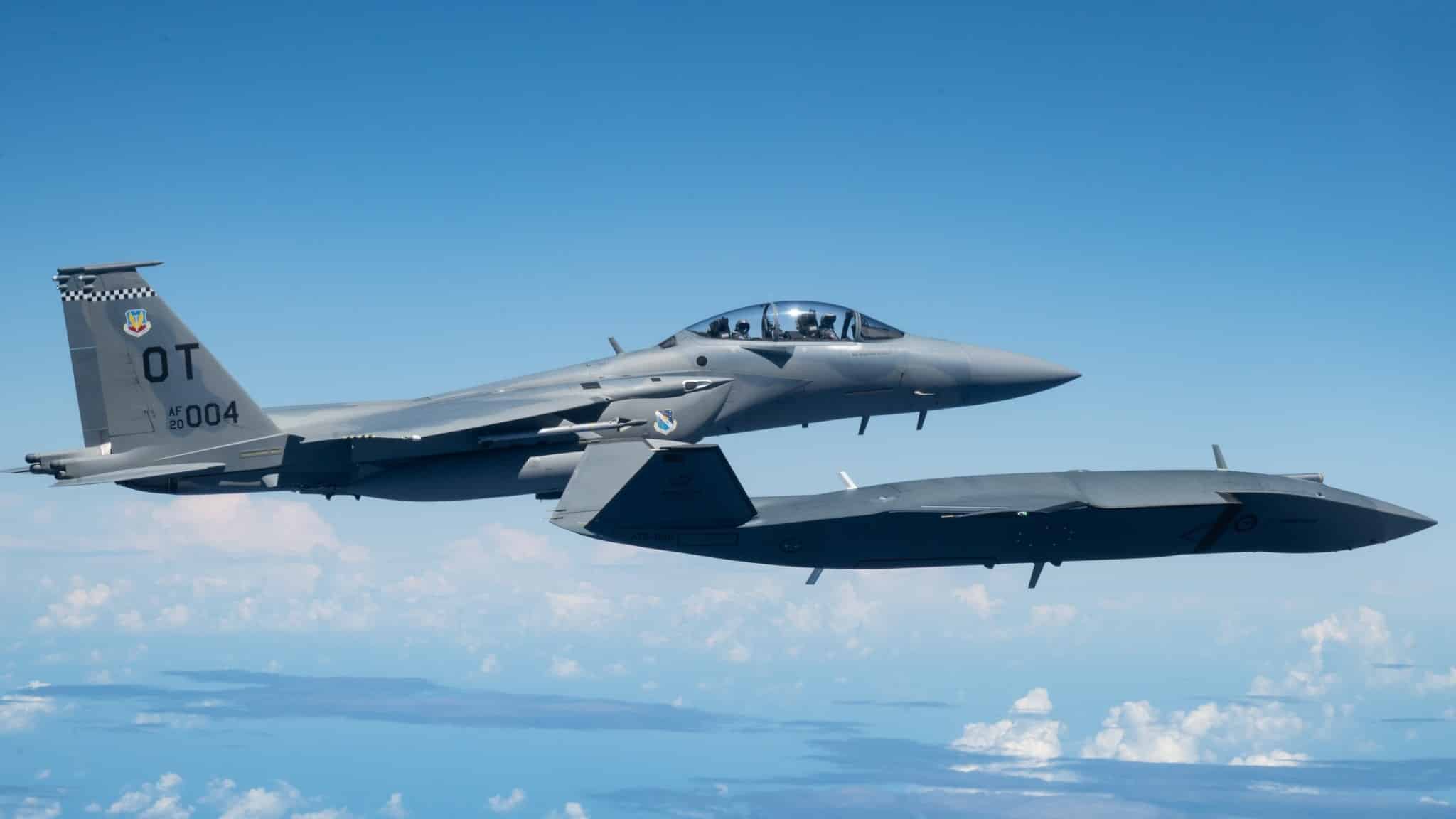
Moreover, in the press release announcing the MQ-28’s involvement in Valiant Shield last month, PACAF said “the uncrewed MQ-28 will fly in concert with crewed fighter platforms, providing a critical opportunity for the joint force to refine tactics, techniques, and procedures for this next evolution of airpower.”
Take a peek into the future.
With the F-15EX’s future manned-unmanned teaming capabilities supported by an advanced cockpit system, communication networks and two-seat configuration, the superior fighter could serve as a battle manager and joint all domain command and control. pic.twitter.com/07oRhGdIjV
— Boeing Defense (@BoeingDefense) September 4, 2025
The MQ-28 was deployed to Rota, Commonwealth of the Northern Mariana Islands, for the duration of the exercise. The specific aircraft is a production representative airframe, which is equipped with an Infra-Red Search and Track (IRST) system.
Artist concept of a Boeing F-15EX flying in formation with four MQ-28s, back when it was still known as the Boeing Airpower Teaming System (ATS) aircraft. | Source: Boeing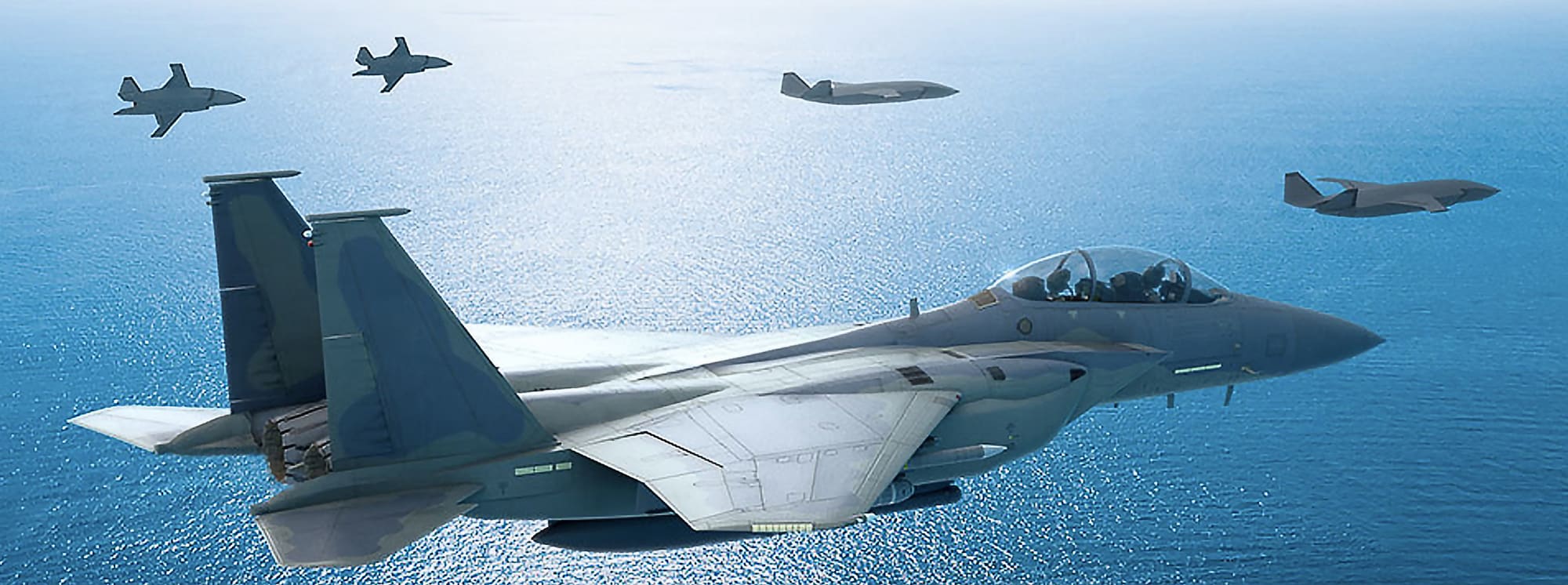
While at Rota, the MQ-28 also took part in a proof-of-concept Forward Arming and Refueling Point (FARP) operation for Collaborative Combat Aircraft (CCA) on June 28. The operation was supported by a HC-130J Combat King II and Airmen assigned to the 79th Rescue Squadron, alongside members of the Royal Australian Air Force and the Experimental Operations Unit (EOU).
The involvement of the EOU is notable as it was activated in June 2025 at Nellis Air Force Base, Nevada, to accelerate the introduction of CCA. The role of the EOU will be to develop the initial tactics, techniques and procedures needed to ensure CCAs are integrated in the fleet and tactically viable for future conflicts.
The unit recently conducted a round of testing with the YFQ-44A at Edwards Air Force Base, California. The service said the unit “executed a series of sorties that refined core operational and logistical procedures for deploying and sustaining CCA in a contested environment.”
With PACAF confirming the involvement of the EOU, it is likely the participation to Valiant Shield 2026 was part of a new round of testing which used the MQ-28 as surrogate for the FQ-42 and FQ-44. The Air Force recently awarded production contracts for the two CCAs.
A U.S. Air Force HC-130J Combat King II and Airmen assigned to the 79th Rescue Squadron, alongside members of the Royal Australian Air Force and the Nellis Air Force Base-based Experimental Operations Unit, conduct a proof-of-concept Forward Arming and Refueling Point operation for Collaborative Combat Aircraft with the MQ-28 Ghost Bat in Rota, Commonwealth of the Northern Mariana Islands, June 28, 2026, in support of VALIANT SHIELD 2026. | Source: U.S. Air Force photo by Senior Airman Austin Salazar F-15EX Visits Kadena Again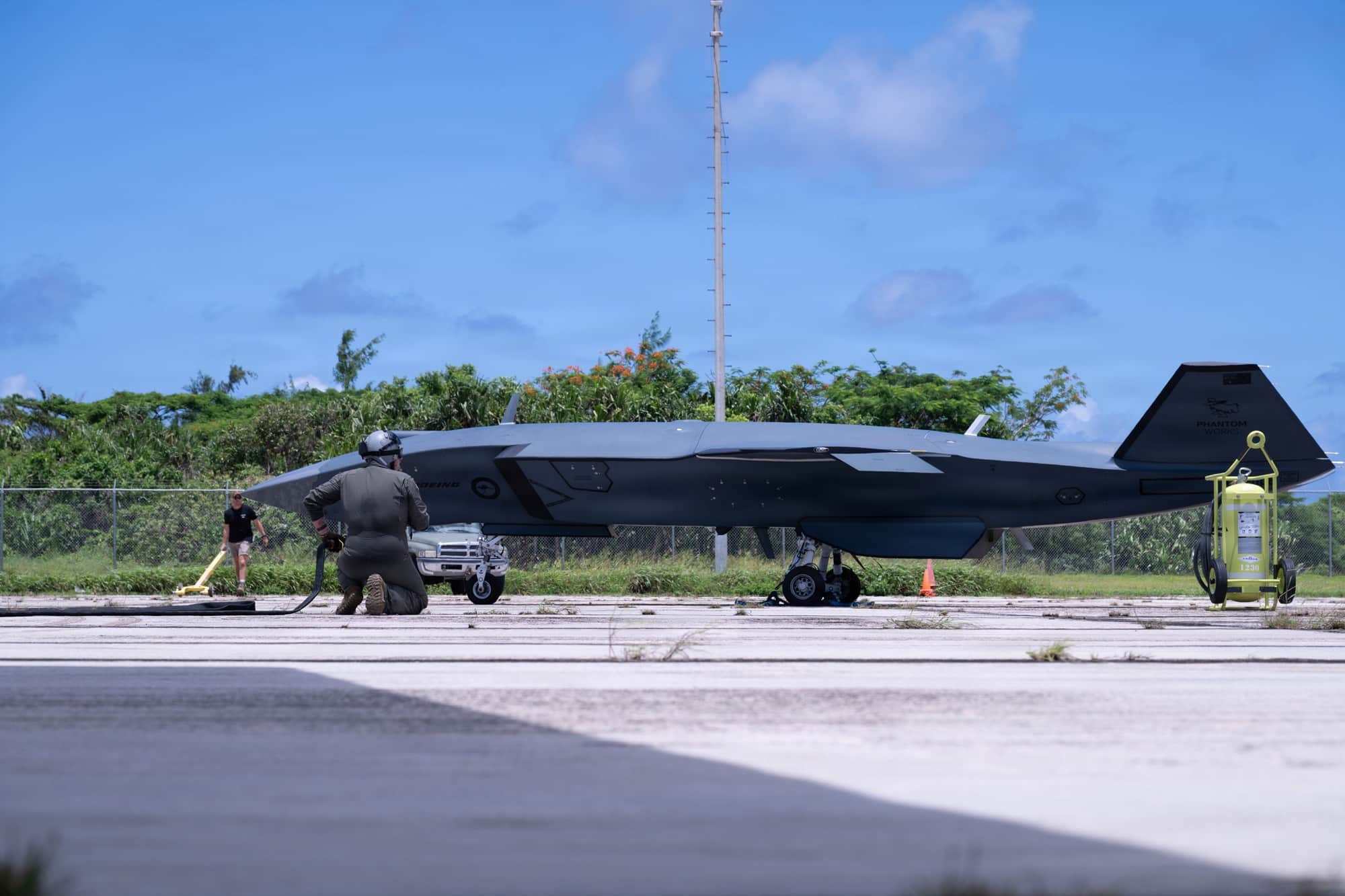
The same F-15EX which flew with the MQ-28 also arrived at Kadena Air Base, Japan, on June 29, 2026, accompanied by two F-15E Strike Eagles. The visit, whose duration is unknown, might have happened after the flight with the MQ-28, as Valiant Shield officially ended on July 1.
This is the second time an F-15EX is deployed to Kadena as the base prepares to receive its permanently assigned Eagle IIs. As we reported in the past here at The Aviationist, the base is transitioning from the F-15C/D Eagle to the new F-15EX Eagle II.
The 67th Fighter Squadron will be Kadena’s first operational F-15EX unit, followed by the 44th Fighter Squadron. A total of 36 new fighters is expected to be delivered there starting next year, according to Air Force Secretary Troy Meink.
A U.S. Air Force F-15EX Eagle II assigned to 85th Test and Evaluation Squadron, Eglin Air Force Base, Florida, lands at Kadena Air Base, Japan, June 29, 2026. | Source: U.S. Air Force photo by Airman 1st Class Gracelyn Hess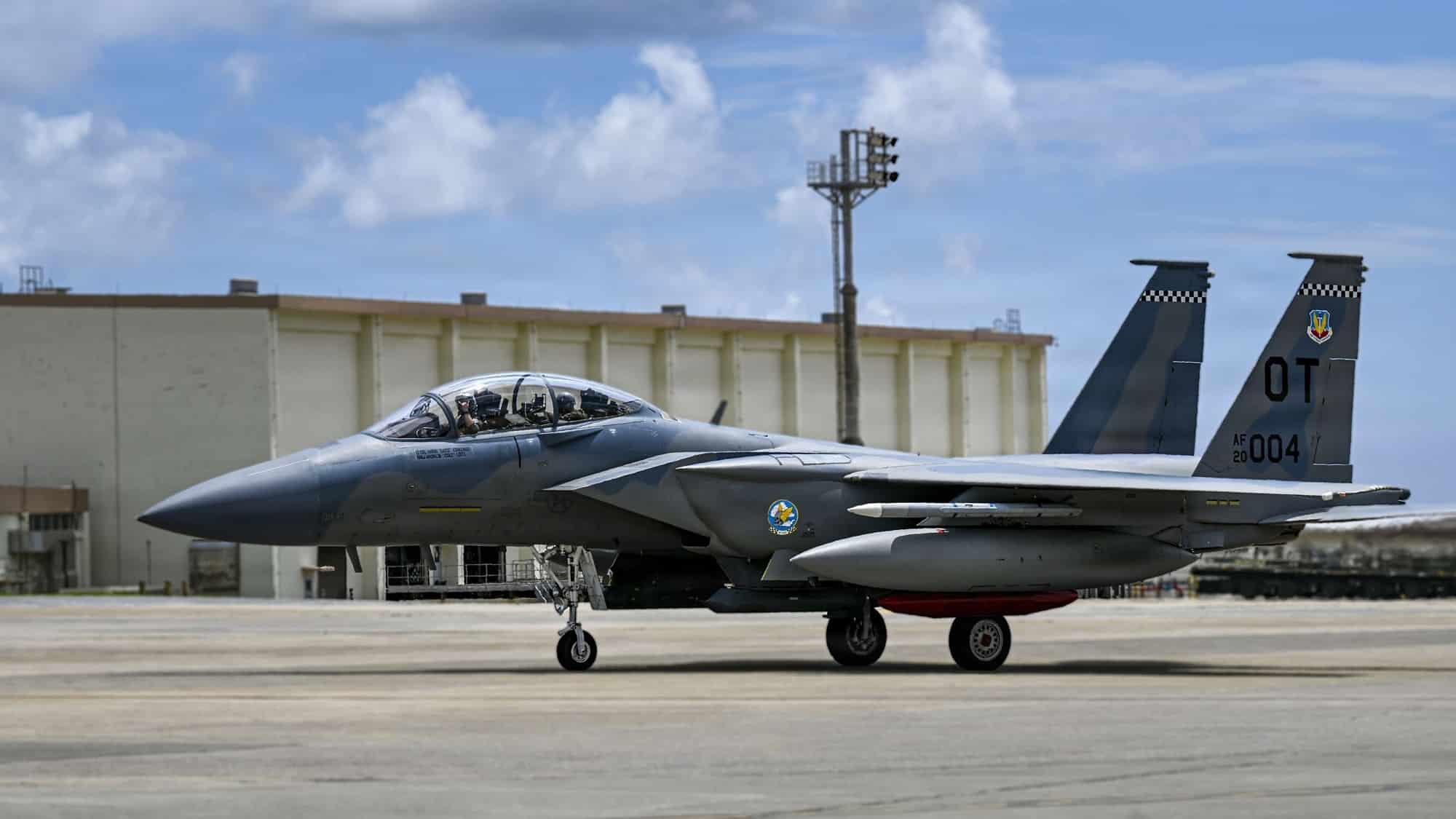
“The F-15EX represents the next chapter of airpower at Kadena,” said U.S. Air Force Brig. Gen. John Gallemore, 18th Wing commander. “Our Airmen have the opportunity to train with the aircraft, build confidence in its capabilities and ensure we’re ready to project lethality and integrate into operations as we continue providing combat power in support of a free and open Indo-Pacific.”
Valiant ShieldValiant Shield is a biennial, multinational, joint exercise focused on integrating the joint force in a multi-domain environment. The exercise brings together forces from the U.S. Air Force, Navy, Marine Corps, Army, and Space Force, alongside regional allies and partners, to train across a vast geographic area in the Pacific.
First established in 2006, Valiant Shield has evolved into one of the largest and most sophisticated military exercises in the Pacific. This reflects the growing emphasis on joint and combined operations in response to an increasingly contested security environment.
A U.S. Air Force F-15EX Eagle II and F-15E Strike Eagles assigned to the 85th Test and Evaluation Squadron, Eglin Air Force Base, Florida, fly in formation after receiving fuel from a KC-135 Stratotanker assigned to the 909th Air Refueling Squadron over the Pacific Ocean, June 29, 2026. | Source: U.S. Air Force photo by Staff Sgt. Dwane R. Young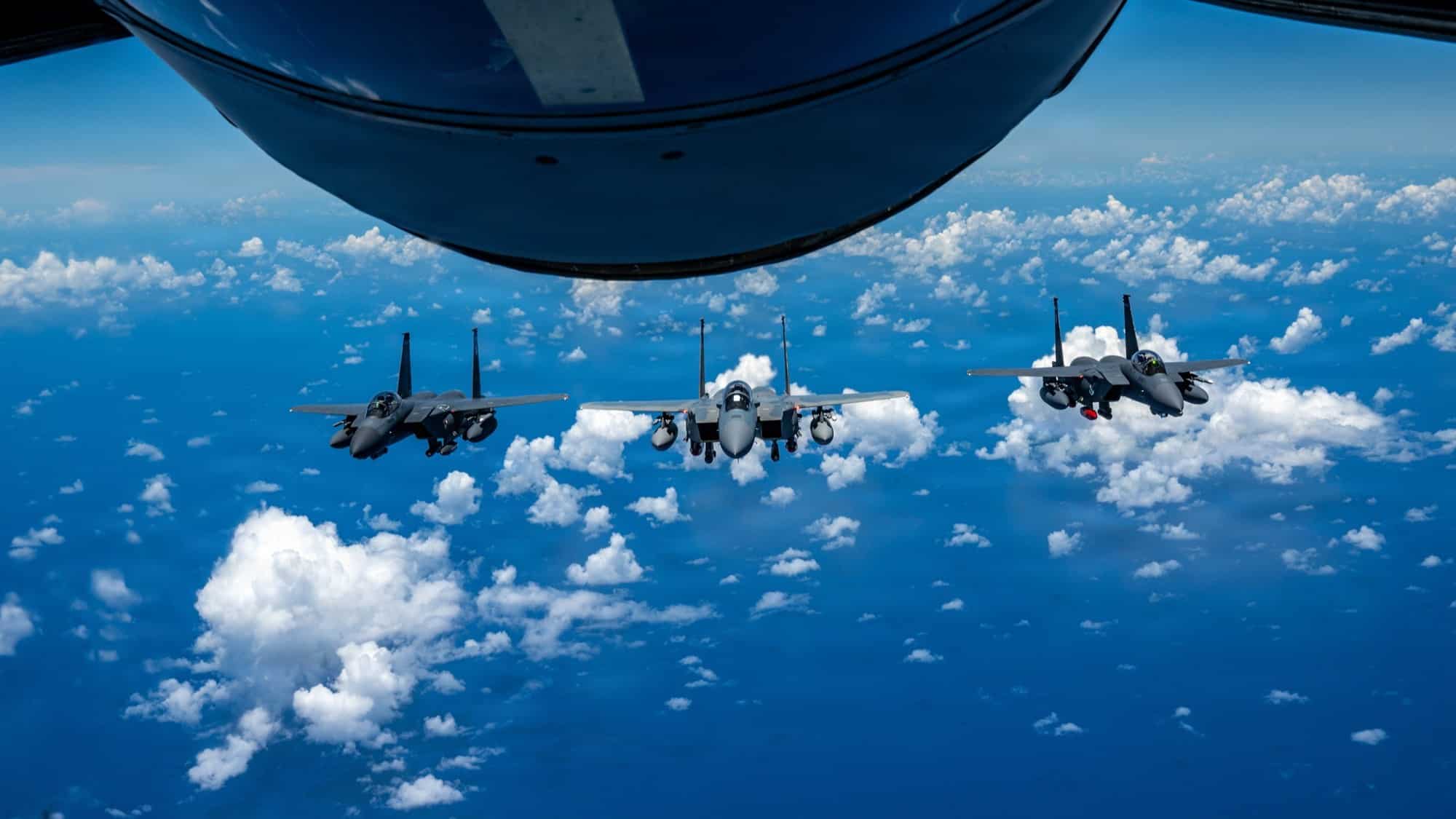
“Valiant Shield demonstrates our enduring commitment to a free and open Indo-Pacific,” Adm. Steve Koehler, commander of U.S. Pacific Fleet. “Exercising advanced multidomain capabilities with our allies ensures we continue to seamlessly innovate and operate together, project combat power together and prevail over any challenge – together.”
The exercise typically features a wide range of assets, including fighter aircraft, bombers, aerial refueling tankers, intelligence, surveillance and reconnaissance (ISR) platforms, naval surface combatants, submarines, amphibious forces, and advanced command-and-control systems. “This routine training fosters real-world proficiency in sustaining joint forces through detecting, locating, tracking, and engaging units at sea, in the air, on land, and in cyberspace in response to a range of mission areas,” explains PACAF.
Catégories: Defence`s Feeds
Yemen : Behind the launch of the new Houthi militia styled after Iran's Basij
To stem simmering discontent among their ranks, the Houthis announced the launch on 24 June of a new internal body, [...]
Catégories: Defence`s Feeds
France : Pro-Russian officer names himself head of France's army history centre
There is some confusion within the French military. The French army is in the middle of reorganising its historical research [...]
Catégories: Defence`s Feeds
Australia/China : Canberra reviews funding for defence think-tank ASPI, Beijing's bête noire
Intelligence Online has gained insights into the consequences of the Australian defence ministry's funding review for leading defence think-tank Australian [...]
Catégories: Defence`s Feeds
United States : Joshua Rudd, US special forces officer nursing NSA back to health
Since taking up his posts as both head of the National Security Agency (NSA) and of the US Cyber Command [...]
Catégories: Defence`s Feeds
France : Head of PM's military cabinet set for General Inspectorate of the Armed Forces?
General Jean-Christophe Béchon, head of the French Prime Minister Sébastien Lecornu’s military cabinet is widely tipped to be appointed to the General Inspectorate of the Armed Forces (IGA).
Catégories: Defence`s Feeds
A-10 Takes Part in Final Public Range Day in Arizona
Airmen and the local community gathered as Davis-Monthan hosted the final public A-10 Range Day at the Barry M. Goldwater Range.
Davis-Monthan Air Force Base hosted at the Barry M. Goldwater Range near Gila Bend, Arizona, the last public Range Day with the A-10C Thunderbolt II on Jun. 24, 2026 held its last Range Day. The announcement comes as the type inches towards its imminent retirement, despite Congressional approval to save the iconic aircraft.
“As the A-10C Thunderbolt II made one of its final passes over the Barry M. Goldwater Range near Gila Bend, Arizona, Airmen assigned to the 355th Wing, community members, and civic leaders gathered to witness the familiar roar that had echoed across Tucson’s skies for nearly five decades, marking one of the aircraft’s final range days,” said the press release.
For the sake of clarity, it should be noted, that while the press release mentioned “one of the aircraft’s final range days,” the title and the caption explicitly mentioned it “was the final A-10 Range Day.”
The Range Days are a traditional U.S. Air Force event held almost every other month at the Barry M. Goldwater Range by the 355th Wing. These events see the A-10C execute a live-fire demonstration of its combat mission, enthralling both public, Airmen, serving members and their families alike.
A U.S. Airman photographs two A-10C Thunderbolt II aircraft as they release flares on Jun. 25, 2026 at the Barry M. Goldwater range. | Source: U.S. Air Force photo by Airman Najzee Kuzu Imminent retirement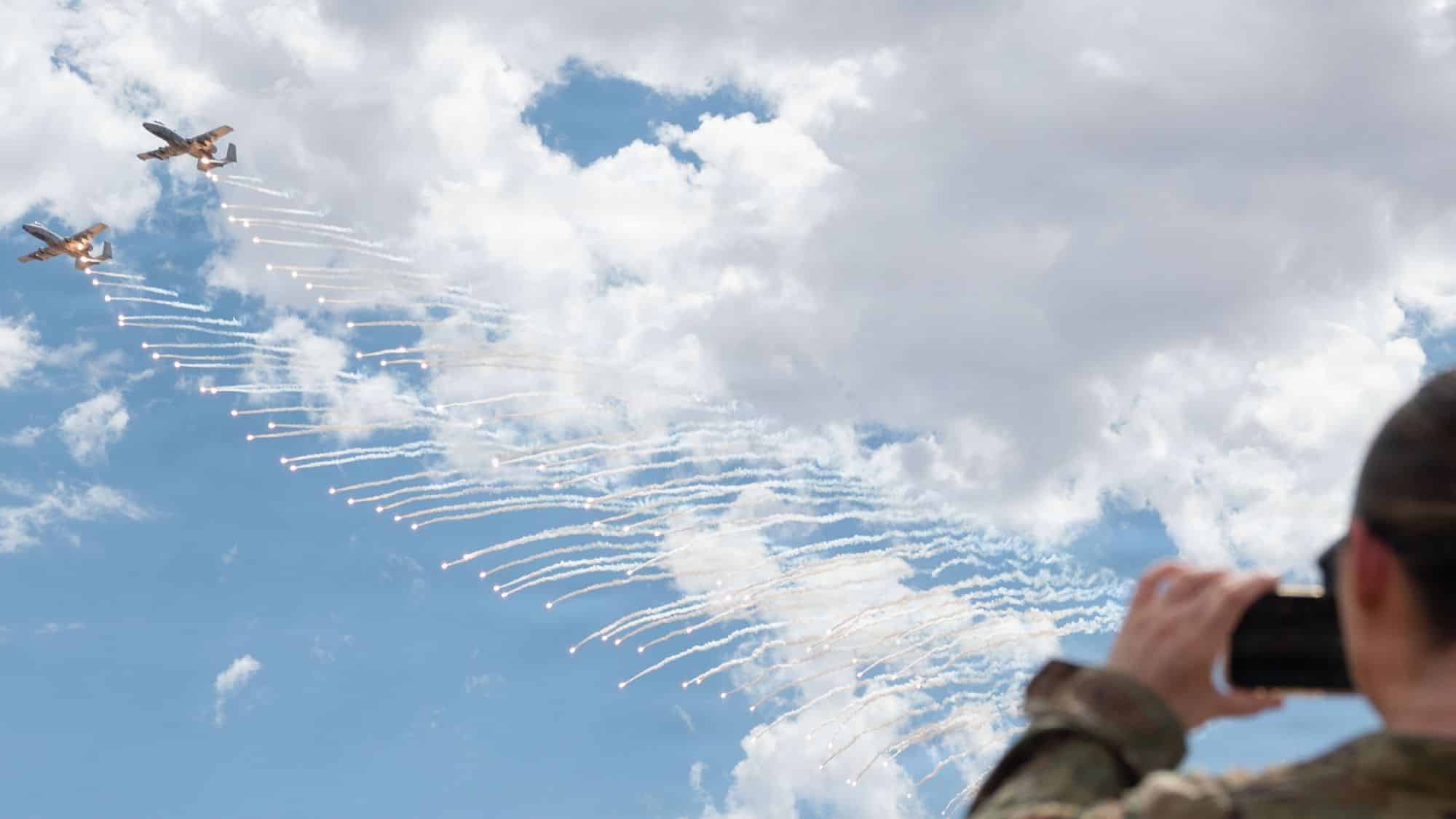
The A-10C, better known as Warthog, was earmarked for retirement by the end of 2026, however it will now remain in service at least until the 2030s. The U.S. Congress is in fact resisting attempts to fully retire the attack aircraft without a replacement.
The jets have seen considerable action against Iran during Operation Epic Fury, carrying a new refueling probe on the nose and electronic warfare pods, and returning with kill markings depicting bombs and Iranian naval vessels. The run up to the type’s eventual sundown has also seen the Air Force deactivate other associated units and activities.
This includes the shuttering of the 40th Test Flight Test Squadron’s Detachment 1 in December 2025, a geographically separate unit at Davis-Monthan AFB that executed A-10 developmental test operations. On Apr. 3, 2026, the U.S. Air Force also ended the training of the A-10C when the 357th Fighter Squadron graduated the last batch of student pilots at Davis-Monthan AFB.
Final Range DayDescribing the final Range Day as “powerful and precise,” the service said this was “a living, breathing demonstration of everything the A-10 mission represented; discipline, dedication and an unwavering commitment to those on the ground watching.”
Among the spectators was also retired U.S. Air Force Lt. Gen. Glen “Wally” Moorhead, who has witnessed the A-10 over 38 years of service. Moorhead delivered the first A-10 to Davis-Monthan nearly five decades ago, and was also one of the first pilots of the A-10C variant.
U.S. Air Force Col. Jose Cabrera, 355th Wing Commander, watches an A-10C Thunderbolt II perform. | Source: U.S. Air Force photo by Airman Najzee Kuzu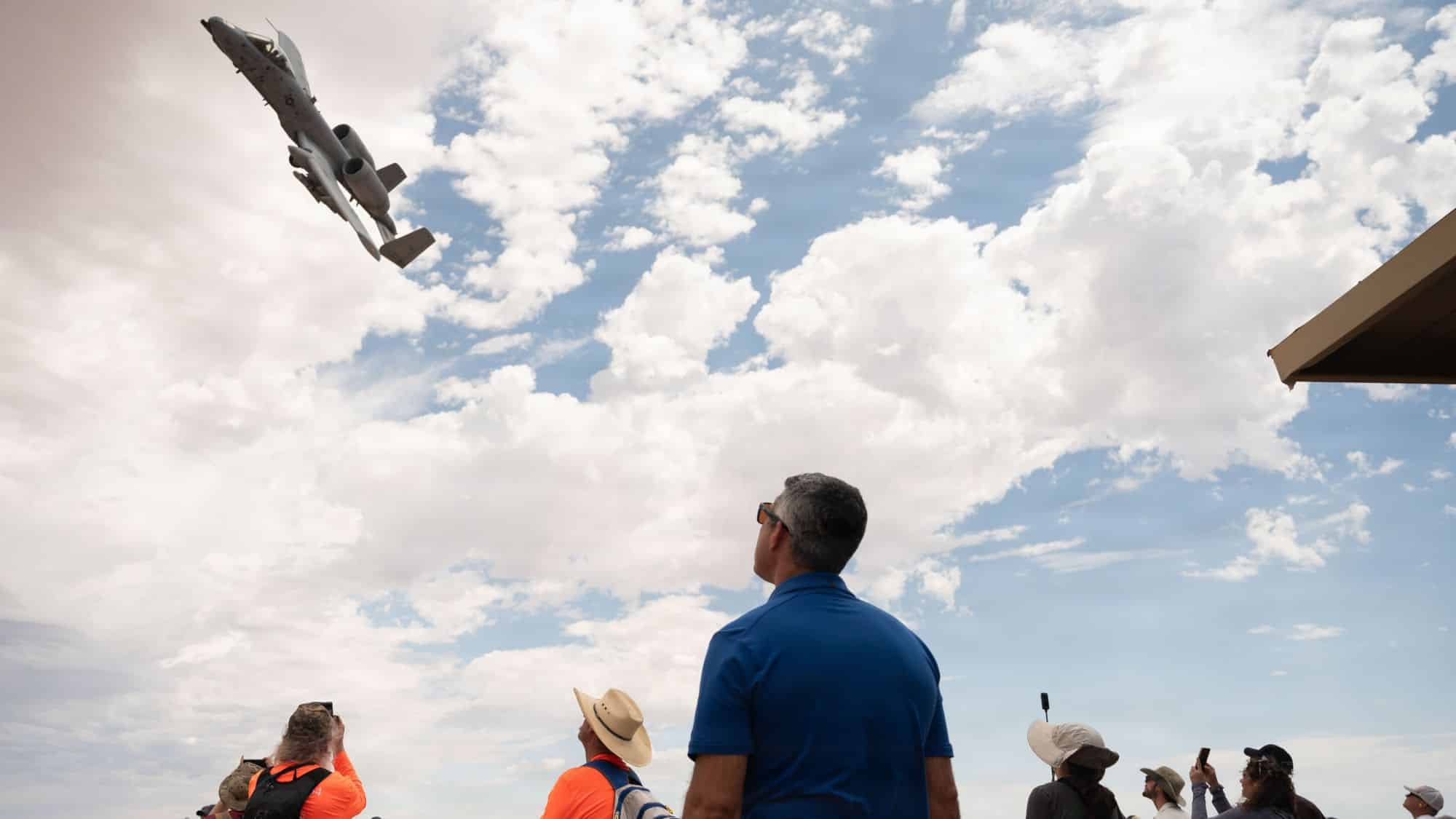
“The culture of attack is a special culture inside the United States Air Force,” reflected Moorhead. “The people flying the airplanes, the people working on them, loading them, making them work, that culture of mission is just strong, it’s extremely strong. And it’s always been a pride of mine.”
Tucson natives meanwhile have come to view the Range Days as more than just aerobatic and live-fire demonstrations. “The growl of the gatling gun, and the sight of a warthog in the clouds above have become a message from the base to the city that supports it; a message that says, without words, that the people inside that fence are mission ready constantly,” said the release.
Retired Air Force Col. Bill Pitts, who flew the A-10 for more than 14 years in his 26-year career, reflected on the community ties the event: “The attitude, the atmosphere around the A-10 is special. The pilots grow to love each other, and the attack community is a unique bunch.”
A U.S. Air Force A-10C Thunderbolt II aircraft assigned to the 357th Fighter Generation Squadron demonstrates live fire at the Barry M. Goldwater Range near Gila Bend, Arizona, June 11, 2026. | Source: U.S. Air Force photo by Senior Airman Christopher Ornelas Jr. Other recent Range Days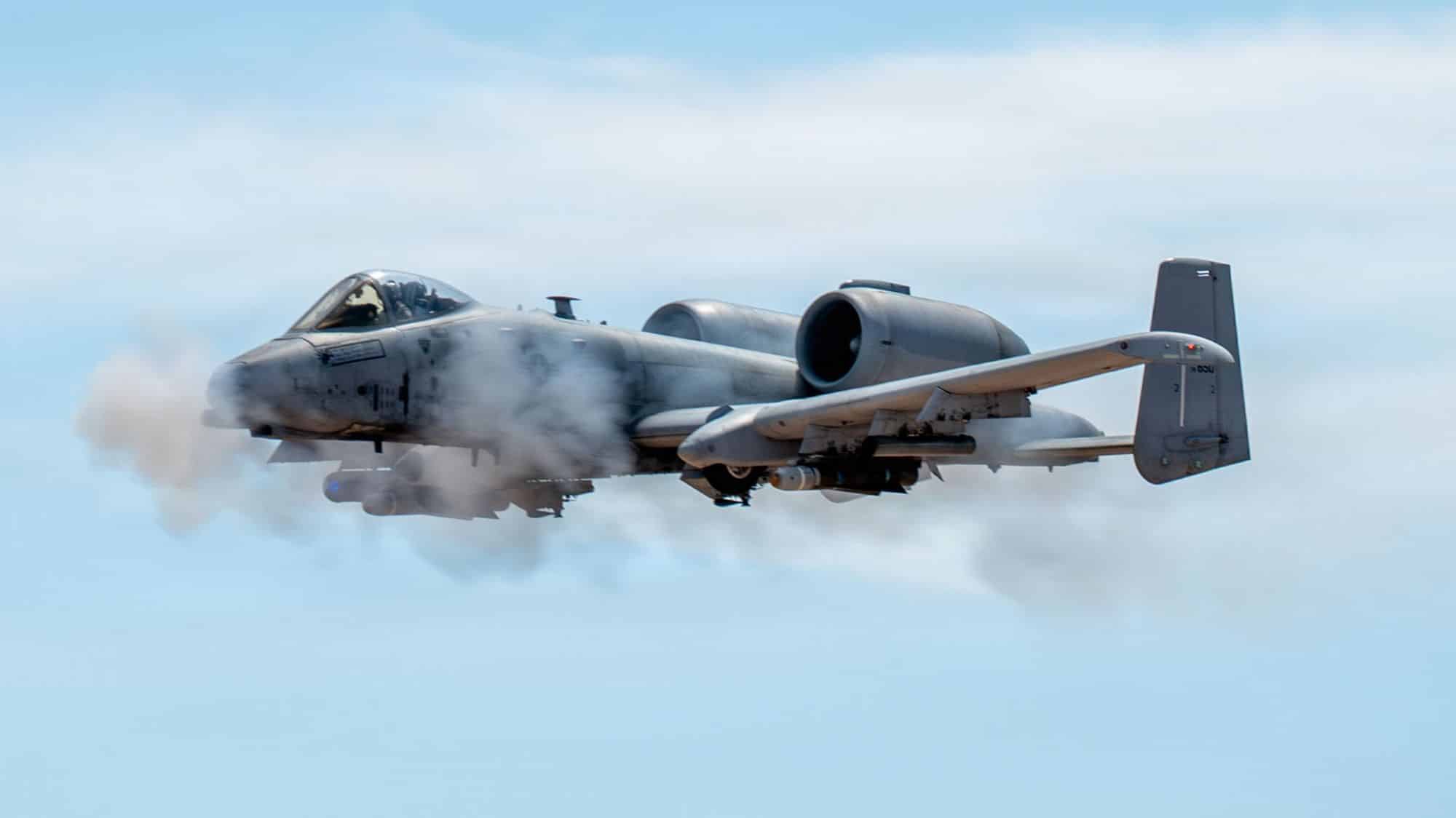
The recent Range Days before the final one at Gila Bend were held from the beginning of the year on Mar. 27, 2026, May 1, May 28 and Jun. 11. Hosted by the 357th Fighter Generation Squadron (357th FGS), Range Days are attended by Airmen, civic leaders, Civil Air Patrol cadets and Junior Reserve Officers’ Training Corps Cadets where they witness the “installation’s rescue and attack mission.”
A-10 Warthog strafing run! I think it was about 107°F up there on the range tower.
I had to keep my phone and camera in the shade between passes so that it wouldn’t overheat and not be able to record! pic.twitter.com/TbJOgVJr1w
— Andrew Kelly (@andrewkphotos) June 30, 2026
Attending Airmen “recognized as top performers had the opportunity to participate in an A-10 range day to see the mission their work supports.” As for the A-10, one image caption said the range day “demonstrated the aircraft’s speed and maneuverability while supporting pilot proficiency in dynamic training environments.”
Catégories: Defence`s Feeds
Lakenheath F-15Es Return From Middle East Combat Deployment With Striking Nose Art
Eleven 48th Fighter Wing Strike Eagles have returned home from the Iran air war sporting interesting nose art and bomb markings.
On Jul. 1, 2026, eleven F-15E Strike Eagles belonging to the 48th Fighter Wing returned home from their latest combat tour in the Middle East. Although some aircraft carried 494th FS markings, according to our sources all the aircrews were from the 492nd Fighter Squadron “Madhatters” (or “Bolars” from the squadron’s callsign). It is not unusual for the two squadrons of the 48th Fighter Wing to pool aircraft and borrow jets from one another when some airframes are unavailable.
The jets made their way back to RAF Lakenheath from Jordan, where they had been deployed to support Operation Epic Fury, with a stopover at Sigonella Air Base in Italy.
Flying as TREND 11-15 and TREND 21-26, the first eight jets landed before sunset. Despite the poor lighting conditions, our contributor Stewart Jack was there and took some interesting photographs of the F-15Es. The shots reveal nicknames and nose art applied to the jets, as has become a tradition for deployments to the CENTCOM AOR (area of responsibility). In this case, the nicknames appear to follow a monster/cryptid theme, mixing mythological creatures and horror figures.
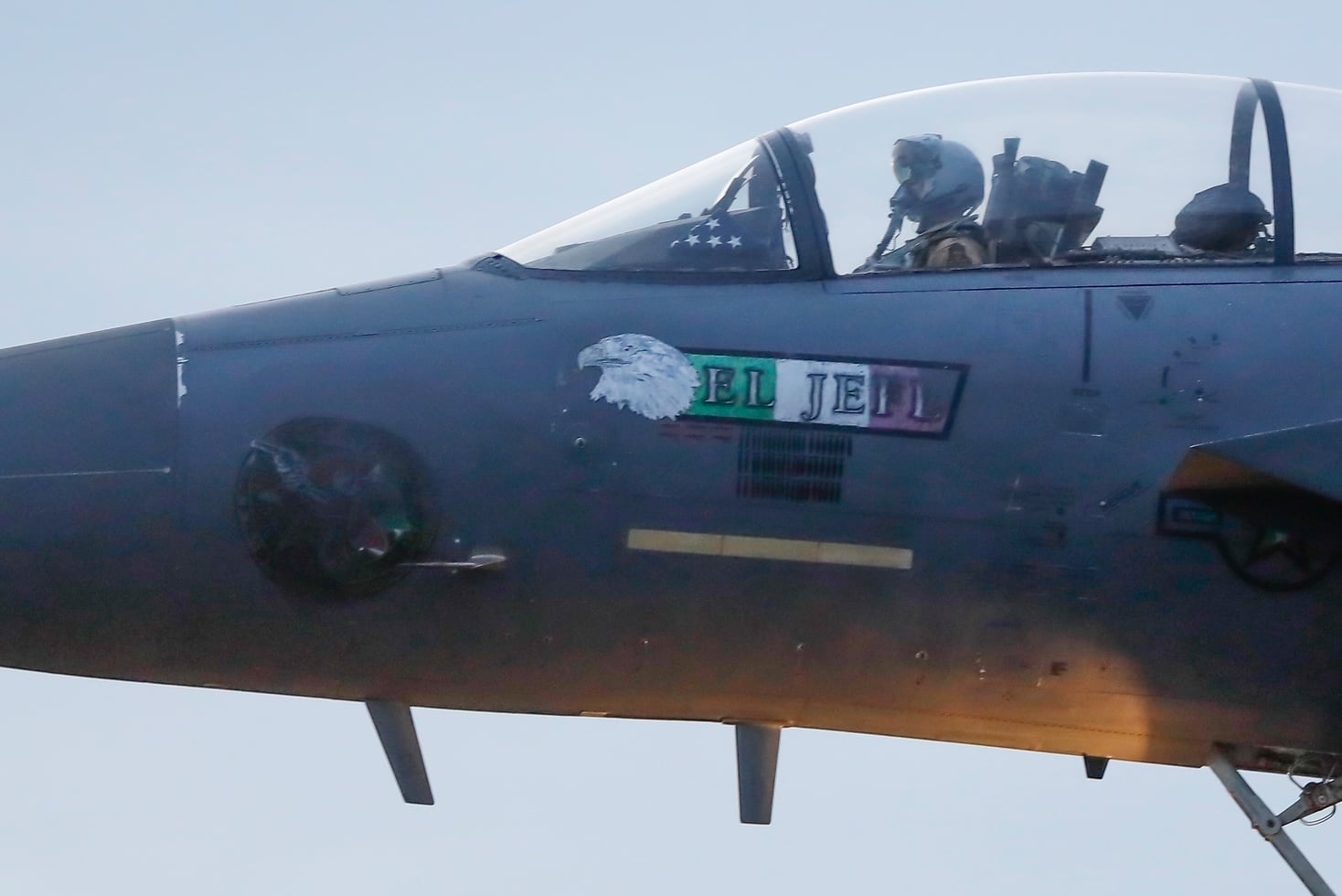
Overall, the first eight Strike Eagles were nicknamed Nessie, Kraken, Yeti, Chupacabra, Cthulhu, Cerberus, Sirenhead and El Jefe. The final three F-15Es landed at around 21:45 LT, when it was much darker, and for the moment we have been unable to determine their nicknames.
More in details the aircraft arrived in the following order:
00-3001 “Nessie”
91-0329 “Kraken”
97-0221 “Yeti”
01-2001 “Chupacabra”
91-0331 “Cthulhu”
91-0309 “Cerberus”
96-0205 “Sirenhead”
91-0324 “El Jefe”
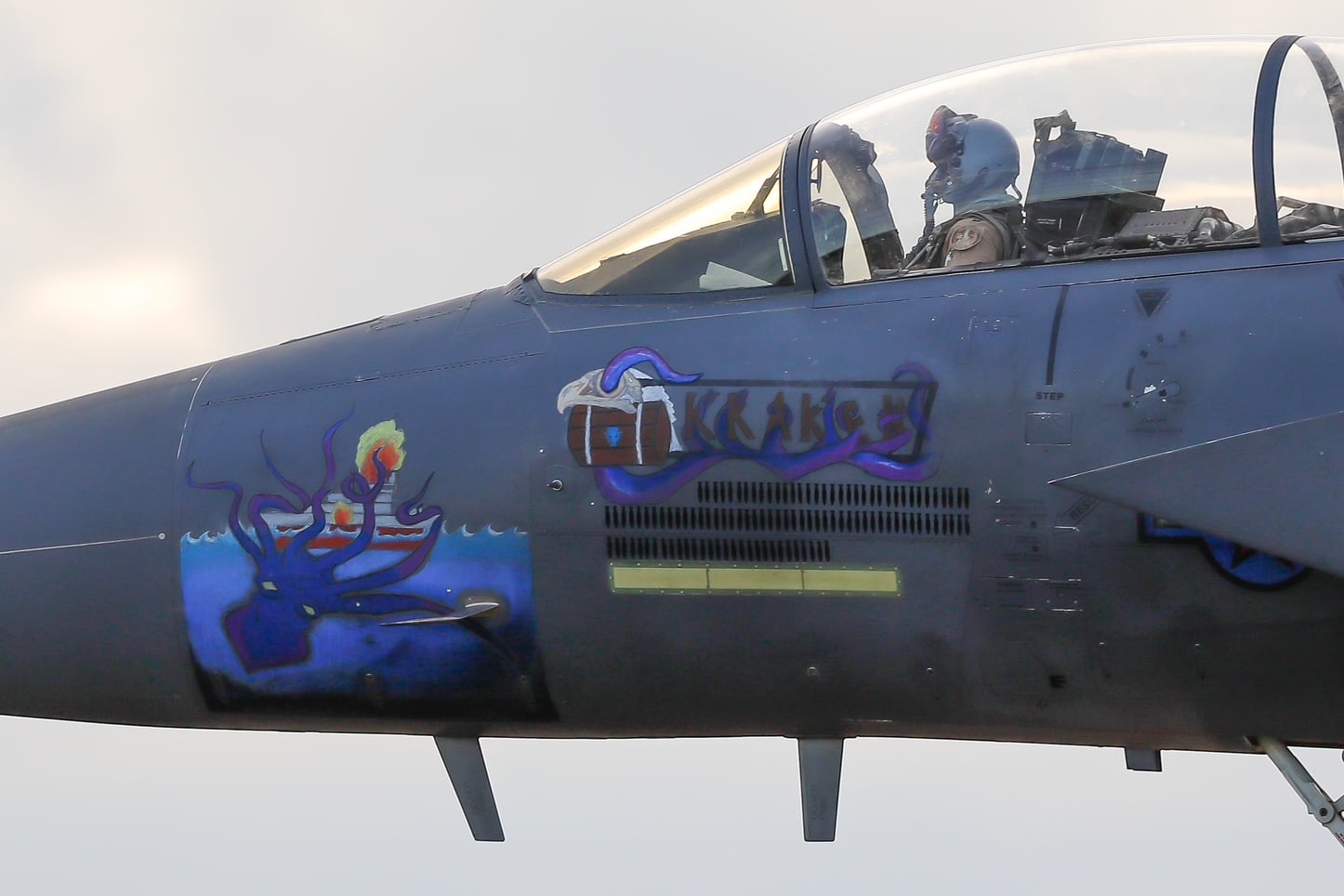
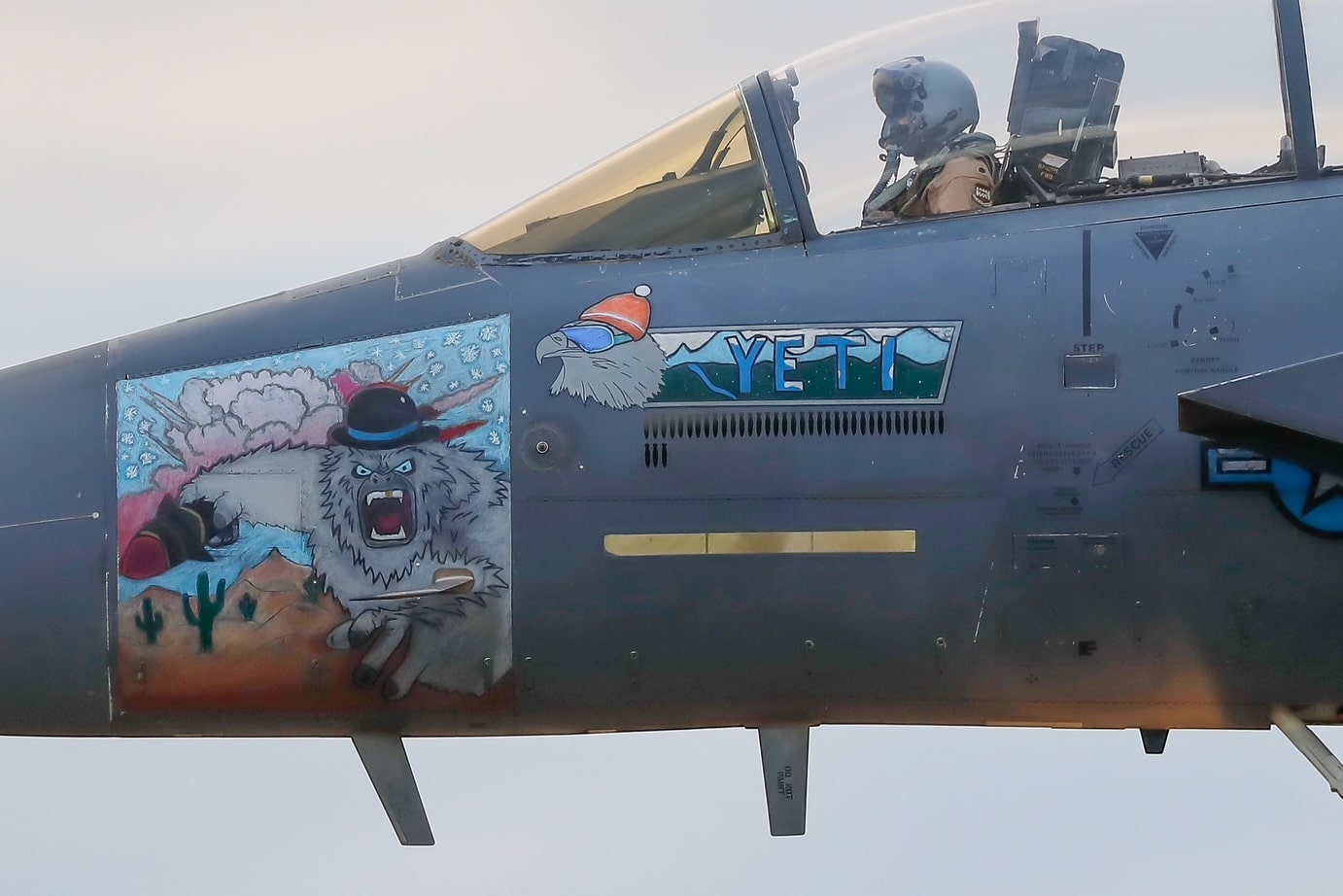
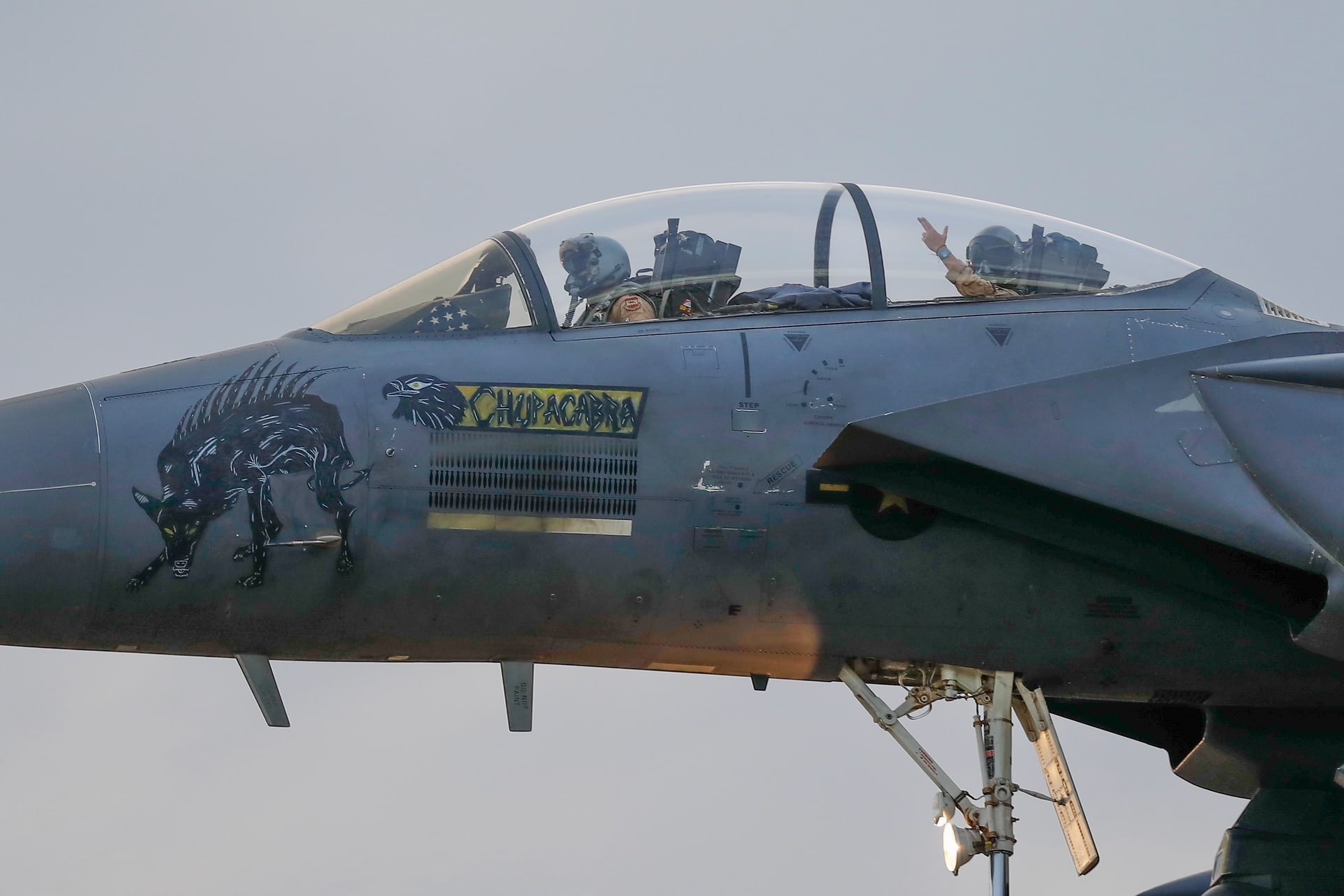
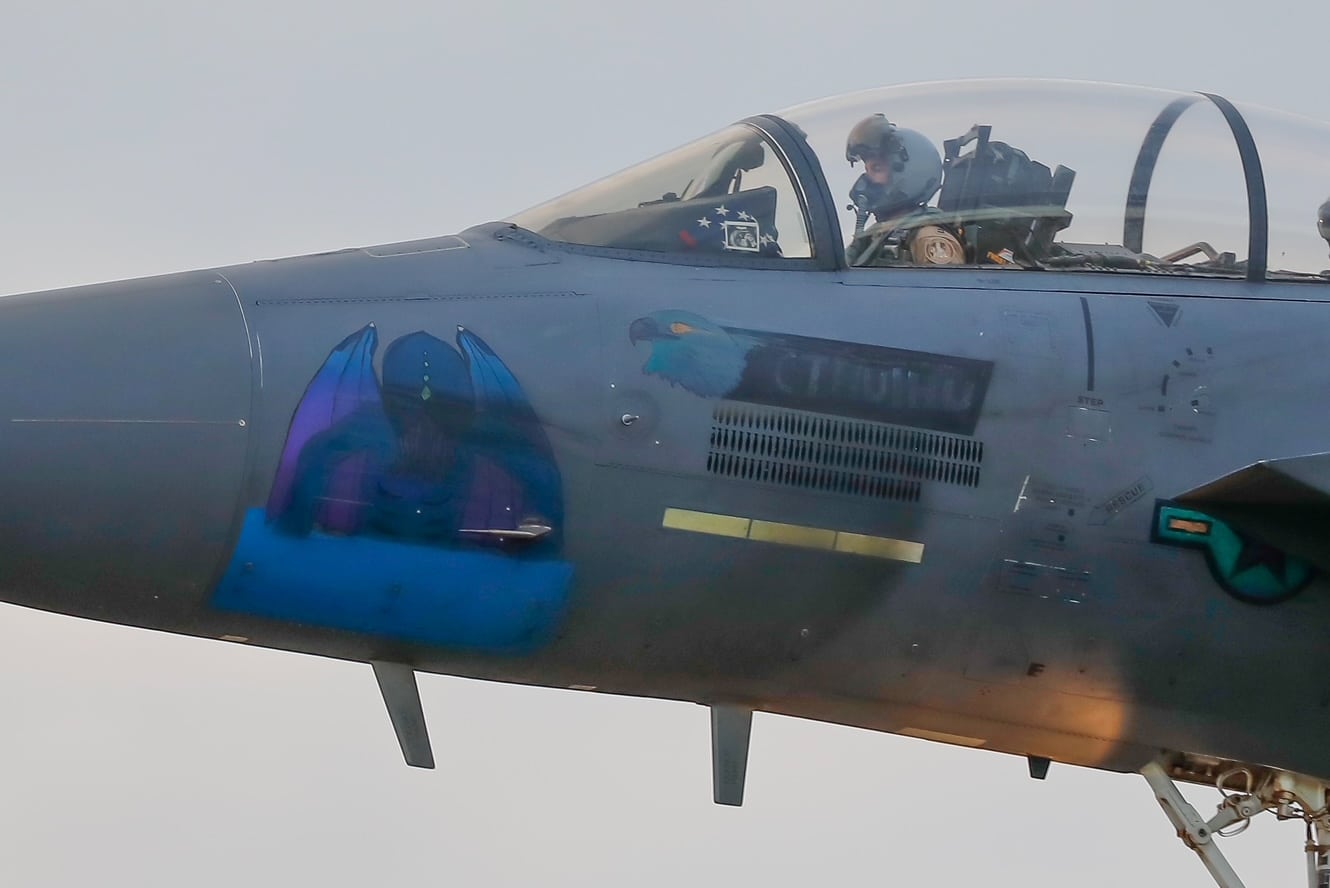
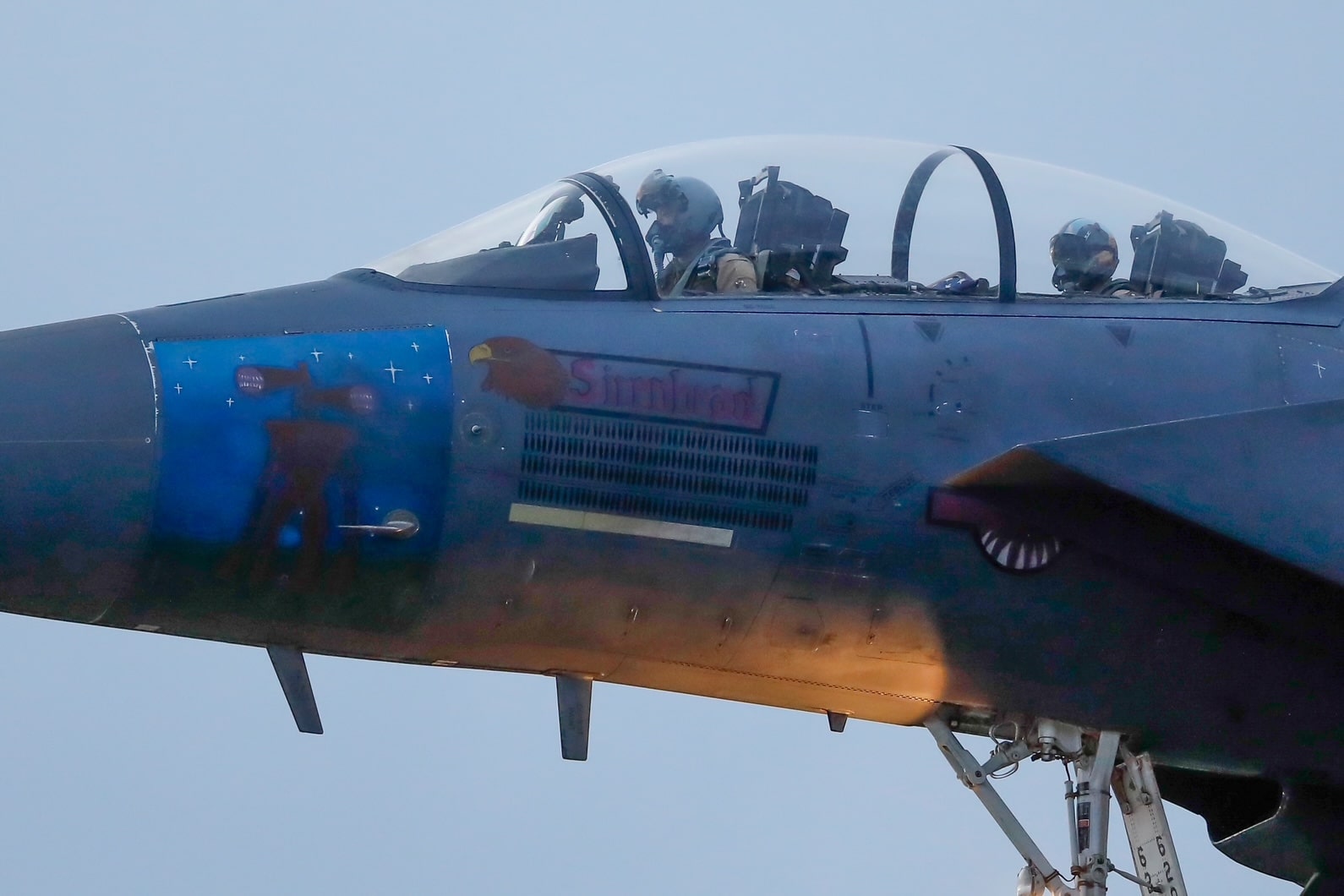
All the aircraft sport a significant number of JDAM (Joint Direct Attack Munition) markings, with two of them, “Cerberus” and “El Jefe,” also painted with what appear to be AGM-158 JASSM (Joint Air-to-Surface Standoff Missile) silhouettes. Noteworthy, the first eight aircraft don’t seem to sport any APKWS II markings.
91-0309 “Cerberus” | Source: Stewart Jack 91-0324 “El Jefe” | Source: Stewart Jack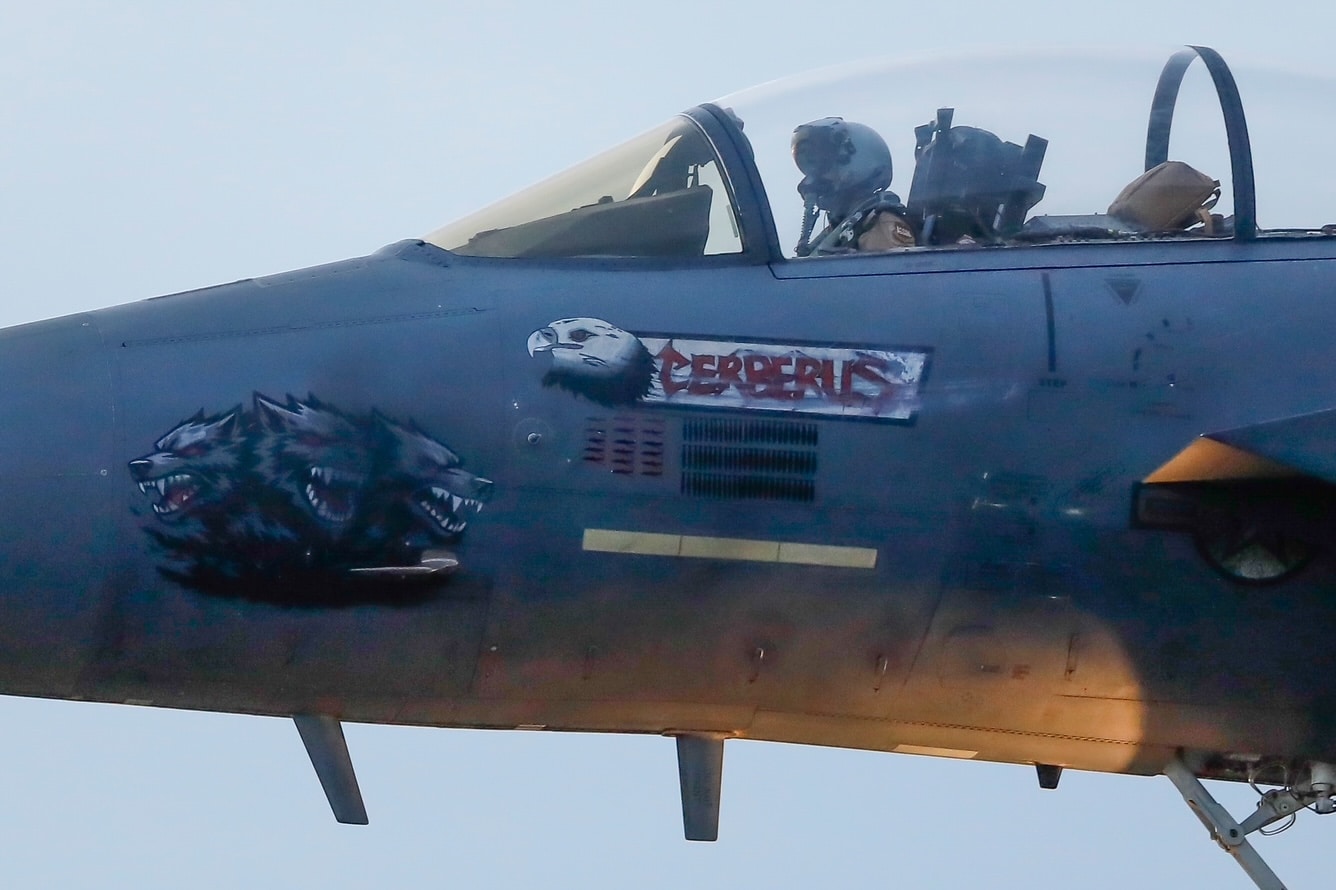
Nose art and nicknames on Strike Eagles deployed to the Middle East first appeared on the 18 F-15E Strike Eagle jets belonging to the 391st Expeditionary Fighter Squadron returning to Mountain Home AFB from OIR (Operation Inherent Resolve) in April 2019. Since then, it has become a standard for all the F-15E squadrons deployed to the CENTCOM AOR.
A big thank you to our contributor Stewart Jack Photography for sending us his photos!
Catégories: Defence`s Feeds
Pages



© 2012-2018 Europa Varietas Foundation © 2015-2018 Europa Varietas Association
www.europavarietas.org | info(@)europavarietas(dot)org | Switzerland




We are looking for sponsors for the English translation of these books, please contact turkeandras(at)gmail(dot)com